

Italy’s Strategic Ascent in the European Space Arena
Italy’s space sector, once a discreet niche of scientific and industrial excellence, has transformed into a prominent force in European space policy. Its origins trace back to the 1960s, when the National Research Council’s San Marco project and the Aerospace Engineering Department at the University of Rome La Sapienza, under Luigi Broglio, pioneered offshore launches from a platform off Malindi, Kenya. The country’s astrophysics tradition, rooted in the Italian School of Physics, provided a strong scientific foundation, but for decades activities remained within a close-knit national circle.

Today, the numbers tell a story of rapid expansion. The Italian Space Agency (ASI) operates with a budget of about €1 billion, while the national recovery plan (PNRR) allocates over €2 billion to space. Commitments at the ESA ministerial conference in Paris in November 2022 reached €3.1 billion for 2023–2025, a 35% increase over 2019 levels. In just ten years, Italy’s ESA contributions have nearly tripled, placing it third in Europe behind Germany and France, and solidifying its role in the continent’s space ecosystem.
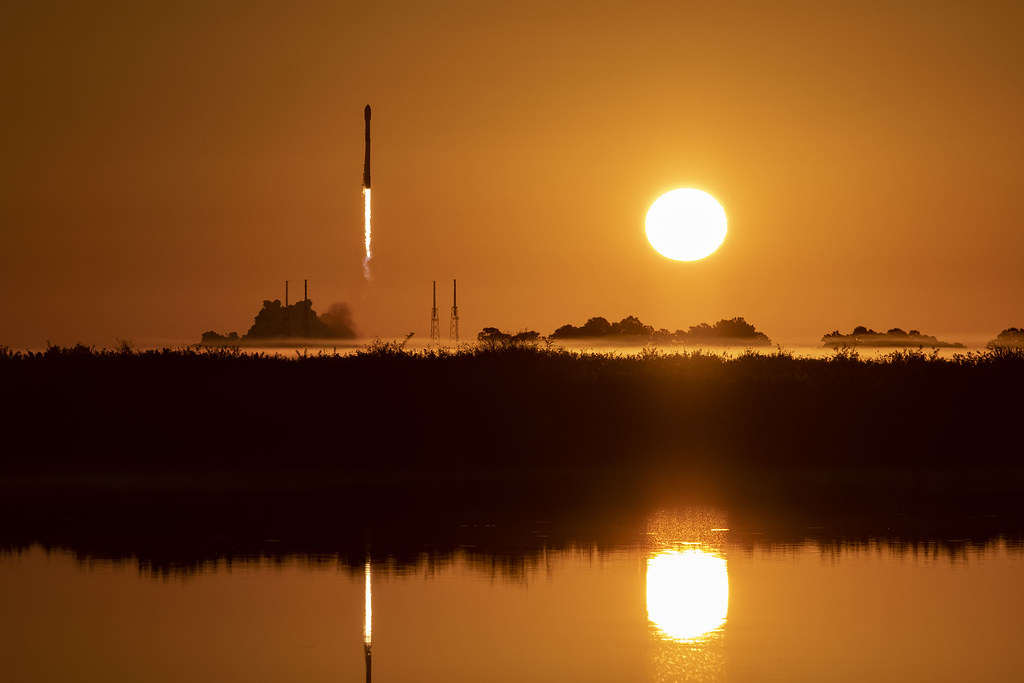
A pivotal milestone came with the launch of the Vega rocket on February 13, 2012, marking Italy’s entry into launcher capability after decades focused mainly on satellites and services. Italian astronauts have also shaped public perception, notably Samantha Cristoforetti’s historic flight in November 2014 as the first Italian woman in space. Institutional reform in 2018 centralized space policy under the prime minister, creating a steering committee to integrate scientific, industrial, defense, transport, and diplomatic priorities.
Industrial alliances have played a defining role. The 2007 Franco-Italian joint venture merging Alcatel’s and Finmeccanica’s space activities created Thales Alenia Space and Telespazio, embedding Italy’s satellite production within a bilateral framework. Franco-Italian cooperation in secure telecommunications, exemplified by Athena-Fidus and Sicral agreements, reinforced industrial synergies. Within Leonardo, space activities regained prominence after a period of brand consolidation under former CEO Mauro Moretti. Under Alessandro Profumo’s leadership from 2017, space became a strategic identity, with figures like Massimo Comparini and Luigi Pasquali driving its revival.
Rome has emerged as the sector’s geographic hub, hosting ASI, ESA’s ESRIN center, Avio’s launcher facilities in Colleferro, and major university engineering departments. While Turin and Naples remain important, the concentration around Rome enhances institutional and media resonance. Leonardo’s portfolio—Telespazio, Thales Alenia Space, and a 29.6% stake in Avio—anchors Italy’s industrial leadership, complemented by rising players such as OHB Italia and Argotec, prime contractors for the Iride Earth observation constellation.
Iride, funded under the recovery plan, aims to deploy 22 satellites in its first phase, with a €1 billion total budget. Managed by ESA in collaboration with ASI, it seeks to enhance geo-observation of Italy’s territory for both civilian and military uses, continuing the dual-use approach established with Cosmo-Skymed. The program’s tight schedule—completion by 2026—underscores the urgency to convert investment into operational capability. Italy’s commitment to Earth observation also extends to the European Copernicus program, reinforced by Simonetta Cheli’s appointment in 2021 as ESA’s Earth observation director.
Exploration programs add another dimension. The Space Rider reusable shuttle integrates atmospheric re-entry technology, while Thales Alenia Space’s Turin facilities contribute to ESA’s European Service Module for NASA’s Orion spacecraft and to lunar habitation modules for Northrop Grumman. These projects align Italy with the renewed global focus on lunar exploration.
Italy’s space trajectory remains intertwined with international cooperation, particularly with France. The Quirinal Treaty of November 2021 formalized space collaboration, including mutual support for Ariane and Vega launchers. Yet tensions persist, as seen in Italian concerns over France’s Maia micro-launcher project. “There is a perpetual search for a compromise and a satisfactory balance,” noted Stéphane Israël, CEO of Arianespace, in November 2022, emphasizing Vega C’s potential complementarity with Maia. The failure of Vega C’s second flight in December 2022 highlighted the fragility of launcher programs and the need for European solidarity.
National pride in space achievements sometimes fuels a narrative of rivalry with France, framing Italy as an emerging space “power.” This perspective, while politically resonant, risks overshadowing the cooperative frameworks that have historically advanced both nations’ capabilities. The Italian sector’s growth—driven by technology, industrial alliances, and strategic policy—reflects a broader European trend toward integrating competition and collaboration in pursuit of shared progress.