

Archer and Joby Push Toward 2025 Air Taxi Launch
The U.S. electric vertical takeoff and landing (eVTOL) sector closed 2024 with a mix of breakthroughs and setbacks, underscoring both the promise and the volatility of this emerging mode of transport. While several global players faltered, California-based rivals Archer and Joby advanced toward their shared goal: securing Federal Aviation Administration (FAA) certification and initiating commercial air taxi services in 2025.

In a field where conventional aircraft programs often require decades from concept to certification, eVTOL startups have compressed timelines dramatically. Archer and Joby each logged significant progress this year, moving deeper into the FAA’s multi-stage approval process while securing substantial funding to sustain the costly final phases of development. Analysts estimate that perfecting flight technology and completing certification could consume between $1.5 billion and $2 billion per company.
Archer, headquartered in Santa Cruz, announced a $450 million agreement with defense contractor Anduril Industries to produce military variants of its eVTOL design. This deal lifted its 2024 fundraising total to $660 million and overall financing to more than $2 billion. Key backers include United Airlines, Abu Dhabi’s sovereign investment fund, and Stellantis, which is overseeing construction of Archer’s manufacturing facility near Atlanta. The first phase of that plant is nearly complete, with clearance granted to begin initial aircraft production in 2025.
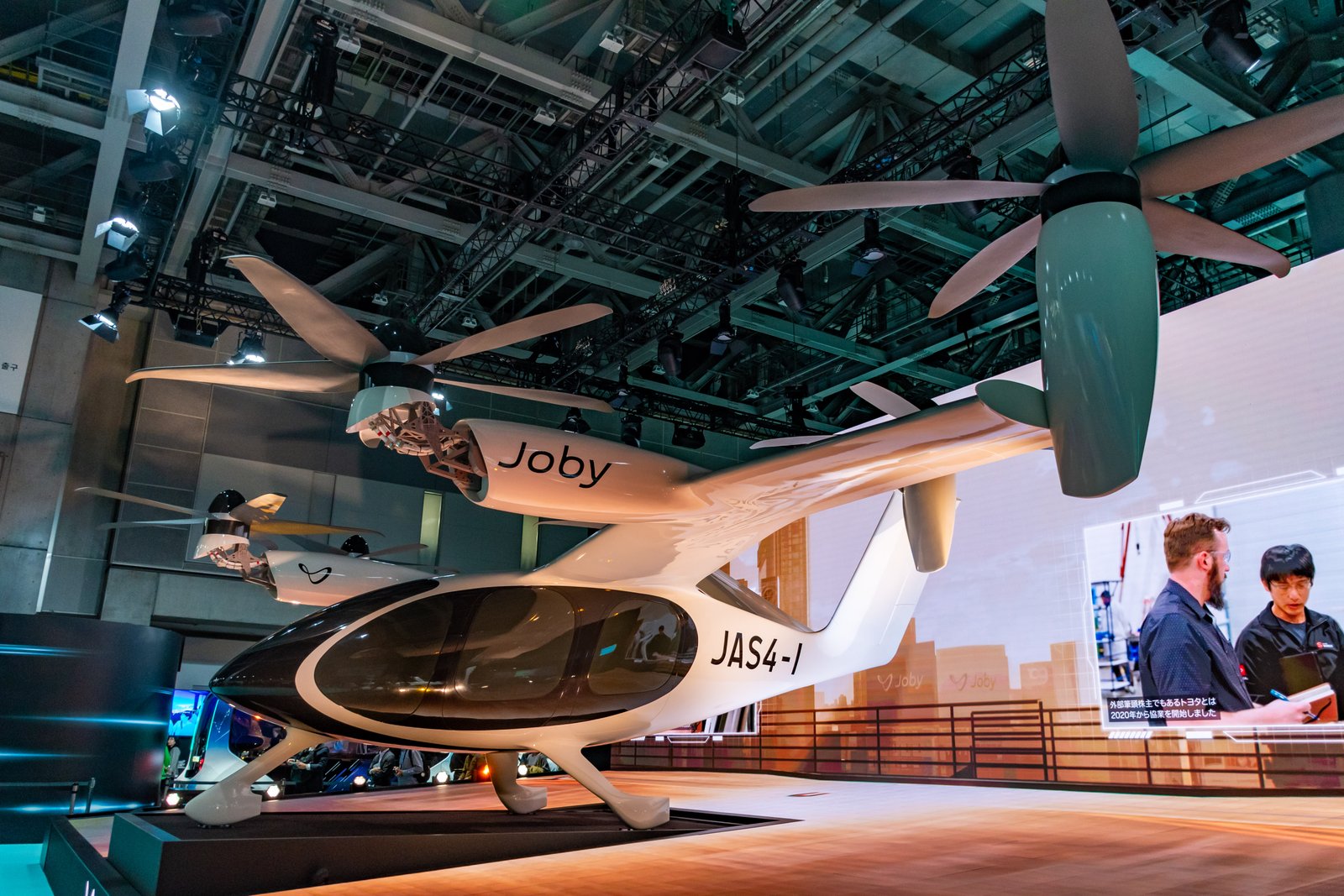
Joby, based in Northern California, also strengthened its financial position. In October, Toyota added $500 million to its investment, bringing the automaker’s total support to nearly $900 million. Additional financing included $222 million from other underwriters, and the company announced plans to issue roughly $300 million in new shares. Delta Airlines is among its strategic partners, and cumulative funding for Joby now exceeds $2.6 billion. The company recently confirmed it had “entered the final phase of FAA certification” testing.
The competitive landscape beyond the U.S. tells a different story. In the U.K., Vertical Aerospace achieved notable test flight results in 2024 but faced acute financial strain, accepting $50 million from Mudrick Capital, a financier specializing in distressed companies. Vertical has postponed its certification target from 2025 to 2028. In Germany, Volocopter and Lilium both encountered severe funding shortfalls. Lilium, known for its unconventional propulsion architecture, declared bankruptcy and halted operations. Airbus, with its own air taxi prototype still in early development, remains a potential acquirer of struggling startups.
China’s EHang became the first eVTOL manufacturer to secure national certification, but industry observers question whether its regulatory process meets the rigor of Western standards. As a result, EHang’s operations may remain confined to domestic routes for the foreseeable future.
Even if Archer and Joby achieve certification in 2025, their initial services will likely be limited in scope. Infrastructure development for vertiports—specialized hubs for takeoff, landing, charging, and passenger handling—has been slow, with minimal new construction. Navigation systems tailored for low-altitude, battery-powered aircraft remain under development and must be integrated into existing air traffic control frameworks.
Economic viability presents another hurdle. Sergio Cecutta, co-founder of SMG Consulting, told Aviation Week: “You’re talking something like $8 per passenger mile at entry-into-service. If these companies want to sell the tickets for what it costs to operate the service, then it will have to be a very premium offering. … Maybe over time you could make it more accessible, but if you want to be affordable from day one, then it means the price needs to be subsidized.” Early ticket prices are expected to appeal primarily to affluent travelers, with long-term ambitions to reduce costs to $2–$3 per passenger mile.
Initial route planning reflects these constraints. Archer intends to shuttle United Airlines passengers between downtown heliports in cities such as New York, Chicago, Los Angeles, and San Francisco and their respective airports. Agreements with Southwest Airlines could link non-hub airports to nearby municipalities. Joby is preparing similar feeder services for Delta passengers, connecting metropolitan vertiports to airport terminals. Future plans include premium door-to-terminal transfers for select customers.
For now, both companies remain focused on the critical milestone of FAA certification. Without it, the transition from prototype to operational air taxi networks will remain grounded, delaying the broader vision of high-frequency urban aerial mobility.