

Loughborough UAV Team Secures Triple Win at UAS Challenge
The Institution of Mechanical Engineers’ Uncrewed Aircraft Systems Challenge marked its 10th anniversary this year at BMFA Buckminster in Grantham, drawing student engineering talent from across the globe. The competition tasks teams with designing and building an uncrewed aircraft capable of executing a simulated humanitarian aid mission. Aircraft must take off and land, navigate through waypoints and gates, deliver an aid package, and return to base along a defined route. Beyond flight performance, teams submit a concept development report and a business case, testing both technical and strategic thinking.

Against a backdrop of increased participation, Loughborough University’s UAV team—composed primarily of Aeronautical Engineering undergraduates—emerged as a dominant force once again. For the fourth consecutive year, they claimed the ‘Best Design’ award, alongside the ‘Scrutineers Award’ and the ‘Simulation Award’. The accolades reflected not only the aircraft’s engineering excellence but also the team’s meticulous preparation and operational discipline.
Team Leader Raj Bhangra noted, “It’s been another challenging year for the Loughborough UAV Team; more teams than ever were competing and it was a great opportunity to interact with student engineers from around the world and talk to industry engineers about the UAS and aeronautical industry. We also had former team members return as graduate engineers; volunteering with the IMechE; or representing affiliated companies, highlighting the benefits of the challenge to future engineering prospects. The Team worked really hard this year to produce another innovative tilt-rotor design which attracted a lot of attention in the hangar. The judges were clearly impressed with the whole design and professional quality of the final aircraft as evidenced by the awards we received. It’s been a privilege to have led the Team this year and I’m really proud of everything we’ve achieved.”
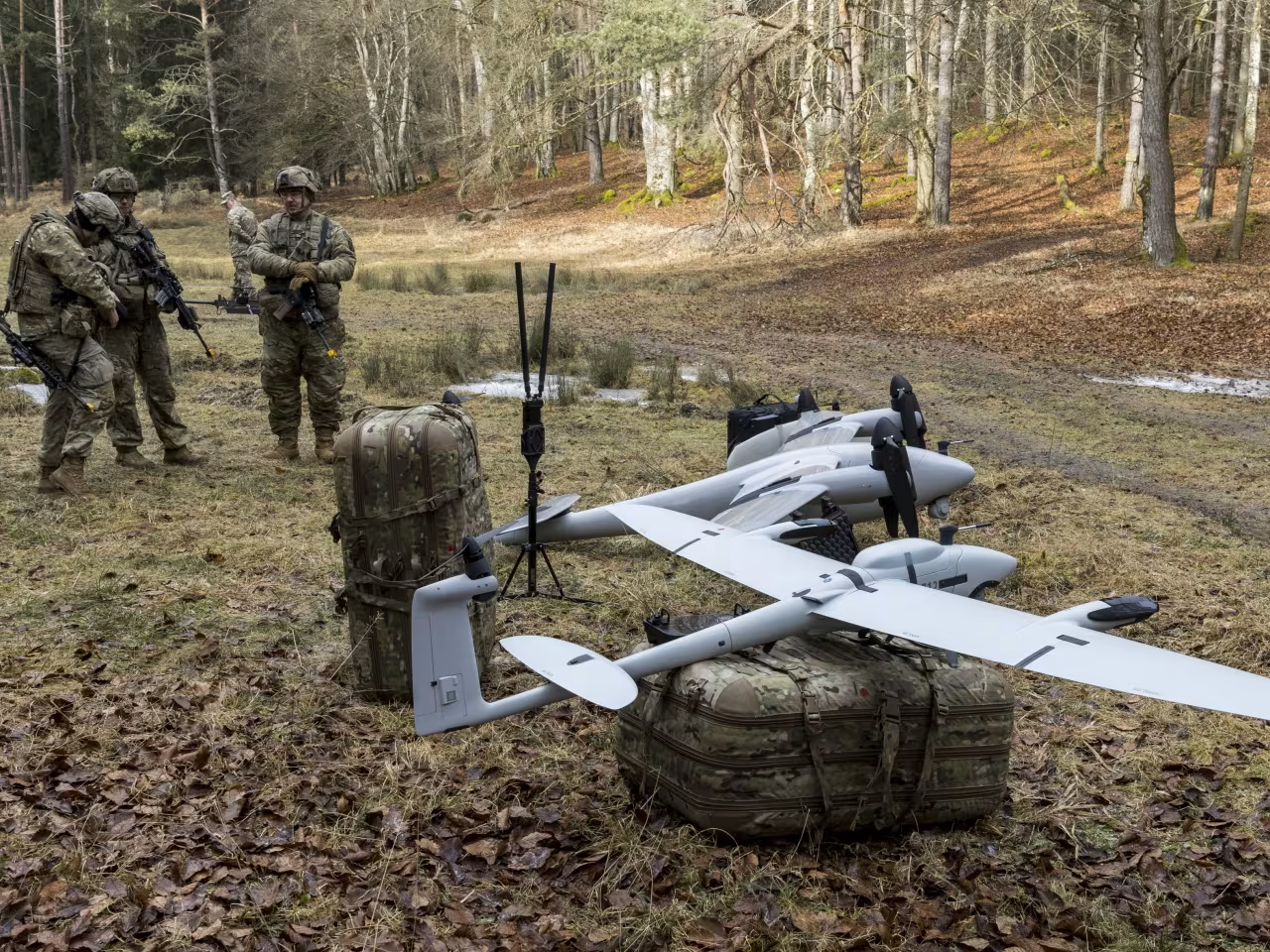
The tilt-rotor configuration, a hybrid between fixed-wing and rotary-wing systems, offers vertical take-off and landing capability while retaining efficient forward flight. Such designs demand precise integration of propulsion, control systems, and aerodynamics, often pushing teams to innovate in areas such as lightweight composite structures, servo actuation, and flight control algorithms. In competitive settings, simulation plays a crucial role in refining these elements before physical testing, which likely contributed to Loughborough’s success in the ‘Simulation Award’ category.
Staff Advisor John Newton emphasized the resilience required during the event: “The Team this year produced an excellent performance to earn 3 well deserved awards, despite challenging weather conditions at the competition they were able to get their aircraft airborne and back down safely. The judges were particularly impressed with the team’s professionalism and the setup of their aircraft.” Adverse weather can severely impact small UAV operations, with gusts and turbulence testing both airframe stability and pilot control inputs. Achieving safe and repeatable flights under such conditions underscores the robustness of the design and the competence of the operators.
The UAS Challenge’s structure encourages a holistic approach to aerospace engineering. Teams must balance aerodynamic efficiency, structural integrity, payload capacity, and mission-specific requirements, while also considering manufacturability and cost. This mirrors real-world engineering projects, where technical performance is only one dimension of success. By engaging with industry engineers and alumni, participants gain exposure to professional standards and emerging trends in unmanned systems, from advanced materials to autonomous navigation.
Loughborough’s continued dominance in design categories suggests a strong institutional culture around iterative development and knowledge transfer. Returning alumni, now working in the aerospace sector, provide mentorship and context that can accelerate the learning curve for current students. The involvement of figures like Prof Adrian Spencer as Team Consultant further strengthens the technical guidance available.
With universities worldwide vying for recognition, maintaining a winning streak requires not only innovation but also consistency in execution. The Loughborough UAV team’s achievements this year reflect a synthesis of creative engineering, disciplined project management, and adaptability under pressure.