

NVIDIA’s Eureka Merges LLMs and Simulation for Robot Mastery
A new research initiative from NVIDIA has demonstrated an AI system capable of autonomously generating reward algorithms that enable robots to master complex skills with remarkable proficiency. The system, named Eureka, has trained a robotic hand to perform rapid pen-spinning tricks at a level comparable to a skilled human — a feat not previously achieved in robotics. This dexterity demonstration is one of nearly 30 distinct tasks Eureka has successfully taught, ranging from opening drawers and cabinets to tossing and catching balls and manipulating scissors.
Eureka’s capabilities are detailed in a newly published research paper, accompanied by open access to its AI algorithms for experimentation within NVIDIA Isaac Gym. Isaac Gym is a GPU-accelerated physics simulation platform designed for reinforcement learning research, built atop NVIDIA Omniverse and leveraging the OpenUSD framework for high-fidelity 3D simulation. At its core, Eureka is powered by the GPT-4 large language model, which serves as the generative engine for creating task-specific reward functions.
“Reinforcement learning has enabled impressive wins over the last decade, yet many challenges still exist, such as reward design, which remains a trial-and-error process,” said Anima Anandkumar, senior director of AI research at NVIDIA and co-author of the Eureka paper. “Eureka is a first step toward developing new algorithms that integrate generative and reinforcement learning methods to solve hard tasks.”
Reward design is a critical bottleneck in reinforcement learning. Traditionally, human experts craft these reward functions manually, often through iterative tuning. Eureka automates this process by using GPT-4 to generate software code that defines how a robot is rewarded during training. It does not rely on predefined templates or extensive task-specific prompts, and it can incorporate human feedback to refine its output. According to the research, Eureka-generated reward programs outperform expert-written ones in over 80% of evaluated tasks, delivering an average performance improvement exceeding 50%.
The training workflow begins with Eureka producing a batch of candidate reward functions. These are evaluated in parallel within Isaac Gym’s GPU-accelerated simulation environment, allowing rapid assessment of their effectiveness. The system then compiles key performance statistics from the trials and feeds them back into the language model, prompting it to improve subsequent reward generations. This iterative loop enables a form of self-improvement, steadily enhancing the quality of the reward functions and, consequently, the robot’s learned behaviors.
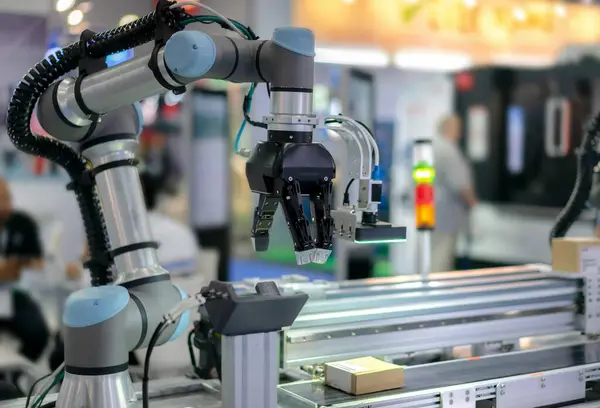
Eureka has been applied to a wide range of robotic platforms, including quadrupeds, bipeds, quadrotors, collaborative robot arms, and dexterous robotic hands. The research paper presents detailed evaluations of 20 tasks drawn from open-source dexterity benchmarks, each requiring nuanced manipulation skills. Visualizations from nine Isaac Gym environments, rendered in NVIDIA Omniverse, illustrate the resulting capabilities — from humanoid robots learning efficient running gaits to articulated arms executing precision grasps.
“Eureka is a unique combination of large language models and NVIDIA GPU-accelerated simulation technologies,” said Linxi “Jim” Fan, senior research scientist at NVIDIA and a contributor to the project. “We believe that Eureka will enable dexterous robot control and provide a new way to produce physically realistic animations for artists.”
The approach builds on NVIDIA Research’s broader exploration of AI agents, such as Voyager, a GPT-4-powered system capable of autonomously exploring and building within the Minecraft environment. By merging generative AI with high-speed simulation, Eureka demonstrates a scalable method for teaching robots skills that demand both physical realism and adaptive problem-solving.
NVIDIA Research, comprising hundreds of scientists and engineers globally, continues to advance fields spanning AI, computer graphics, computer vision, autonomous vehicles, and robotics. The Eureka project underscores the potential of integrating large language models with physics-based simulation to accelerate progress in robotic dexterity and control.