

NASA’s Landmark Year of Exploration and Innovation
In 2024, NASA advanced an extraordinary range of missions across human spaceflight, planetary science, Earth observation, aeronautics, and technology development, underscoring its role as both a driver of exploration and a catalyst for innovation. Administrator Bill Nelson stated, “In 2024, NASA made leap after giant leap to explore, discover, and inspire – all while bringing real, tangible, and substantial benefits to the American people and to all of humanity.”

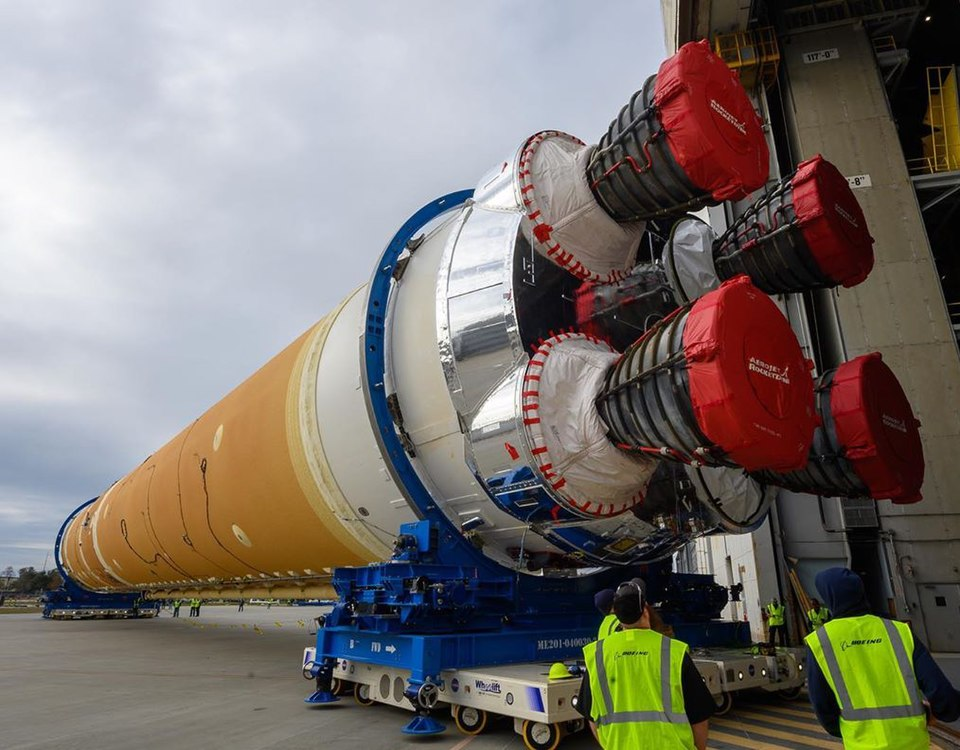
The Artemis campaign remained central to the agency’s Moon to Mars strategy. Preparations for Artemis II, the first crewed lunar mission in over half a century, included delivery of the Space Launch System core stage and adapter to Kennedy Space Center, booster stacking, mobile launcher tests, and integration of an emergency egress system. Orion spacecraft systems underwent altitude chamber testing to simulate deep space vacuum conditions, while crews rehearsed launch countdowns, mission simulations, and recovery operations at sea. February marked a milestone in commercial lunar delivery when Intuitive Machines’ Nova-C lander, under NASA’s Commercial Lunar Payload Services initiative, placed science instruments on the Moon. Later in the year, a new CLPS award set the stage for a 2027 delivery to the lunar South Pole.
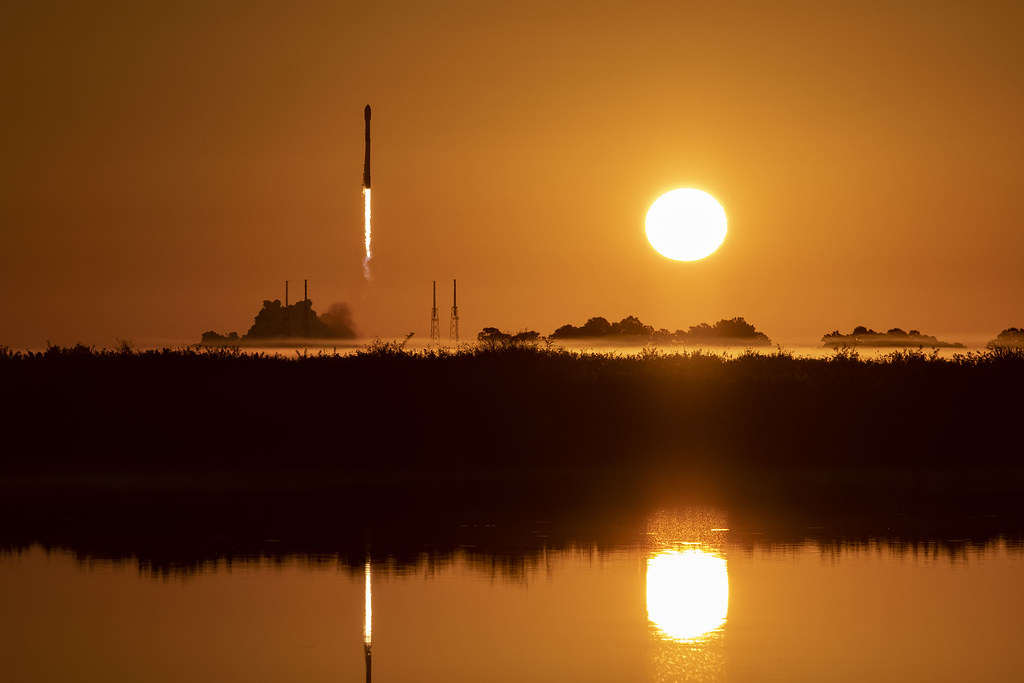
Mars exploration saw the MAVEN orbiter reach a decade of atmospheric studies, while the Ingenuity helicopter concluded its mission after far exceeding its planned flight count. NASA also refined its Mars Sample Return strategy to reduce complexity and cost. In October, a SpaceX Falcon Heavy launched the Europa Clipper spacecraft, beginning a multi-year journey to investigate Jupiter’s icy moon using planetary gravity assists to achieve the velocity required for arrival in 2030.
Earth science missions delivered unprecedented data. The PACE satellite began transmitting detailed measurements of ocean health and air quality. The TEMPO instrument provided near-real-time air pollution mapping at neighborhood scale. PREFIRE CubeSats started quantifying far-infrared heat loss from polar regions, and the new Disaster Response Coordination System began supplying emergency managers with rapid hazard data. A second Earth Information Center opened to broaden public access to climate insights.
Astronomy and astrophysics progressed with the James Webb Space Telescope continuing deep-universe observations, the OSIRIS-REx mission transferring asteroid Bennu samples to JAXA, and Voyager spacecraft returning data from the edge of the heliosphere. NASA initiated development of the UVEX ultraviolet survey telescope, advanced integration of the Nancy Grace Roman Space Telescope, and prepared the SPHEREx mission for a 2025 launch. The Solar and Heliospheric Observatory logged its 5,000th comet discovery, and sounding rocket campaigns confirmed the existence of a global electric field at Earth.
On the International Space Station, 25 astronauts conducted research supporting both terrestrial benefits and deep space readiness. Fourteen visiting spacecraft delivered over 40,000 pounds of cargo. NASA and Boeing concluded an uncrewed Starliner test flight with a successful landing. Aeronautics research unveiled the X-59 quiet supersonic demonstrator, part of the Quesst mission to enable overland supersonic travel, while sustainable aviation initiatives targeted net-zero carbon emissions by 2050.
Technology development included testing of advanced solar sails, expansion of lunar relay systems, and continued growth of the Artemis Accords, with 15 new signatories in 2024 committing to safe and transparent space exploration. International collaboration was reinforced at the 75th International Astronautical Congress and through multinational Artemis workshops.
Public engagement reached record levels. The April 8 total solar eclipse drew 32 million website views in a single day, with live coverage from space and ground. NASA+ streaming viewership quadrupled over traditional channels, and social media followers climbed to over 406 million. Spanish-language outreach expanded through podcasts, live broadcasts, and educational materials, while partnerships with cultural institutions and brands brought space science to new audiences. STEM initiatives awarded $45 million to higher education, planted “Moon Trees” grown from Artemis I seeds, and integrated NASA content into platforms like Minecraft.
From the launch of Europa Clipper to the unveiling of the X-59, from polar climate monitoring to the final flights of Ingenuity, 2024 demonstrated NASA’s capacity to merge engineering excellence with scientific discovery, while fostering global cooperation and inspiring the next generation of explorers.