


Rowan University Advances Soft Robotics Education
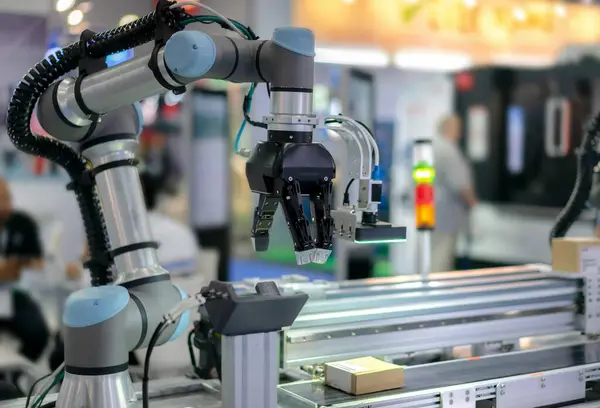
In the public imagination, robots are often envisioned as rigid, metallic constructs—towering Transformers, Pixar’s WALL-E, or the droids of Star Wars. Yet the emerging frontier in robotics is moving away from hard, gleaming exteriors toward soft, compliant structures, and Rowan University is positioning itself at the forefront of this shift. With the backing of a new National Science Foundation grant, the Henry M. Rowan College of Engineering is developing specialized soft robotics modules for its mechanical engineering curriculum. These modules will introduce students to the materials science, mechanical principles, and machine learning techniques underpinning soft robotics, while also offering a Certificate of Undergraduate Study in the discipline.
The initiative is spearheaded by Mitja Trkov, Ph.D., assistant professor of mechanical engineering, and Wei Xue, Ph.D., associate professor of mechanical engineering. “Students can take traditional classes to learn about robots,” Xue stated. “But if the future of manufacturing is human-centric, they have to learn about the materials and structures. Soft materials, smart materials and soft robotics will be important in the future job market.”
Soft robotics employs pliable materials to create systems capable of bending, stretching, contracting, and expanding in ways rigid robots cannot. Designs often mimic biological forms such as snakes or octopi, enabling them to navigate confined spaces, reach into narrow cavities, or adapt to irregular surfaces. This flexibility also enhances safety when working alongside humans, aligning with the concept of collaborative robots—cobots—that are intended to complement human capabilities rather than replace them.
Unlike conventional robotics courses that emphasize rigid-body mechanics, Rowan’s soft robotics modules will cover multidisciplinary competencies. Students will explore advanced materials and fabrication methods, integrate sensors and actuators, and examine the unique functionalities achievable with compliant structures. Trkov and Xue plan to engage students directly in the design process, tasking them with creating their own soft robot concepts. Each module will center on a distinct robot design, chosen to highlight specific engineering principles, fabrication techniques, or control strategies.
“We’re trying to show different types of soft robots, and to develop and package these in modules,” Trkov explained. “We’ll also provide some technical background, so that students can build the robot but also understand the basic principles behind each of the components or underlying mechanisms.” This approach ensures that learners not only gain hands-on experience but also develop a deep understanding of the underlying science and engineering.
Soft robotics is still a rare offering at the undergraduate level, with few institutions integrating it into core engineering programs. By embedding these modules into existing courses, Rowan aims to make the field accessible to a broader student base. The NSF grant will further support the creation of an online platform to disseminate these educational resources to the wider soft robotics community, fostering collaboration and knowledge exchange beyond the university.
Trkov emphasized the broader vision driving the project: “We believe that soft robotics offers so many new opportunities in robotics. We’re building this new workforce to think beyond traditional robotics.” This perspective reflects a growing recognition within the engineering sector that future manufacturing and automation will demand systems capable of safe, adaptive interaction with humans and complex environments.
From an engineering standpoint, the integration of soft robotics into undergraduate education represents a convergence of multiple disciplines—mechanical design, materials science, control systems, and bio-inspired engineering. The emphasis on flexible, compliant mechanisms mirrors trends in aerospace and automotive sectors, where adaptive structures and morphing surfaces are being explored to improve efficiency and performance. For students and practitioners alike, Rowan’s initiative offers a rare opportunity to engage with a technology poised to redefine the boundaries of robotic capability.