

Missouri S&T Brings Drone Precision to Farming
In Missouri’s agricultural heartland, the sight of farmers riding tractors or utility vehicles to check crops and livestock may soon be complemented by unmanned aerial systems. Researchers at Missouri University of Science and Technology (Missouri S&T) are leading an initiative to integrate drone technology into everyday farming operations, aiming to modernize the state’s agricultural practices through targeted education and hands-on training.

“One of our main goals will be to get more farmers up to speed with more modern technologies,” says Dr. Katherine Grote, associate professor of geosciences and geological and petroleum engineering. “We want to educate them on the benefits of using drone technology to help with their work.”
Grote, alongside Dr. Jeremy Maurer, assistant professor in the same department, heads a research project titled “Helping the agricultural workforce harness the remote-sensing data explosion.” Backed by a five-year, $755,000 grant from the Missouri Department of Agriculture, the program is designed to help farmers throughout the state become proficient in drone-based remote sensing and precision agriculture.
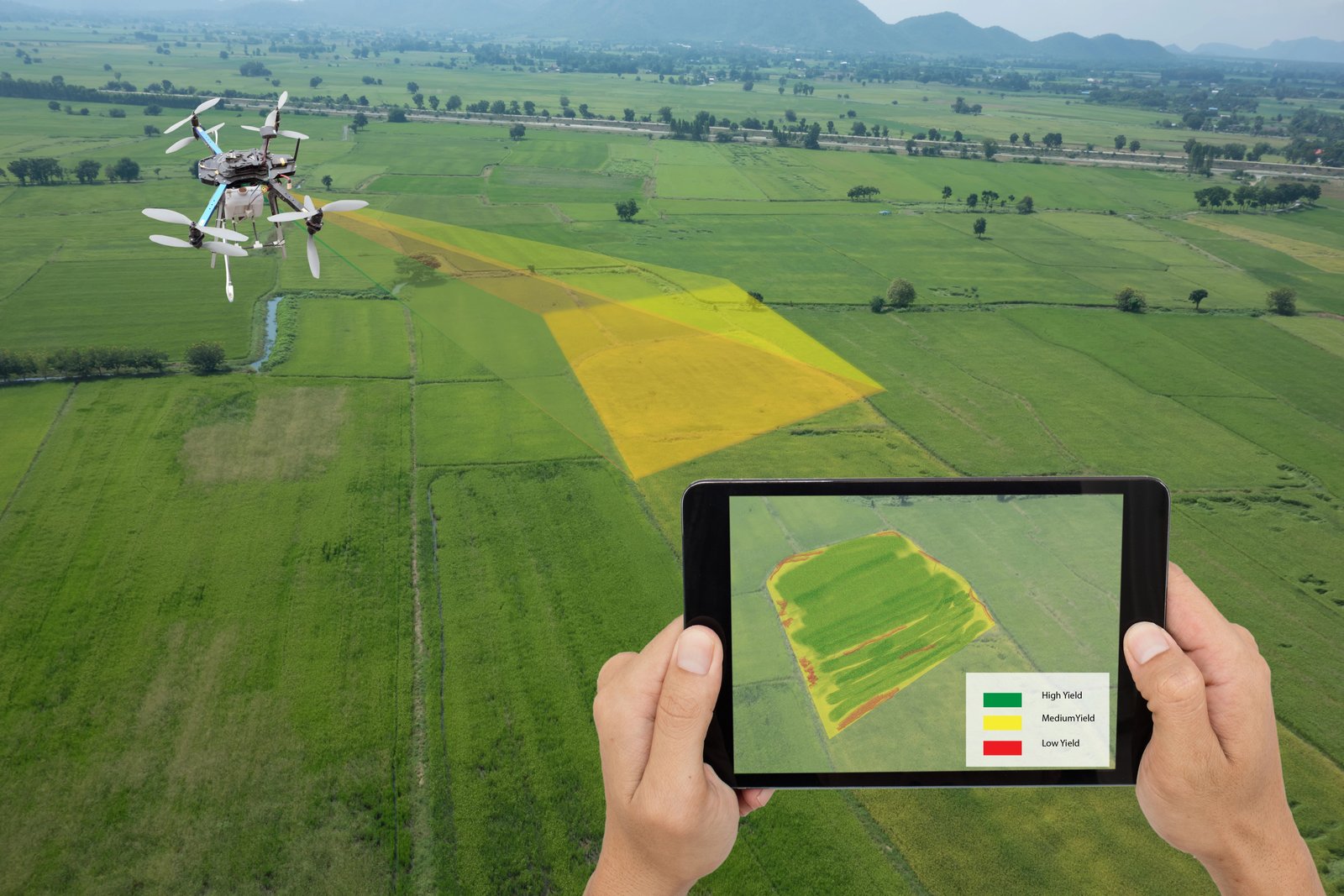
Precision agriculture relies on data-rich insights to optimize planting, irrigation, and crop treatment. Drones equipped with multispectral cameras and other sensors can provide high-resolution imagery that reveals subtle variations in crop health, soil moisture, and drainage patterns. “With the drones, farmers can be much more targeted in their approaches,” Grote explains. “They can easily see the yield production for certain areas. They can see if locations are swampy or draining. They can even tell which spots are most in need of additional pesticides or fertilizer and then apply these products in specific locations.”
The project will involve the purchase of multiple drones, which will be deployed at training sites strategically located across Missouri. These sites will serve as hubs where farmers can work directly with researchers to learn flight operations, data acquisition, and interpretation techniques. Missouri S&T will collaborate with University of Missouri Extension staff and faculty from the University of Missouri-Columbia to recruit participants and deliver instruction.
A key component of the program is the development of software tools tailored for agricultural users. “We will also develop software to help farmers better understand the data that is coming from the drones,” Grote says. The goal is to enable farmers to translate aerial imagery into actionable field decisions without requiring advanced technical backgrounds. By integrating visual analytics with agronomic models, the software will guide users in identifying problem areas and applying corrective measures with precision.
Beyond drones, the initiative will introduce farmers to free satellite imagery resources. These datasets, often derived from platforms such as Landsat or Sentinel, can provide broader temporal and spatial context for farm management. “It is interesting to think we will be able to train people on how these images that are taken from space can help their farms here in Missouri,” Maurer notes. The combination of satellite and drone data offers a layered perspective: satellites deliver consistent, long-term coverage, while drones supply fine-grained, on-demand observations.
The integration of aerial systems into agriculture is part of a broader trend in which advanced sensing technologies migrate from research labs into practical field applications. In aerospace and robotics circles, drones have already proven their value in surveying, infrastructure inspection, and environmental monitoring. Applying similar methodologies to farming leverages their ability to cover large areas quickly, capture diverse spectral bands, and operate with minimal disruption to ongoing work.
Missouri S&T’s effort reflects an understanding that technology adoption in agriculture depends not only on hardware availability but also on user confidence and skill. By embedding training within the farming community and coupling it with accessible analytical tools, the project seeks to accelerate the uptake of 21st-century techniques without displacing established practices. As Maurer observes, “Some farming traditions may always remain the same, but at the same time, we want to fast-track farmers’ ability to use 21st century techniques to make their operations even more effective.”