

Lockheed Martin Stalker VXE Sets 39-Hour Endurance Record
On February 18, 2022, at Santa Margarita Ranch in California, Lockheed Martin’s Skunk Works division pushed the boundaries of small unmanned aerial system performance. A specially configured Stalker VXE completed a continuous flight lasting 39 hours, 17 minutes, and 7 seconds, setting a new benchmark in the Fédération Aéronautique Internationale’s Group 2 category for aircraft weighing between 5 and less than 25 kilograms. The achievement has been submitted for certification through the National Aeronautic Association, the U.S. affiliate of the FAI.

The record-setting aircraft was a production Stalker VXE modified with an external, wing-mounted fuel tank. This addition, developed by Composite Technology Development Inc., was engineered to be lightweight yet robust enough to withstand the aerodynamic and structural demands of extended flight. The modification was not merely for the sake of the record; the flight provided critical data to refine the platform’s endurance capabilities for operational use.
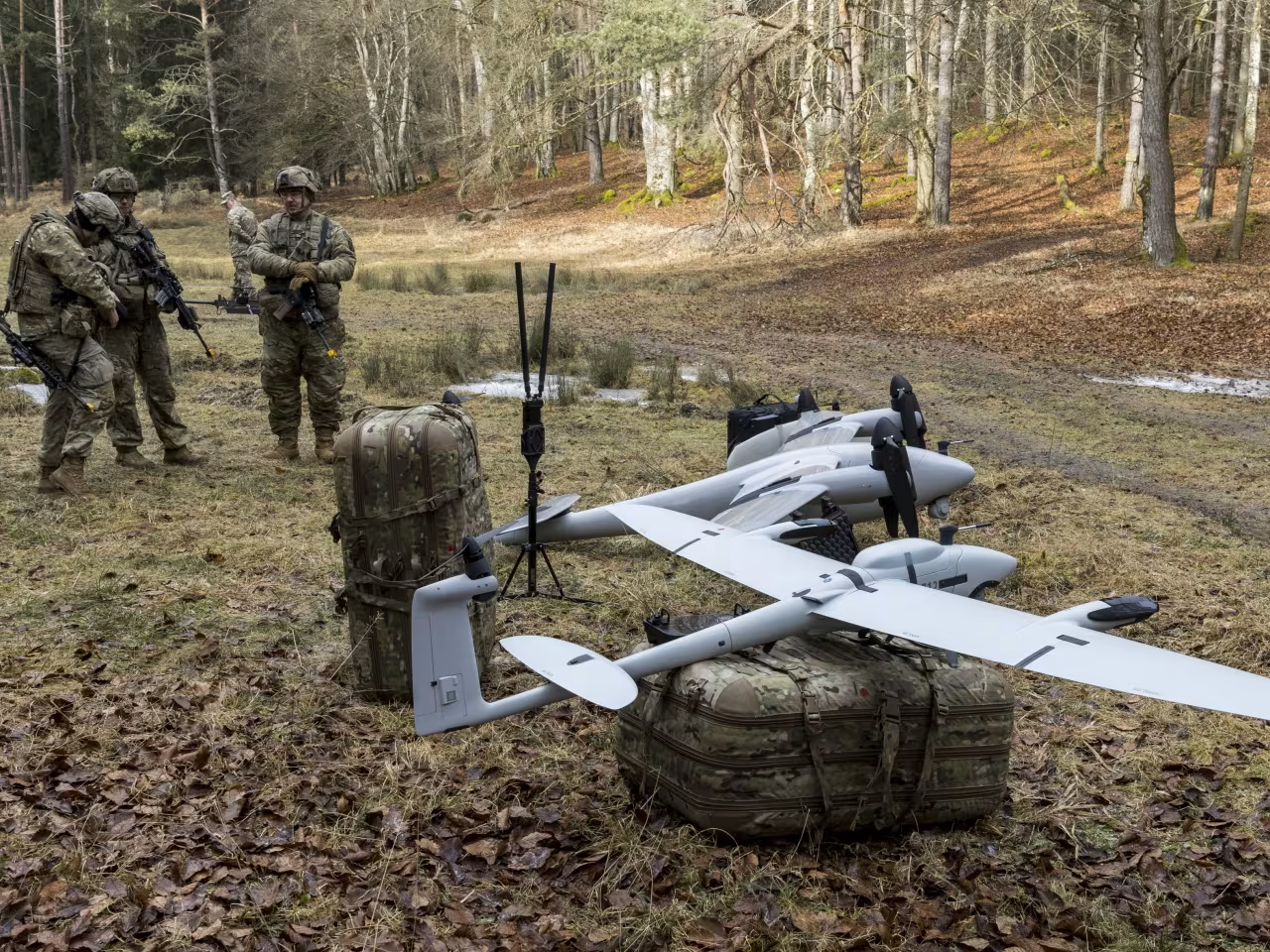
The Stalker VXE is designed for versatility. Its combination of vertical take-off and landing capability, modular payload integration, and open system architecture allows it to adapt to a wide range of mission profiles. The aircraft’s small operational footprint and minimal crew requirements make it particularly suited for austere environments where logistical support is limited. Lockheed Martin emphasizes that its “class-leading endurance” is a key differentiator in the increasingly competitive small UAS market.
Multiple industry partners contributed to the success of the 39-hour mission. Edge Autonomy, the original equipment manufacturer of the Stalker VXE, brought deep experience in high-performance unmanned systems. Adaptive Energy provided advanced fuel cell technology, a critical enabler for sustained flight, focusing on high energy density and reliable field operation. Precision Integrated Programs delivered flight operations support, ensuring the mission adhered to safety and performance parameters. Clovis Area Modelers supplied FAI-certified contest directors to monitor and adjudicate the flight in real time, ensuring compliance with record verification requirements.
From a technical perspective, achieving such endurance in a Group 2 UAS demands careful balancing of weight, aerodynamics, propulsion efficiency, and power management. The integration of a wing-mounted fuel tank alters the aircraft’s center of gravity and drag profile, requiring adjustments to flight control algorithms and stability margins. The fuel cell system, operating in conjunction with the internal combustion engine, had to deliver consistent power output across varying atmospheric conditions over nearly two days of continuous operation.
Long-endurance unmanned platforms like the Stalker VXE have growing relevance in both defense and civilian applications. Extended flight times enable persistent intelligence, surveillance, and reconnaissance (ISR) coverage without the need for frequent launch and recovery cycles. In border security, disaster response, and environmental monitoring, such persistence can translate into faster decision-making and more efficient resource allocation. For military operators, it reduces the exposure and logistical burden associated with manned aircraft or short-range drones.
The Skunk Works team’s approach reflects a broader trend in unmanned systems development: leveraging modular architectures to rapidly integrate new technologies. Open system design allows for quick swapping of payloads, from electro-optical/infrared sensors to communications relays, without extensive airframe modifications. This adaptability extends the service life of the platform and enables it to evolve alongside mission requirements.
Lockheed Martin, headquartered in Bethesda, Maryland, employs approximately 114,000 people worldwide and maintains a focus on advanced technology systems across aerospace, defense, and security sectors. The Stalker VXE’s record flight underscores the company’s commitment to pushing technical limits while collaborating with specialized partners to deliver operationally relevant capabilities.
As endurance records are ratified and integrated into operational planning, the lessons learned from such flights often ripple across the unmanned systems industry. Advances in lightweight materials, energy storage, and propulsion efficiency developed for record attempts can inform the next generation of UAS designs, influencing both commercial and defense markets.