

Perseverance Marks Milestones in Mars Exploration
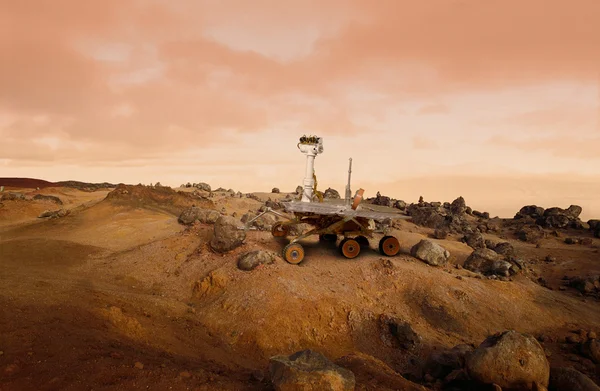
Since its landing in Jezero Crater on February 18, 2021, NASA’s Perseverance rover has rapidly advanced the frontiers of planetary exploration. Over 216 Martian days of continuous operation, the rover has traversed 2.6 kilometers of rugged terrain, deployed its full suite of engineering capabilities, and captured tens of thousands of images with its 19 onboard cameras. Three achievements stand out: the successful collection of rock core samples, the pioneering flights of the Ingenuity helicopter, and the first detailed scientific observations of the Jezero Crater delta.
A central mission objective is the extraction and storage of rock cores for eventual return to Earth. Each core, about the size of a dry-erase marker, is sealed in specialized tubes designed to preserve its integrity during the years-long interplanetary transfer. The first drilling attempt in August targeted a flat, accessible rock. After six days of preparation and drilling, the team confirmed the sample tube had sealed—only to discover it was empty. Analysis revealed that the target rock was unexpectedly soft, disintegrating into powder during drilling. While the tube contained Martian atmosphere valuable for study, the absence of solid material underscored the variability of Martian geology.
Three weeks later, at a site 550 meters away, Perseverance encountered harder, wind-polished rocks protruding above the surface. This time, two intact cores were successfully extracted and stored. Over the course of the mission, the rover aims to collect several dozen such samples, to be deposited at a secure, accessible location for retrieval by NASA’s Mars Sample Return mission in the late 2020s. In situ analysis with the SHERLOC and PIXL spectrometers revealed crystalline minerals indicative of basaltic lava flows, along with salt minerals suggestive of ancient groundwater interactions.
Complementing Perseverance’s ground operations is Ingenuity, a solar-powered helicopter weighing 1.8 kilograms, with a main body comparable in size to a grapefruit. Detached from the rover shortly after landing, Ingenuity achieved the first powered flight in the atmosphere of another planet on April 19, 2021. Rising to 3 meters and hovering for 39 seconds, the flight demonstrated that its long rotor blades could generate sufficient lift in Mars’ thin atmosphere. Subsequent flights expanded its operational envelope, including horizontal traverses up to 625 meters. Ingenuity has now flown 13 times, capturing high-resolution images to scout terrain ahead of the rover. These aerial perspectives are proving instrumental in route planning toward the mission’s geological target—the Jezero delta.
Jezero Crater was selected for its prominent delta formation at the terminus of a dry river valley. Orbital imagery suggested the delta’s sediments were deposited by an ancient river into a lake approximately 3.5 billion years ago, potentially creating a habitable environment. However, satellite resolution was insufficient to confirm the depositional history. Perseverance’s Mastcam-Z, equipped with zoom lenses capable of resolving a paper clip from across a football field, provided panoramic and targeted views of the delta cliffs from over two kilometers away. Follow-up imaging with SuperCam revealed tilted sedimentary layers at the base of the 80-meter cliffs and boulders up to 1.5 meters across near the top.
These observations, published in Science on October 7, 2021, reconstruct a sequence in which a river fed a long-lived lake, depositing fine sediments over millions of years. Later, episodic flooding events transported large boulders into the delta, overlaying the earlier deposits. Subsequent arid conditions and wind erosion shaped the present landscape. The confirmation of a paleo-lake in Jezero Crater represents a foundational scientific result for the mission.
In the months ahead, Perseverance will ascend the delta, conducting microscopic examinations of rock layers and collecting additional samples. When returned to Earth, these cores may reveal whether microbial life once existed in this ancient Martian lake.