

Why SpaceX Sends Starlink Missions from California
In recent years, the skies over California’s central coast have seen a marked uptick in rocket launches, many of them belonging to SpaceX’s Falcon 9 fleet. The majority of these missions from Vandenberg Space Force Base are dedicated to deploying Starlink satellites, part of a rapidly expanding low-Earth orbit internet constellation.
Starlink, operated by SpaceX, is designed to deliver high-speed internet to users globally, including military customers. Unlike traditional satellite internet systems that rely on a handful of geostationary satellites positioned about 22,236 miles above Earth, Starlink’s network operates at roughly 341 miles altitude. This proximity reduces latency, enabling smoother streaming, responsive online gaming, and more reliable video conferencing.
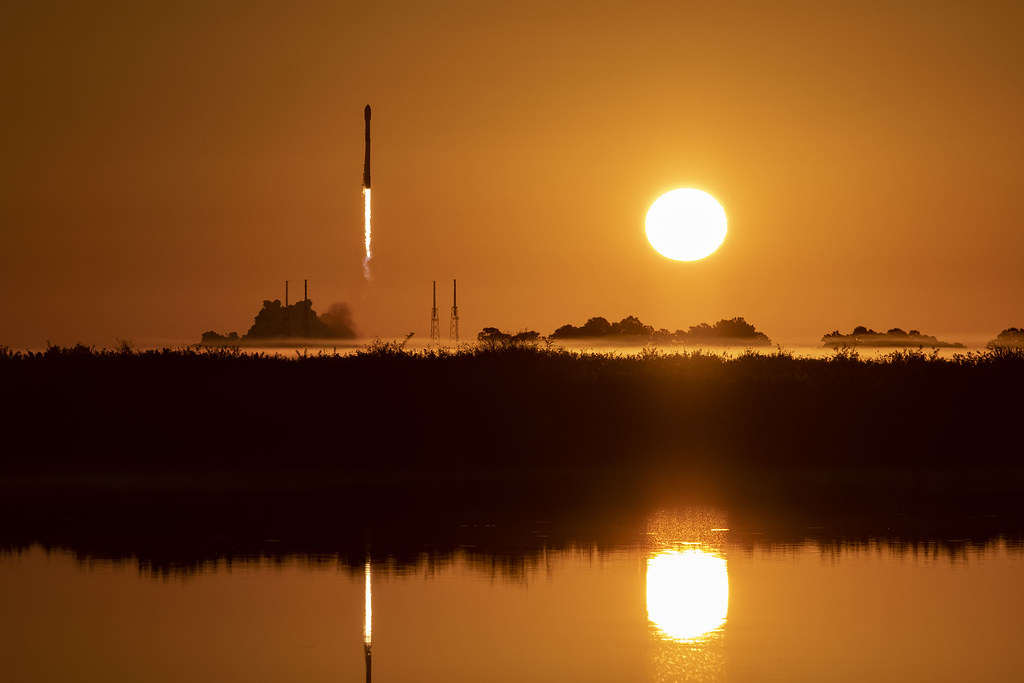
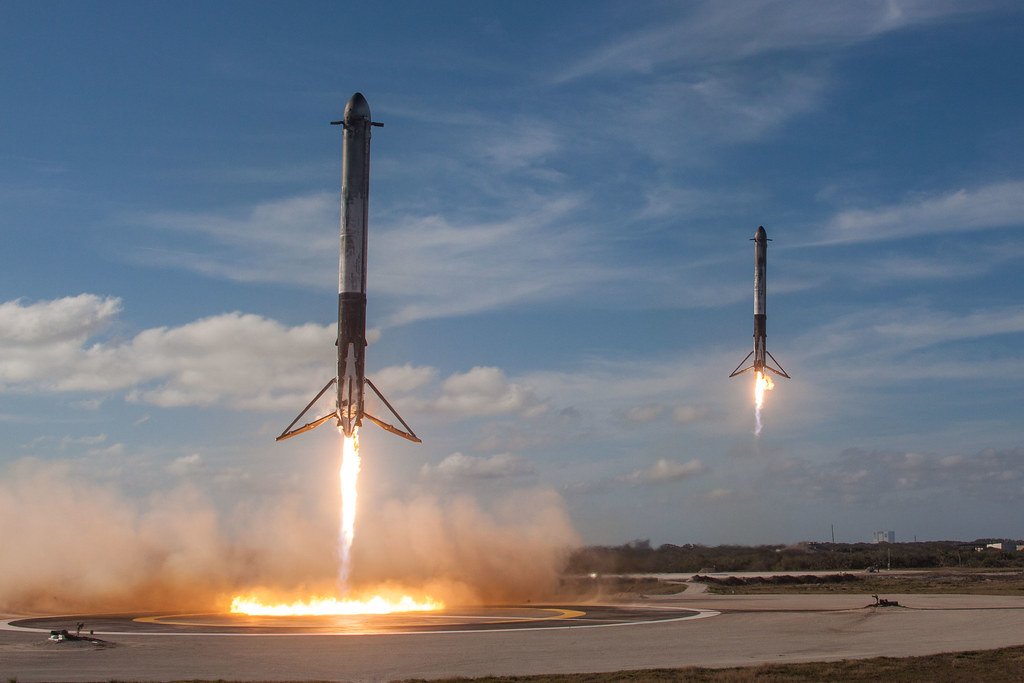
SpaceX’s Falcon 9, a two-stage, 230-foot reusable rocket, has become the workhorse for these deployments. While the company has launched from California since 2013, the first Starlink mission from Vandenberg took place in September 2021, according to Space Launch Delta 30, the U.S. Space Force unit managing operations there. Since then, the pace has accelerated sharply. In July 2025 alone, five Falcon 9 launches lifted off from Vandenberg, four of them carrying Starlink payloads. Each launch typically delivers about two dozen satellites into orbit.
The ramp-up is significant. In 2023, only six SpaceX missions departed from Vandenberg. That number surged to 36 in 2024, and the Federal Aviation Administration has authorized up to 50 Falcon 9 launches from the site in 2025. A proposal under consideration could double that limit to 100 annually.
The choice of California over Florida for certain Starlink missions comes down to orbital mechanics. Jonathan McDowell, an astronomer at the Center for Astrophysics, explained that Florida’s Cape Canaveral is optimal for equatorial launches, placing satellites in orbits aligned with Earth’s equator. California’s coastal position, however, is ideal for missions requiring a southern trajectory into polar orbit. “Satellites in a polar orbit are capable of revisiting the same location over Earth more often, providing more consistent and reliable connectivity,” McDowell said. This capability is particularly valuable for regions lacking robust infrastructure.
Polar launches from Vandenberg also benefit from geography. Rockets departing southward over the Pacific avoid densely populated areas, reducing risk during ascent. This safety factor has long made Vandenberg a preferred site for polar and sun-synchronous missions.
As of July 2025, SpaceX has nearly 8,000 Starlink satellites in orbit. Since the first launches in 2019, more than 1,000 additional satellites have been sent up, though some failed to reach orbit and hundreds of older units have been intentionally deorbited. McDowell noted that SpaceX’s long-term ambition is to deploy about 30,000 satellites within five years, pending Federal Communications Commission approval. “Most observers think that maybe 15,000 is the most realistic goal,” he said.
Competition is emerging, though still far behind. Amazon, led by Jeff Bezos, has begun building its own Kuiper satellite network. By mid-2025, the company had placed 78 of a planned 3,232 first-generation Kuiper satellites into low-Earth orbit, with limited service targeted by year’s end. Amazon has even contracted SpaceX for launches, including the third Kuiper deployment from Cape Canaveral in July 2025. Blue Origin, Bezos’s spaceflight company, is developing the New Glenn rocket to eventually carry Kuiper payloads. McDowell assessed the competitive landscape bluntly: “Everyone else is so far behind where SpaceX is at, and not very likely to catch up because of SpaceX’s capability to launch these things.”
For engineers and spaceflight enthusiasts, the operational split between Florida and California highlights the precision required in orbital planning. Launch site selection is dictated not by convenience but by the physics of reaching specific orbital inclinations, the safety of flight paths, and the strategic needs of the satellite network. Vandenberg’s growing role in Starlink’s expansion underscores how geography and engineering converge to shape the architecture of global communications.