

Bayraktar Ak?nc? UCAV Achieves Precision Strike Milestone
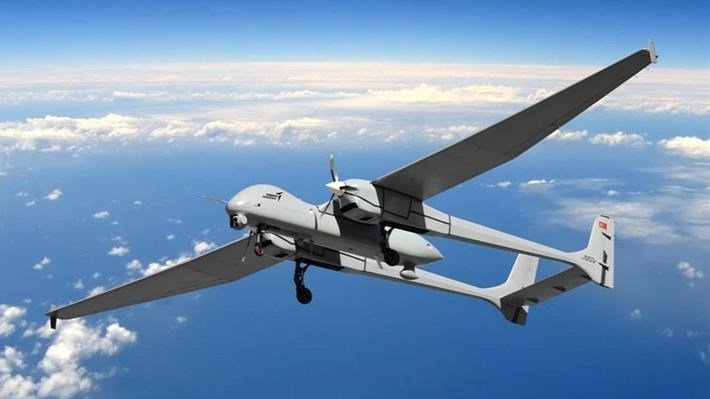
Turkey’s Bayraktar Ak?nc? unmanned combat aerial vehicle (UCAV) has advanced its weapons integration programme with a successful live-fire trial involving a new domestically developed munition. Baykar, the platform’s manufacturer, confirmed that the test marked the first operational firing of the KGK-SIHA-82 wing-assisted guidance kit from the Ak?nc? airframe.
On 14 June, the UCAV departed from Çorlu in northwestern Turkey to conduct the trial over the Black Sea. The mission targeted a designated coordinate off the coast of Sinop, with telemetry and electro-optical tracking confirming a direct hit. The KGK-SIHA-82, developed by TÜB?TAK Defense Industries Research and Development Institute (SAGE), weighs 340 kg and is designed to extend the standoff range of conventional air-delivered ordnance. In this test, the munition achieved precision impact at a range of 30 km.
The Ak?nc?’s recent activities underscore its multi-role capability and ongoing integration of indigenous weapon systems. Earlier, the UCAV successfully engaged a sea surface target using the Teber-82 Guidance Kit, a modular precision upgrade developed by Roketsan. This series of trials reflects Turkey’s emphasis on self-reliance in advanced aerial strike capabilities, reducing dependency on foreign-sourced munitions.
The airframe itself has demonstrated notable performance benchmarks. On 11 March, it set a national aviation altitude record by reaching 40,170 ft during a test flight. This achievement highlights the platform’s operational ceiling and potential for high-altitude surveillance and strike missions, enabling extended line-of-sight communications and enhanced sensor coverage.
The Bayraktar Ak?nc? entered service on 29 August 2021 in a ceremony attended by President Recep Tayyip Erdo?an. Since induction, six units have been fielded and are actively employed by Turkish security forces in operational roles. The UCAV’s deployment integrates it into Turkey’s broader unmanned systems doctrine, which combines intelligence, surveillance, reconnaissance, and precision strike functions.
International interest in the Ak?nc? has been reinforced by export agreements with three countries. Under these contracts, deliveries of both the UCAV and associated ground control systems are scheduled to begin in 2023. Baykar’s export record in the unmanned sector is notable; the company’s first national UAV export occurred in 2012, and in 2021, UCAV exports reached a value of USD 664 million, accounting for over 80% of its revenue.
Technically, the Ak?nc? is designed to carry a diverse payload mix, including air-to-ground munitions, air-to-air missiles, and electronic warfare systems. The integration of the KGK-SIHA-82 adds a capability for precision engagement at extended ranges, leveraging aerodynamic lift from its wing kit to increase glide distance. Such systems enable engagement of targets without requiring the UCAV to enter heavily defended airspace, a key consideration in modern aerial warfare.
The trial’s success also demonstrates the maturity of Turkey’s guidance and control technologies. Electro-optical confirmation from the Ak?nc?’s onboard sensors, coupled with ground-based telemetry, ensured accurate assessment of munition performance. This dual-layer verification is critical in weapons testing, providing both visual confirmation and quantitative data for post-mission analysis.
The collaboration between Baykar, TÜB?TAK SAGE, and Roketsan illustrates the integrated approach within Turkey’s defence industry, combining airframe innovation with advances in precision-guided munitions. By aligning platform capabilities with indigenous weapons development, the programme strengthens national defence autonomy while expanding export potential.
With continued trials and operational deployment, the Bayraktar Ak?nc? UCAV is positioned as a central asset in Turkey’s unmanned combat portfolio, capable of delivering precision effects across a range of mission profiles.