



Dow’s Measured Shift Toward Plastics Circularity
The global economy remains less than 10% circular, and plastics—integral to modern manufacturing—pose a formidable challenge. Large incumbent multinationals, with vast resources and influence, have the capacity to drive systemic change. Yet, for companies like Dow, one of the world’s largest plastics producers, the transition toward a circular economy is proving incremental rather than transformative.
Dow’s stated ambition is unequivocal. As Eric Peeters put it, “We want to be the most sustainable material science company out there.” This vision is embedded in sustainability goals that include enabling one million metric tons of plastic to be collected, reused, or recycled by 2030, and ensuring all packaging products are reusable or recyclable by 2035. These targets align with circular principles, yet much of Dow’s current activity centers on recycling—mechanical and, in future, chemical—rather than more disruptive redesign or reuse models.
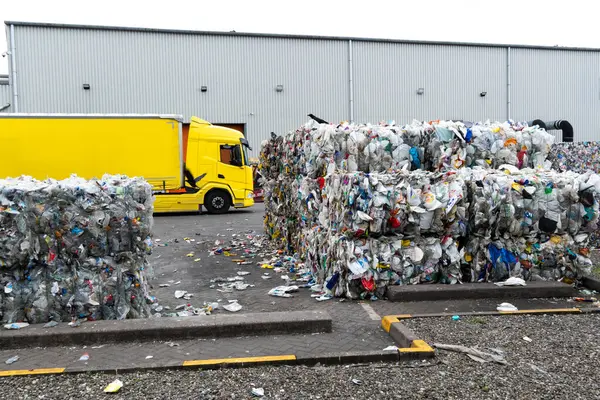
Recycling is pursued both to address existing waste and to meet customer demand for circular packaging. “Plastics have a pretty low recycling rate of about 9%, globally, and that’s unacceptable,” noted Haley Lowry. However, Dow and others, such as GSK, defend continued use of plastics on performance grounds. Adwoa Coleman stated, “if a true lifecycle assessment and risk analysis is done… plastic comes out offering a better benefit across the board.” For pharmaceuticals, Scott Oram highlighted its role in extending shelf life and reducing waste.
Progress is slowed by the inertia of established linear systems. Nicoletta Piccolrovazzi acknowledged, “It takes a long time to change… very challenging when you have a well working thing to change completely for something that is not working yet.” Pilot projects are used to test approaches in favorable contexts, supported by Dow’s Impact Fund, which awarded $1.4 million to eight projects in 2020. These initiatives often hinge on strong partnerships, from NGOs to commercial collaborators, and may scale if proven viable.
Leadership within Dow is diffused. Director-level roles focus on recycling, while “Communities of Practice” foster grassroots engagement. Eunice Heath described these as groups where employees “really want to learn… with sustainability being that foundation.” This decentralized model mirrors approaches at GSK and Dell, enabling localized innovation while aligning with corporate goals.
Partnerships are central. Adwoa Coleman observed, “We cannot do it alone… if we tried to take on the whole system… we would have a lower likelihood of success.” Industry alliances, such as the Alliance to End Plastic Waste, and local initiatives like Ghana’s GRIPE, exemplify collaborative strategies. Dell’s John Pflueger emphasized that take-back systems require “an ecosystem… that entire ecosystem has to scale up by a factor of 10.”
Policy exerts a dual influence. The Basel Convention’s restrictions on plastic waste movement are seen as barriers; “it is actually a significant barrier often for us to do the right thing,” said Peeters. Conversely, frameworks like the European Green Deal have nudged companies toward circularity. In Ghana, the threat of a plastic ban spurred industry-led recycling initiatives. There is also advocacy for subsidies to support emerging technologies like chemical recycling.
Customer demand shapes uptake. As a B2B supplier, Dow responds to brand owners’ circularity targets. In some sectors, half of customer discussions involve circularity; in others, demand is minimal. Economic viability remains a constraint, especially when low oil prices make virgin plastic cheaper. “We have to make a profit otherwise we do not survive,” Peeters stated. Nicoletta Piccolrovazzi noted that circular systems are “in their infancy” compared to optimized linear models.
Infrastructure gaps, particularly in emerging markets, limit recycling potential. Kristin Bovid described challenges in regions “when we do not have an appropriate waste management infrastructure and the alternative is… throwing it in the ocean or burning it.” Technology is viewed as a future enabler, from chemical recycling methods to blockchain-based material tracking. Peeters outlined efforts exploring pyrolysis and mechanical recycling, while Dell anticipates full “Chain of Custody” tracking by 2030.
Dow’s approach illustrates the interplay of ten key levers—leadership, policy, customer demand, technology, internal processes, pilot projects, partnerships, infrastructure, and financial viability. Each can act as driver, enabler, or barrier, and none are fixed. The company’s current focus on recycling represents a pragmatic starting point, but higher-value loops—reuse, remanufacture, and redesign—remain largely untapped. The path forward will depend on aligning economic incentives, scaling infrastructure, and leveraging partnerships to push beyond incremental change.