

ITRI Showcases Breakthroughs in AI, Robotics, and e?Health
At CES 2021, the Industrial Technology Research Institute (ITRI), Taiwan’s largest applied research organization, presented a suite of innovations spanning artificial intelligence, robotics, and e?health technologies. Founded in 1973, ITRI has been instrumental in shifting Taiwan’s industries from labor?intensive production toward innovation?driven growth, with a focus on Smart Living, Quality Health, and Sustainable Environment under its 2030 Technology Strategy & Roadmap.

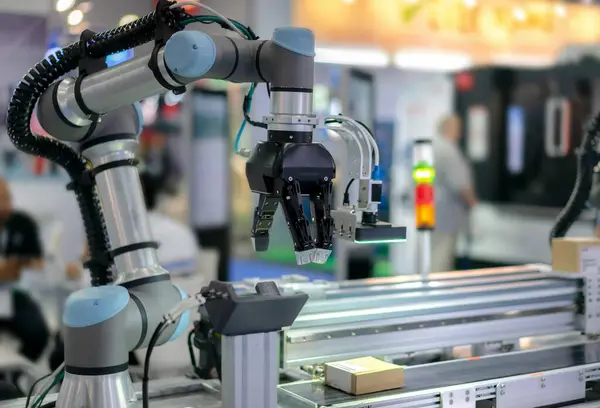
Among the robotics highlights was the Dual Arm Robot System (DARS), a human?like platform equipped with two slim robotic arms and anthropomorphic hands. Designed for versatility, DARS performs a variety of tasks without specialized tools, leveraging advanced sensor arrays and machine learning algorithms to adapt to different operations. This approach reflects a broader trend in robotics toward dexterous manipulation and human?centric design, enabling machines to operate in environments traditionally dominated by human labor.
In the energy domain, the Self?Learning Battery Management System (SL?BMS) offers real?time estimation of battery parameters including remaining capacity, aging capacity, power?limited capacity, and maximum power. For electric vehicle applications, SL?BMS translates energy consumption data into mileage information, aiming to eliminate range anxiety. By incorporating adaptive algorithms, the system refines its predictions over time, a capability increasingly critical as EV adoption expands.
Water purification technology was represented by the UVC LED Water Sterilizer System HydroNovation. This compact system achieves 99.9 percent bacterial sterilization using UV LED light sources, reducing module volume by one?third compared to mercury lamp sterilizers. Its portability and rapid sterilization make it suitable for disaster relief and regions with inadequate sanitation infrastructure.
ITRI’s e?health portfolio included several wearable systems. iCardioGuard integrates multi?sensing microwave and ECG technology for continuous monitoring of cardiovascular and psychological status, supporting home and elder care. The Heart Guardian employs a miniature patch?type transducer with low?power Doppler ultrasound processing to monitor cardiac output, heart rate, and stroke volume, offering real?time data for patients with heart disease or sleep disorders.
iSmartweaR uses fabric antenna sensing and non?contact nanosecond pulse near?field sensing (NPNS) to measure heart and respiratory rates from up to 20 centimeters away, eliminating the need for skin contact. Verified in hospital night care settings, it delivers high?accuracy data accessible via mobile applications. For infant care, iDarlingWeaR applies low?power radar sensing to monitor heartbeat and respiration through a baby’s blanket, detecting sleep states and issuing alerts upon abnormal readings.
In diagnostic imaging, the Handheld Skin Quality Optical Coherence Tomography device provides rapid, high?resolution 3D imaging of skin structures, functioning as an optical biopsy tool through broadband near?infrared light. The Handheld Ultrasound System, with a 64?channel architecture and interchangeable transducers, supports both B?mode and color Doppler imaging, enabling point?of?care diagnostics in emergency and intensive care environments.
ITRI also demonstrated Sleep Learning Technology (SLT), which uses recurrent neural network (RNN)?based Wi?Fi channel state information (CSI) to detect sleep phases without contact. The system adjusts light intensity for optimal rest and plays audio learning material during deep sleep to enhance memory consolidation. This integration of physiological monitoring with cognitive enhancement reflects growing interest in non?invasive neurotechnology.
In medical imaging analysis, the Measurement Technique for Lumbar Spine X?Ray Images applies deep learning and image processing to streamline interpretation, simulate imaging, and assist in surgical planning. The AI Decision Support Technology of Fundus Image in Diabetes Mellitus is described as the world’s first AI system capable of locating, classifying, and assessing the severity of diabetic retinopathy lesions, supporting ophthalmologists in referral decisions and treatment timing for Clinical Significant Macular Edema.
Beyond its technological portfolio, ITRI has a history of incubating successful spinoffs, including United Microelectronics Corporation (UMC) and Taiwan Semiconductor Manufacturing Company (TSMC). With branch offices in the United States, Europe, and Japan, the institute continues to expand its R&D reach and foster international collaboration, reinforcing its role as a global player in applied research and innovation.