



Global Waste Trade Governance and the Circular Economy
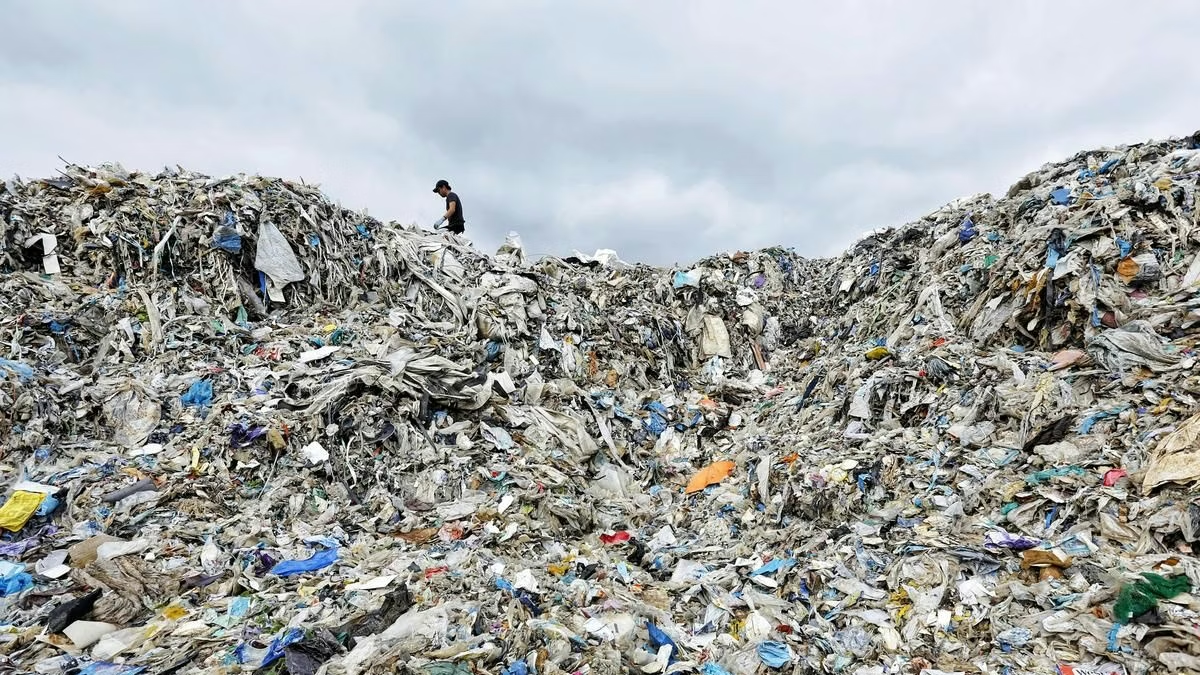
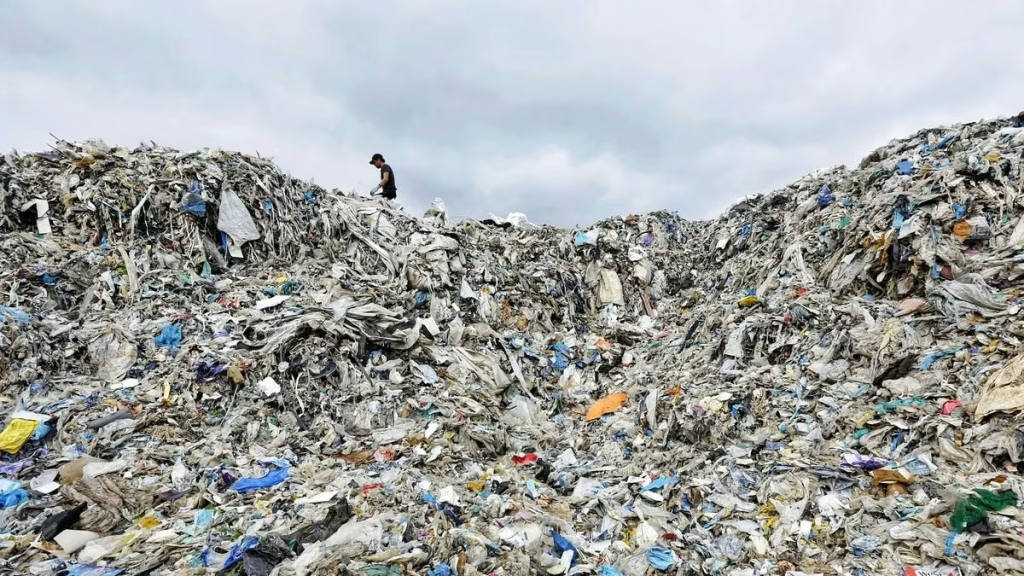
China’s 2018 decision to halt imports of most scrap plastics and other waste materials disrupted a decades-old flow of secondary resources. For years, the country had absorbed roughly 45% of internationally traded plastic waste, a stream that suddenly had to find new destinations. This shift exposed the vulnerabilities in global waste trade governance and underscored the environmental risks of poorly regulated flows, particularly for developing economies that often receive low-quality second-hand goods.
By 2019, the international trade in used materials—including scrap plastics, metals, electronics, paper, and second-hand textiles—had reached 550 million tons, valued at $315 billion. The circular economy model depends on turning such waste into resources, reducing reliance on primary production and delivering significant environmental benefits, from lower water consumption to reduced carbon emissions. Research by the Ellen MacArthur Foundation, in collaboration with UNCTAD, estimated that applying circular economy principles could save China $10.3 trillion by 2040.
Yet the challenge lies in structuring this trade to safeguard both people and ecosystems. Analysis of post-ban trade data for plastics offers several insights. First, scrap tends to flow toward jurisdictions with weaker regulations. Following China’s restrictions, developing countries saw a sharp rise in imports of secondary materials. Malaysia, for example, experienced a tripling of plastic scrap shipments between 2016 and 2018, reaching 870,000 tons. However, trade patterns are not strictly one-way from richer to poorer nations; recycled ethylene flows more strongly from Mexico to the United States than in the reverse direction.
Second, regional dynamics play a decisive role. Trade clusters for specific materials often form due to established commercial routes, reverse logistics networks, geographic proximity, or trade agreements. This means that governance must address both global frameworks and regional specificities.
Third, tariff structures can undermine environmental objectives. Mixed plastics—more difficult and costly to recycle—face average tariffs of only 5.4%, compared with over 6% for other scrap plastics. Given that mixed plastics account for more than half of all recycled plastics traded by both value and weight, such low tariffs run counter to efforts to discourage environmentally harmful materials.
Fourth, illicit trade in waste operates in the shadows. Discrepancies between declared export and import values for plastic scrap average 18.47%, a reversal of typical trade patterns. The World Customs Organization has documented significant seizures, including 180,000 tons of smelting slag illegally shipped from Spain. However, these enforcement actions represent only fragments of a much larger, poorly quantified problem.
Addressing these issues requires coordinated action across multiple international bodies. The Basel Convention amendment is already improving oversight of plastic trade, while the World Trade Organization has formed a working group to align global action on plastics. UNCTAD supports WTO members concerned with ocean plastics pollution and provides technical assistance through initiatives such as the UK-backed Sustainable Manufacturing Programme in sub-Saharan Africa and South Asia. It is also researching alternatives to single-use plastics in these regions.
The OECD and World Bank are integrating waste trade governance into broader systems thinking, linking production and disposal considerations. Key discussions on global materials stewardship are scheduled for forums such as the BRS conventions, UNEA-5, and ICCM5. Private-sector and civil society efforts, including the Alliance to End Plastic Waste and the Platform for Accelerating the Circular Economy, complement governmental measures like extended producer responsibility schemes.
The scope of governance extends beyond plastics. In December 2020, the WTO launched a working group on trade and environmental sustainability, supported by over 50 members, to address climate change, circular economy, and biodiversity protection ahead of its 12th ministerial meeting. Research platforms such as the Chatham House Portal offer tools to apply lessons from plastics to other secondary materials.
While policy frameworks are advancing, their effectiveness hinges on enforcement. Stakeholders at all levels must maintain accountability and work cohesively to translate governance strategies into tangible outcomes.