


First-Order Dynamics Streamline Soft Robot Control
Soft robotic systems, with their compliant structures and viscoelastic materials, present unique modeling and control challenges distinct from rigid-bodied robots. Traditional approaches often rely on static models, such as constant curvature or finite element methods, which simplify development but sacrifice dynamic fidelity, efficiency, and responsiveness. Fully dynamic, second-order models based on frameworks like Cosserat-rod mechanics capture inertial and damping effects, enabling optimal control but at significant computational cost.
A proposed alternative leverages the inherent high damping and low inertial properties of soft robots to reduce their governing equations from second-order to first-order dynamics. This simplification stems from the observation that, after initial transients, damping terms dominate inertial terms—expressed mathematically as C(q, q?) q? ? M(q) q?—allowing the inertial component to be neglected with minimal accuracy loss. As Steven Strogatz noted, “the dominant modeling error will occur during the initial transient motion.” Such first-order behavior is also common in biological muscle dynamics, as described by Zajac.
In configuration-space form, the reduced model replaces the second-order equation M(q) q? + C(q, q?) q? + G(q) = ? with C(q, q?) q? + G(q) = ?. For non-redundant systems where configuration-space and task-space variables coincide, inverse kinematics simplifies to a direct mapping between end-effector pose and actuation forces. This opens the door to lightweight closed-loop controllers requiring only zero-order state feedback, reducing sensor demands and noise sensitivity.
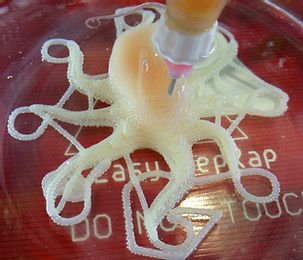
The study validated this approach using a simulated Octopus-inspired tendon-driven manipulator modeled via the Piece-wise Constant Strain (PCS) method. The PCS framework analytically integrates strain fields under Cosserat theory, yielding geometric Jacobians and dynamic equations with full inertial matrices but block-diagonal damping and stiffness—structurally well-suited to inertial term omission.
Forward dynamics models were learned using nonlinear autoregressive exogenous (NARX) neural networks, trained on “motor babbling” data: random tendon actuation over 70 seconds with corresponding end-effector positions recorded. For fair comparison, both first-order and second-order models used identical architectures. Step and periodic input tests showed the first-order model’s transient errors and absence of overshoot oscillations, but near-identical steady-state and periodic responses compared to the second-order model.
Material property variations—doubling density and reducing viscosity sixfold—were used to stress the first-order assumption. As expected, second-order models performed better overall, but accuracy degradation in both models was modest, suggesting robustness of the first-order approach under moderate inertial increases. Extending manipulator length to four sections, with tapered and cylindrical morphologies, also failed to significantly erode first-order accuracy, likely due to hydrodynamic damping from the surrounding water medium.
The first-order inverse dynamics controller was implemented as a feedforward neural network mapping (xi, xi+1) ? ?, trained on the same motor babbling dataset. Path planning, often complex in inverse dynamics control, was simplified by generating trajectories directly from reachable workspace points. Randomized linear paths between workspace points were used for testing.
Closed-loop tracking at 100 Hz control frequency demonstrated strong performance despite myopic, non-optimized trajectories. The high update rate compensated for modeling approximations, maintaining accurate end-effector motion. Open-loop tests, assuming perfect point-to-point reachability, performed worse, underscoring the importance of feedback. Even with delayed controller activation, the system recovered to match closed-loop performance, highlighting resilience.
By reducing temporal model order, the approach streamlines both modeling and control of soft robots. It avoids full mass matrix estimation and inversion, lowers computational load, and eases sensor integration. While first-order systems can pose numerical stiffness challenges in analytical solvers, learning-based implementations bypass these issues. The findings suggest that designing soft robots with low inertial, high damping characteristics not only reflects natural systems but also enhances controllability and predictability, making advanced manipulation more accessible to engineers and researchers.