

Why Astronauts Still Fumble Simple Objects After Landing
Why would a trained astronaut take months to relearn how to handle objects after a trip back from Earth orbit? According to a new strand of research, the answer has little to do with weakness per se. Instead, it is an issue of sensorimotor incompatibility: a conflict between what the brain thinks and what the hand feels as it operates. While in orbit, astronauts grip objects too tightly since their nervous system is still expecting weight. Back on Earth, the opposite problem can persist, with the nervous system now tuned for weightlessness and incorrectly calculating how much pressure is needed to maintain a firm grasp.

That finding matters well beyond dropped tools. A mistimed grip can affect sample handling, medical work, exercise sessions, robotic operations, and any task in which a floating object can become a hazard. As Philippe Lefèvre, a professor of biomedical engineering at the Université catholique de Louvain, put it, “Even if the risk of slippage is low, the consequence of slippage would be really dramatic.”
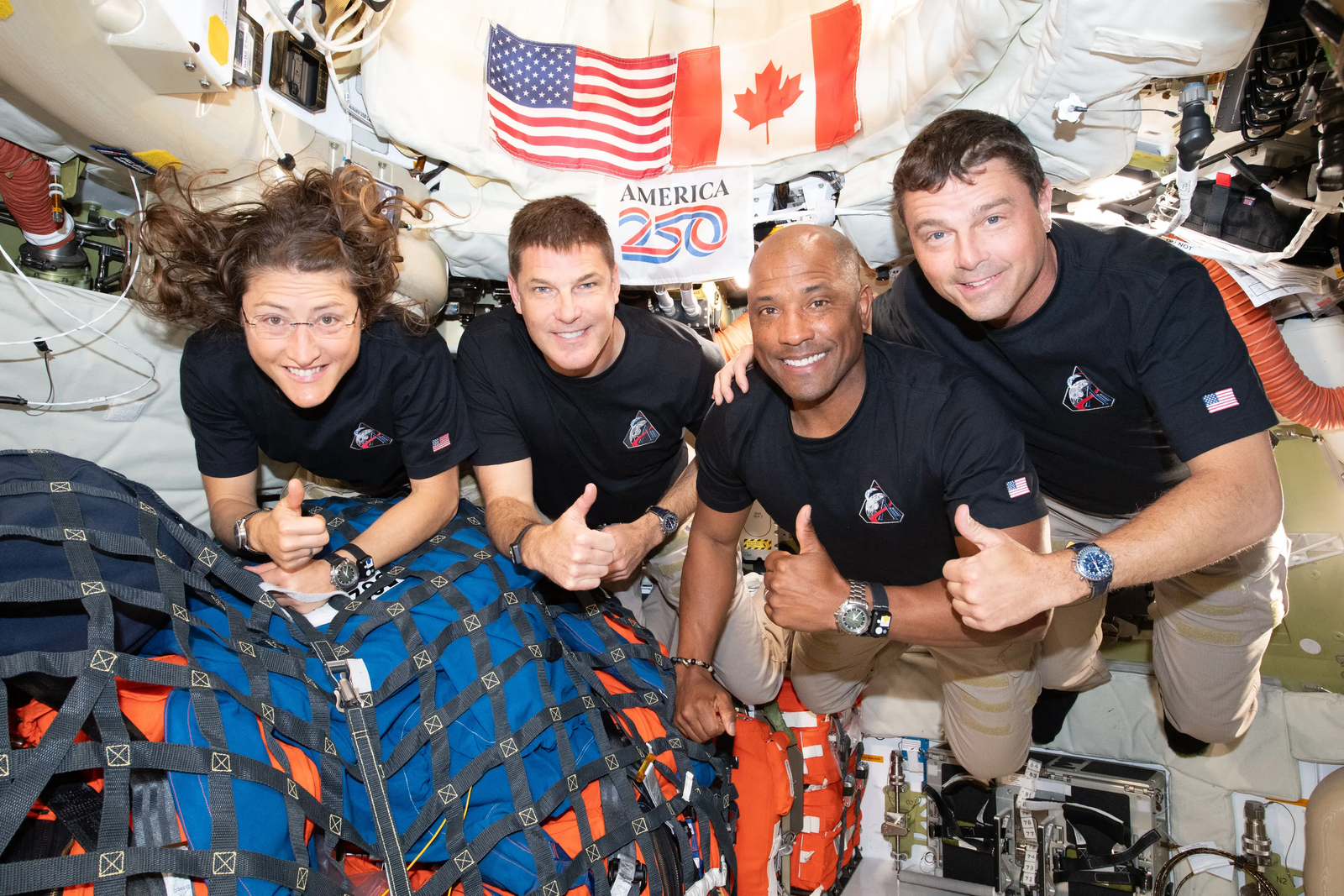
This conclusion was drawn from a recent study of eleven European Space Agency astronauts performing a series of tests for grip-and-hold control before flight, in orbit, and upon return to Earth. The result of the analysis is a clear picture of a slow-adapting brain. Humans have optimized their motor control based on Earth’s constant gravity, so a near absence of it causes sensory data to come with a changed relation between mass, pressure, movement, and contact. Then, once back home, the adaption process is not immediately reversed. It leads to a situation where sensory feedback is incorrectly processed according to gravitational conditions.
The problem itself also belongs to a wider phenomenon of deconditioning effects experienced by space travelers. Bone density and muscle mass loss are known to occur in prolonged space missions, with a particular focus on the gravitational load experienced in terrestrial conditions. Astronauts on board the International Space Station engage in 2.5 hours of daily physical training; however, there are limitations to existing countermeasures. According to a major review of the human and animal data available, regular training is indispensable but insufficient to prevent degradation of muscle tissue during extended flights.
One additional complication comes from hands, which do not only serve as means of applying physical strength. They are precise instruments that become increasingly ineffective due to the nature of pressurized EVA gloves. In experiments simulating such gloves on Earth, researchers managed to reduce their effectiveness to only 10-30% of the grip performance measured with bare hands in grasping and pinching tests. Moreover, studies focused on robotic gripping assistance concepts demonstrated that pressurized EVA gloves significantly increase forearms muscle effort compared to barehands work and cause high muscle fatigue rates associated with repetitive motions during EVA tasks.
Biological experiments recently carried out in real microgravity provide even more evidence of how damaging space travel is to muscles. For example, studies conducted with the help of precursor cells taken from healthy humans and kept in microgravity onboard the ISS reported that the muscle development process was significantly disrupted. At the same time, biopsies from the astronauts’ muscles after flight exhibited a mix of rapid readaptation with slower recovery, along with deficiencies in molecular signaling responsible for innervation. It turns out that the grip problem is a manifestation of multiple physiological changes happening at the cellular level simultaneously. For the upcoming missions to the Moon and Mars, it highlights the role of neurology, biomechanics, space suits engineering, and rehabilitation.