

Starlink Breakup Puts New Focus on Orbital Debris Risks
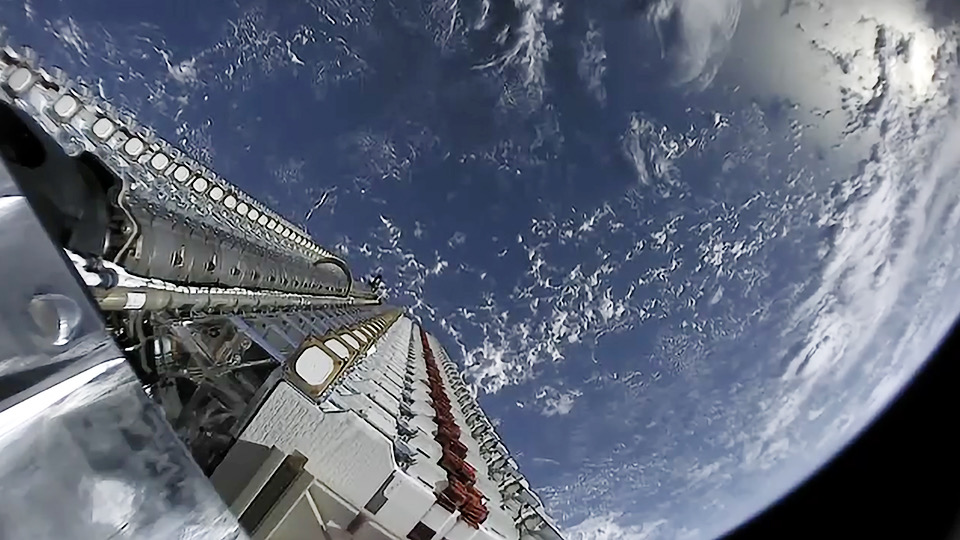
A satellite can be perfectly unremarkable until the moment when it poses a danger to space safety. This paradox is what lends the most recent photo of the Starlink satellite 34343 its particular gravity. HEO Robotics took the picture of the object, weeks prior to the announcement by SpaceX regarding an on-orbit anomaly of the object which resulted in the loss of communications and the fragmentation event of the satellite occurring approximately 560 kilometers above Earth. This way, a seemingly regular inspection photograph became an unexpected milestone in terms of low Earth orbit (LEO) issues.
Specifically, SpaceX stated, On Sunday, March 29, Starlink satellite 34343 experienced an anomaly on-orbit, resulting in loss of communications with the satellite at ~560 km above Earth. The company noted further that this did not pose any additional threats to the International Space Station, the astronauts aboard it, Artemis II, or the upcoming Transporter-16 rideshare mission, adding that it continued monitoring the situation along with NASA and the U.S. Space Force.
While such an affirmation is crucial for the current discussion, the matter is far from being limited to those issues alone. In contemporary LEO, spacecraft are no longer few and far between; it is an overcrowded environment characterized by mega-constellations, rigorous traffic management, and the necessity to better understand the reasons behind spacecraft failures. An independent tracking report cited by external experts describes the incident as a fragment-creation event, with the causes of the anomaly being an internal source of energy, rather than a collision with other objects. Such breakups at this altitude should not cause long-lasting debris due to the still powerful gravitational effect, which nevertheless makes tracking necessary in order to determine conjunction probability for adjacent spacecraft.
At the same time, the recent events come at a specific time when SpaceX is actively tackling issues of reliability and efficient disposal of end-of-life satellites. Previously, there were reports concerning plans to get rid of 100 older satellites of the Starlink constellation due to a problem in their design that may increase the likelihood of malfunction in the future. These plans emphasize a very simple point – mega-constellations benefit from scale and thus require effective anomaly detection as one of their primary features.
But there is yet another angle to the current case of Starlink satellite 34343. Satellites that depart orbit are certainly not an abstract concept in terms of a safety accomplishment. According to information shared by atmospheric scientists, some research has shown that there might be a chance of ozone-depleting metals from spacecraft entering the stratosphere, though it remains to be seen how significant the consequences will be. Thus, the issue of orbital sustainability today involves many layers, including that of the atmosphere.
Indeed, Starlink continues to be the most noticeable example of how fast space infrastructure is developing in relation to the laws regulating it. Over 5,400 Starlink satellites were estimated to be currently in orbit in February 2024, while external sources forecast the total number in 2026 to be even higher. In this context, any separate malfunction in one of the satellites becomes yet another test, this time related to how swiftly an anomaly can be detected and explained in the increasingly crowded skies. Thus, the current picture of satellite 34343 stands out in a very simple way. Namely, it illustrates the fact that, in the age of satellites, a seemingly ordinary close-up photograph becomes evidence in the grand story of space safety.