

Why Earth’s 2026 Fireballs Are Bigger, Louder, and Harder to Ignore
After years of stable baseline activity, something appears to have shifted.’ That’s what American Meteor Society analyst Mike Hankey said about the fireballs that have been making headlines in 2026. The reason for all the commotion surrounding fireballs in 2026 is not that Earth is in more danger than in the previous years, but that fireballs have been behaving in a manner that cannot be ignored or attributed to reporting bias.
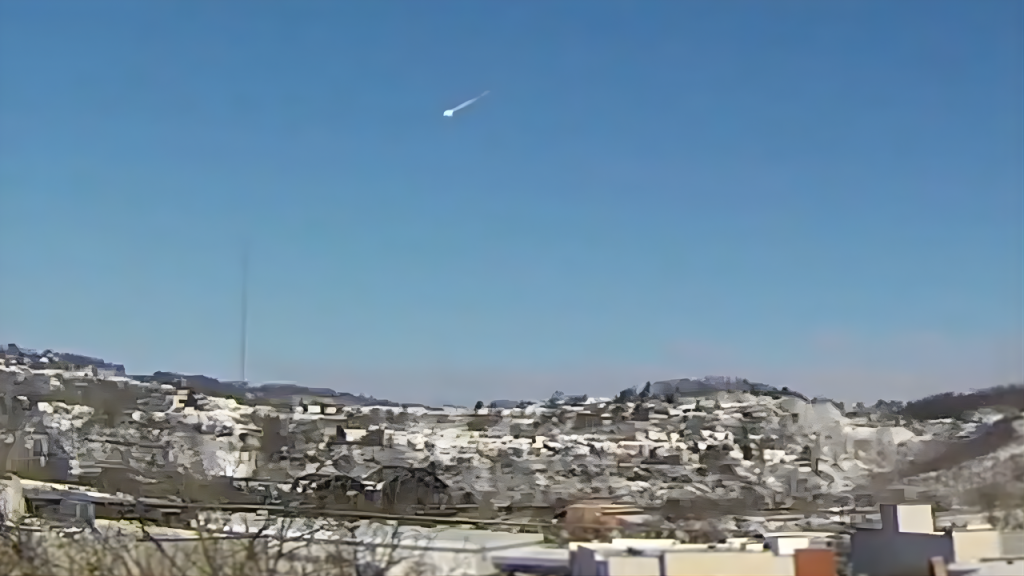
Fireballs are extremely bright meteors. There is much more going on in the night sky than what people think. The unusual thing about fireballs in early 2026 is not that there were more fireballs than in the previous years. According to the American Meteor Society, there were 2,046 fireballs in the first quarter of 2026, just above the previous highest years. The unusual thing about fireballs in 2026 is that there were far more fireballs that were witnessed by a number of people, far more fireballs that were long enough to be witnessed, and far more fireballs that had audible delayed booms, which mean they penetrated deeper into the Earth’s atmosphere.
This is significant because fireballs reported cannot be affected by smartphone searches, doorbell cameras, dash cameras, or AI searches that give users links to fireball reporting sites. Physical occurrences cannot be affected in that manner. Of 38 fireballs with 50 or more reports, 30 had audible booms. That is once every three days. That is not fireballs, that is fireballs with enough physical presence to penetrate deeper into the Earth’s atmosphere before disintegration, with some of them landing on the surface as meteorites.
The atmosphere, however, is still doing its part in the defense mechanism. Pressurized gas, as shown in the study done by Purdue University about the disintegration of meteoroids, is capable of seeping into crevices and pores, further disintegrating the body of the meteoroid and causing its disintegration before it reaches the surface in any kind of whole state.
Though dispersed, most of the events seen in the meteor shower of 2026 were still capable of producing some fragments. Those seen in Ohio and Germany are achondrites, which are part of the group of rocks called meteorites. As analyzed in the AMS, these are natural rocks that are found in heliocentric orbits and are therefore not man-made. What makes this event particularly interesting is the fact that the meteoroids are tracing paths that are almost perpendicular to each other.
The strongest hint of direction so far is the grouping of the events coming from the Anthelion source, which is opposite the Sun, and the unexpected increase in the number of radiants with high declination. This is the reason why the meteor shower is not showing the orderly progression characteristic of meteor showers. It is more of the apparent thickening of the sporadic background of larger debris that the Earth is already encountering. Perhaps the seasonal factor has been taken into consideration, but not likely enough to cause this enormous shift.
However, there is also a problem of measurement. Most of them are still being determined through witness testimony. Dedicated camera coverage in the area of the fireball was found to be largely non-existent. Although networks such as NASA’s All Sky Fireball Network and distributed networks such as the Global Meteor Network are useful tools, witness-based radiants have significant uncertainty. A denser coverage of all-sky camera data, as well as other detection methods such as radar, infrasound, and satellite data, can yield very sharp evidence for spectacular fireballs.
This is the larger significance of the fireballs of 2026. The recent run of fireballs is not a crisis. It is an opportunity to remind ourselves that we are moving through a crowded solar system, that there is only a small distance between a harmless streak and a piece of meteorite capable of punching through a roof, and that our understanding of our planets is still too closely tied to who is outside and looks up at precisely the moment that the sky decides to get bright.