

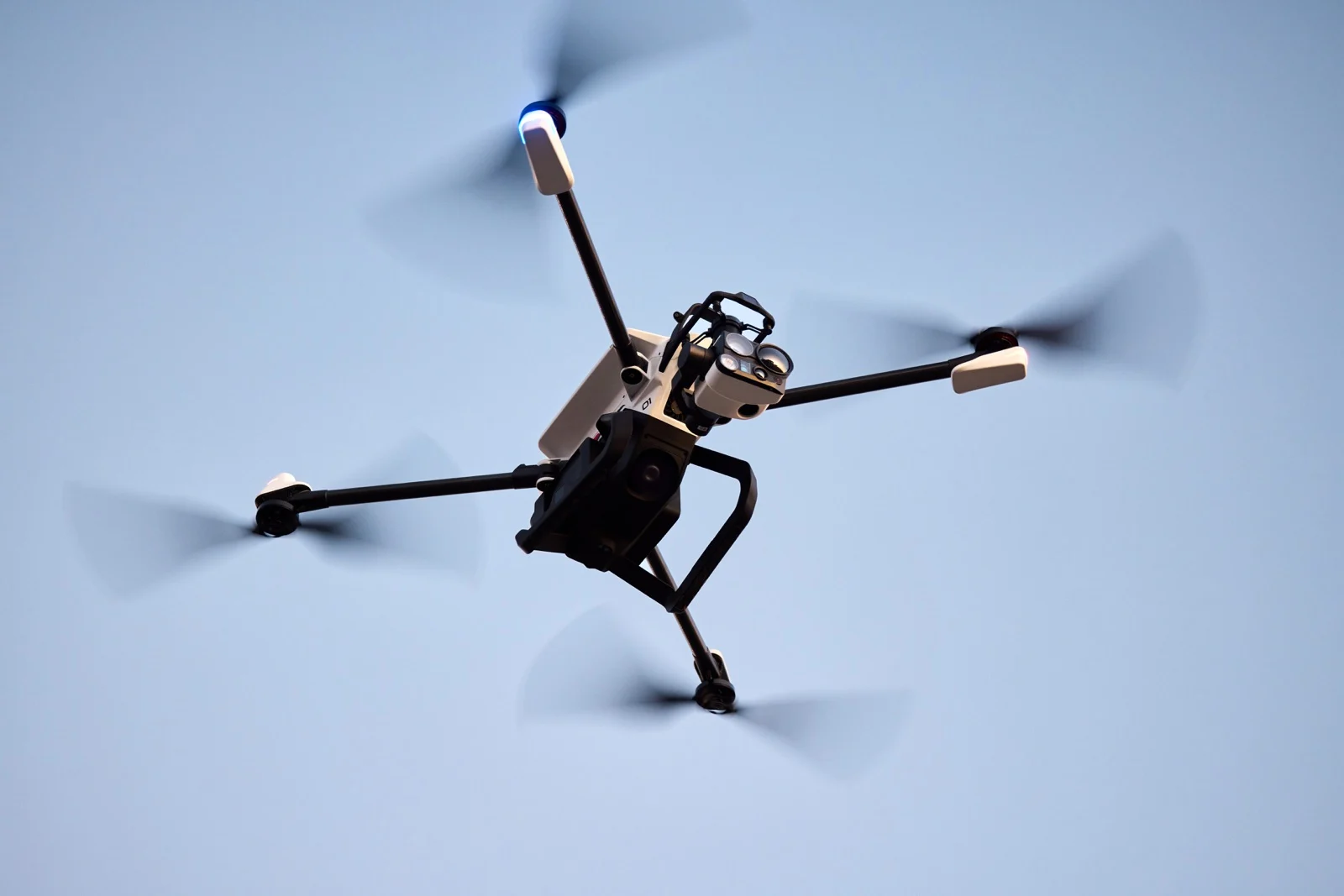
911 Drone Pushes Beyond Charging Limits With Starlink and Battery Swaps
Which is more important in emergency drone program, a more precise camera, a greater range or just a reliable system that is available to fly again before the next dial is made? The following question is at the centre of BRINC new Guardian platform which is not as interesting as a single aircraft but rather an effort at eliminating the slowest element of the public-safety drone work. It is common to find that many Drone as First Responder programs can be launched on a single occasion and then they lose time as batteries need to recharge, operators to restart, or links to stabilize. Guardian is developed with that gap of operations. Its paired ground station, Guardian Station, automatically replaces its exhausted packs and recovers the aircraft in minutes instead of compelling it to make the longer stop of plug-in charging.
That change would not appear radical until it is perceived as a system problem. In autonomous robotics, battery handling has become the bottleneck since the time spent charging is a limiting factor on the frequency with which an aircraft or mobile robot can resume productive activity. Autonomous battery swapping has already become a method to ensure that aircrafts continue to recycle missions with little human intervention in warehouse aviation. BRINC is equally reasoning the same with respect to public safety where availability is frequently a key factor as compared to raw flight performance. The outcome is a platform designed not so much on the occasional dispatch but on continuous preparedness, particularly where the agencies are attempting to occupy substantial areas of suburban territory or scattered rural calls.
The communications architecture is oriented the same way. Guardian will combine Starlink mobile satellite communications, providing the aircraft with an avenue to remain connected when ground networks are poor or overloaded, or not available at all. In the case of emergency response, that is not as much of a branding exercise as it is network resilience. A drone capable of flying eight miles in radius is not of much use unless the video, telemetry, and command connections can be reliable during flight over varied coverage or after an event of the disaster.
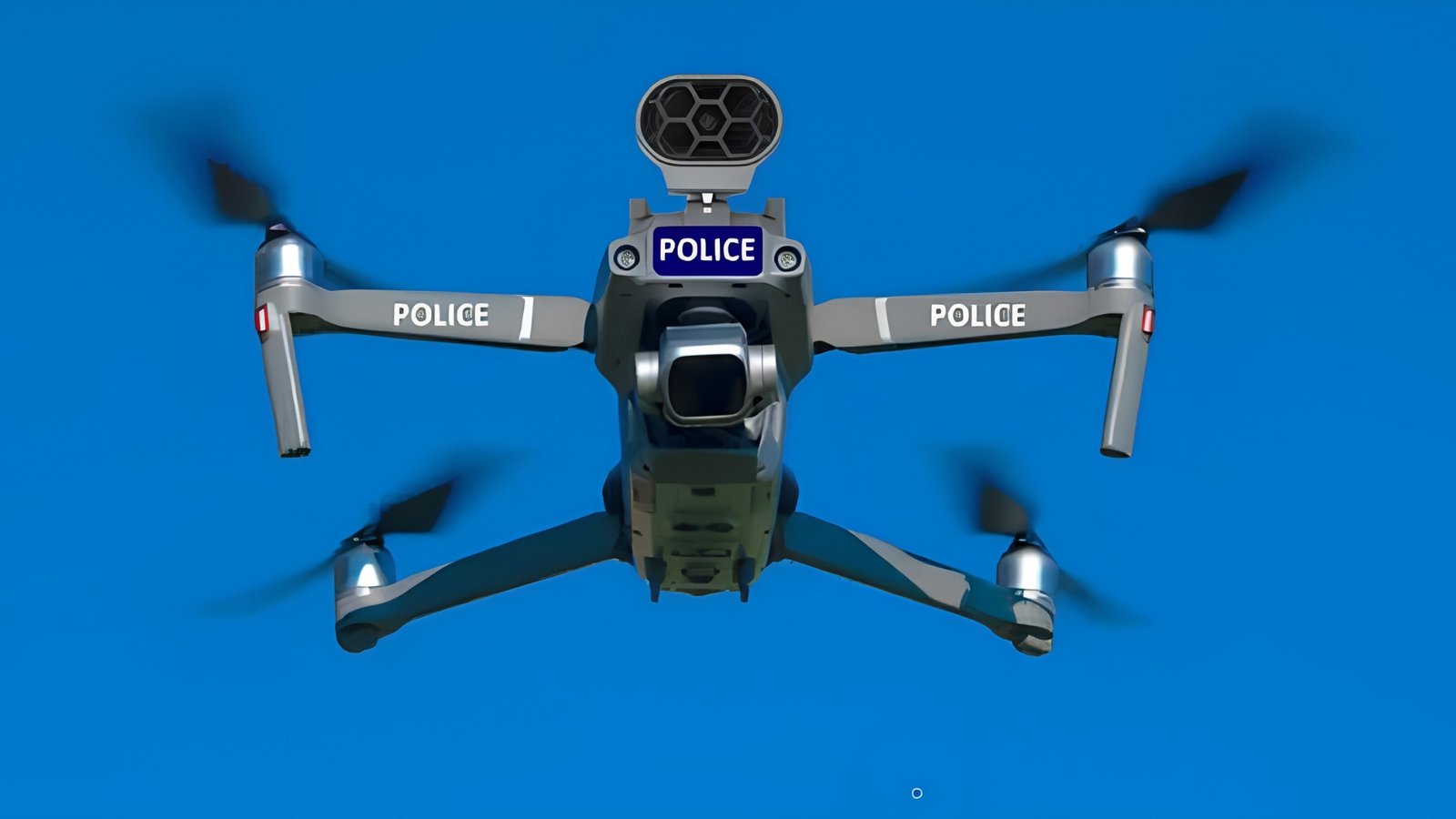
BRINC is combining that endurance scheme with a payload approach suited to first-response operations. Reportedly, the aircraft can transport specific mission-related objects (i.e. Narcan, flotation equipment, or an automated external defibrillator) and transform the drone into something beyond a remote camera mast. It also includes a 4K camera, thermal imager, spotlight, rangefinder, loudspeaker and a claimed top speed that is adequate to dispatch goods rapidly. Practically this is indicative of a wider transformation in unmanned systems: public-safety aircraft are being constructed as part of a response network, and not as a solitary flying sensor.
The same trend can be observed in the other areas of drone development, as persistence and reaction time become more and more determining of value. In counter-UAS operations, e.g., engineers are developing interceptors based on high-speed engagement and dependable management instead of durability as well as physical intercept drones. Other mission, same pressure of the engineered: eliminate dead time, save the connection, and put the aircraft back on the air before it is too late.
BRINC founder and CEO Blake Resnick made the pitch of the company very straightforward: “Drone as First Responder operations have been limited by camera capabilities, connectivity and contact charging. Guardian changes the paradigm, supporting true 24/7 operations and enabling advanced operations like vehicle pursuits.”
What is more profound than that is that another public-safety drone has landed. That emergency aviation is taking a step towards continuous-service architecture, where aircraft, communications, dispatch software and power management are all parts of a single machine. The actual challenge that will be faced by Guardian is to be treated by the agencies as a convenience feature or as the foundations of the new generation of 911 response.