

Orion “Integrity” Tests the Unseen Systems That Make Artemis II Work
“Hope does not belong to management techniques.” David Beaman, Artemis II focuses on the most obvious hardware of the human spaceflight a capsule mounted on a heavy-lift rocket. The actual mission however lies in the finer details which do not always feature on the mission patch, systems which have to keep four people healthy, oriented and safe through the periods when their space ship is leaving the comfort of earth and entering deep space and vice versa.

The crew module of Orion is intentionally small, about two minivans of volume, and thus all its walls become work areas and all its empty spaces storage. The Artemis II Orion vehicle manager Branelle Rodriguez appropriately puts her career in perspective by outlining: I got to design life support systems. And I always used to laugh at, it was always your bedroom, bathroom and kitchen. The philosophy directly translates to the priorities of Artemis II. The test flight is designed in a way that it yields data on cabin air revitalization, manual flying ability and how humans would interact with the hardware and software of Orion during days at a time.
Not the glamorous stuff is the least human-centered engineering as well. The hygienic bay of Orion is the place, where members of the crew come out of the capsule, and the toilet has its design roots in the International Space Station. Even simple things that need to be performed in microgravity need restraint systems, handholds, and protocols that presuppose that the crew performs everything while drifting. The liquid waste transferred by Orion during flight is vented into the open air, and the solid waste is placed in a closed container with odor control filters – unromantic devices that ensure the health of the crew and maintain the habitability of the sealed volume.
Such daily operations cannot be separated with the most bitter experience of the journey: the need to get home. Orion comes back to lunar ranges at approximately almost 25000 mph and its heating/cooling system has to handle the external heating of approximately 5000degF and the cabin must be maintained near room temperature. Through the investigations conducted after Artemis I, engineers discovered that there were unforeseen charring properties of the Avcoat heat shield material and how gases produced in the shield failed to escape as intended, which subsequently caused cracking and local material loss. In the case of Artemis II, the heat shield will be retained on the vehicle, and modification will be done to the reentry orbit of Orion to ensure crew safety margins.
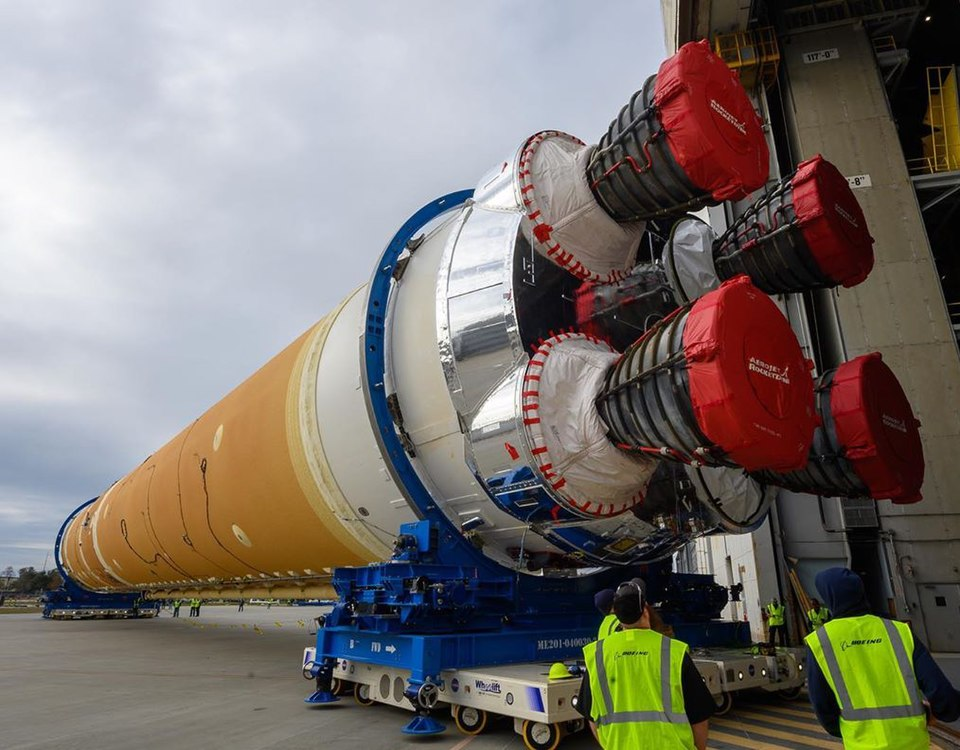
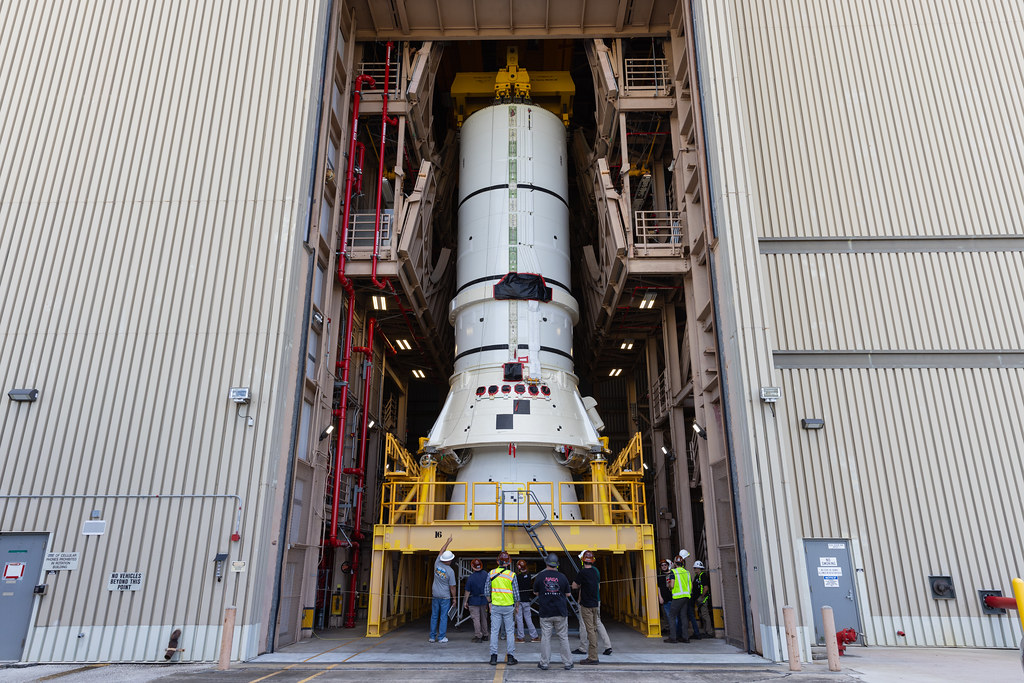
Another form of invisibility is the one around the rocket itself. The Space Launch System has often been reduced to its size, more than 30 stories in height and generating over 8 million pounds of power, but the fact that it is capable of flying is a matter of argument. Artemis I during post-flight work involved the gathering of over four terabytes of data through onboard systems and images of the vehicle and ground locations which had many cameras. Those instrumentation enabled teams to bound performance due to liftoff acoustics, separation of boosters and upper stage events, and compare engine performance with predictions at close tolerances during ascent.
Those comparisons become toned by human rating. Preparedness as Beaman puts it is a daily routine, since the decision on the launch-day is the product of the sum of previous engineering decisions. His number one principle is that our job is to protect the astronauts, and that is applicable in software simulations with injected failures as well as the way the teams will interpret the anomalies which they have not fully understood.
The work that is not flown into space under the name of an astronaut also gives Artemis strength behind the spacecraft and rocket. At various NASA facilities, NASA-supported researchers are advancing the research in astronaut physiology and behavioral health, propulsion materials, and space biology-research which contributes to Orion habitation, SLS reliability, and payloads to be used in deep space, including LEIA biology payload related to the Artemis II.
Artemis II will be a first crewed flight of a new capsule by the time Orion “Integrity” gets off the pad. It will be an intentional audit of those silent systems, air, water, waste handling, software, thermal protection and risk discipline, that will place deep-space exploration as a desire or a repeatable capability.