

First 2026 Starlink Launch Puts a New Falcon 9 to Work
“Deployment of 29 Starlink satellites confirmed,” SpaceX tweeted on X after launching the first batch of 2026 Starlink spacecraft into low Earth orbit.
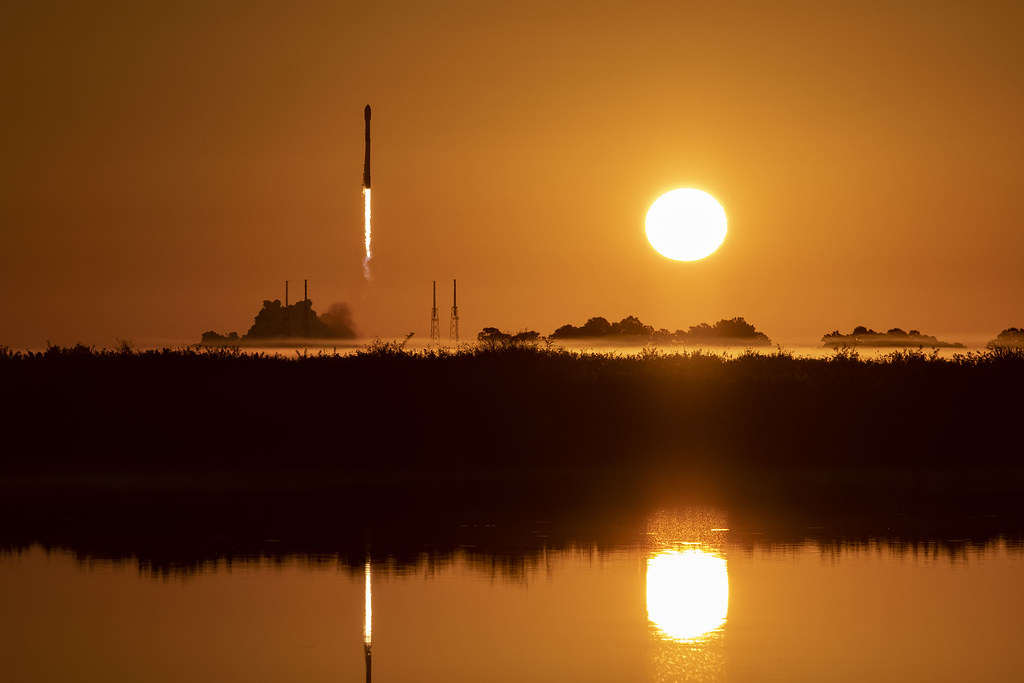
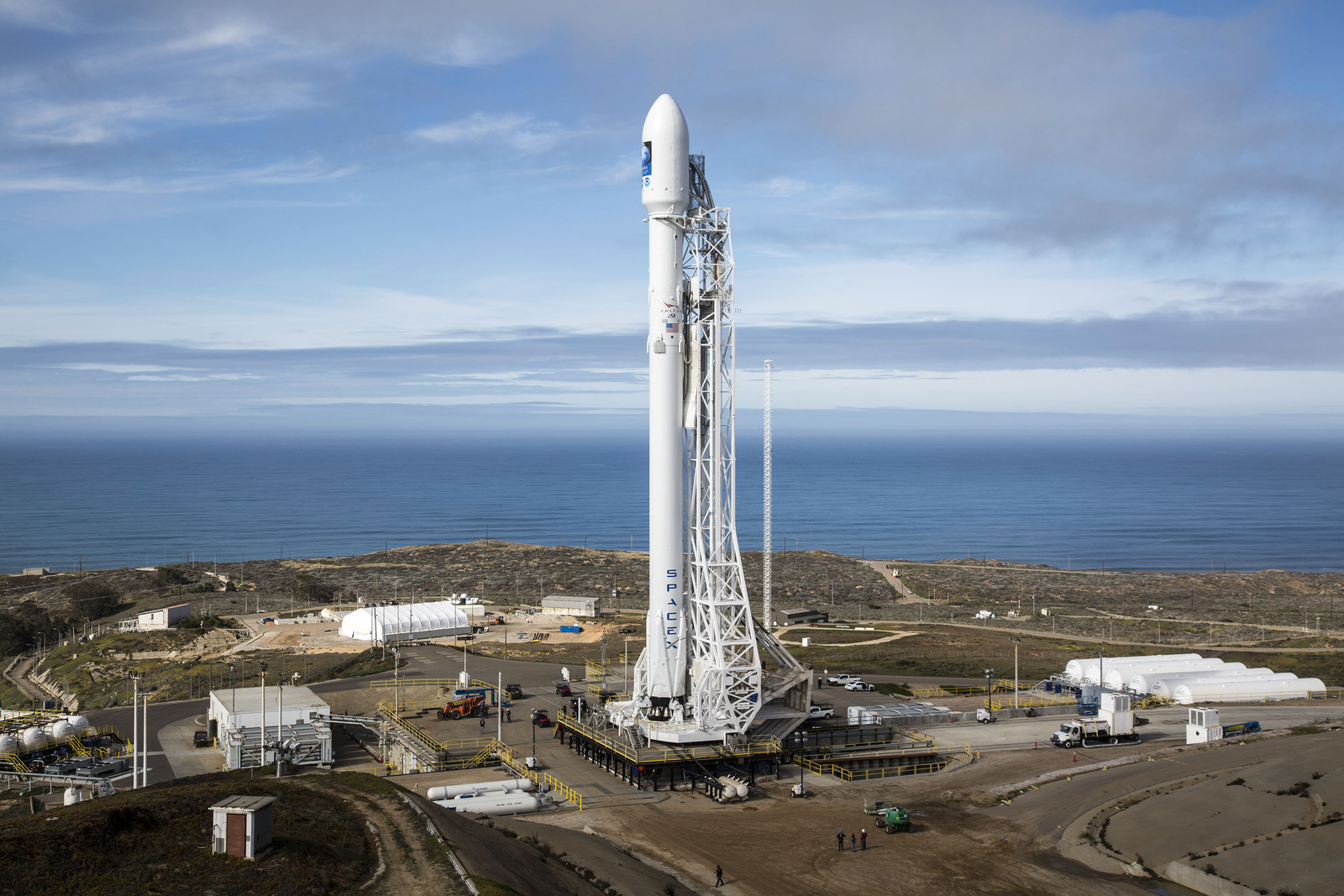
That one line, combined with the first flight for a brand new Falcon 9 first stage, frames an operational reality that can get lost in the drama of liftoff: Starlink is now all about repetition. The mission Starlink Group 6-88 lifted off from Space Launch Complex 40 at Cape Canaveral Space Force Station at 1:48 a.m. EST on Jan. 4, arriving in orbit in under nine minutes, and deploying its payload about an hour later. Its booster – labeled 1101 – completed a first-attempt recovery to drone ship Just Read the Instructions in the Atlantic, reinforcing the point that even “new hardware” is expected to act like mature infrastructure.
SpaceX finished 2025 with a constellation measured less by ambition than by inventory. Independent tracking by the astronomer Jonathan McDowell pegged the fleet at 9,357 Starlink satellites in orbit as of Dec. 19, 2025, the vast majority active. That scale matters in that each incremental launch is not so much about expansion, but about refresh cycles, reliability, and the growing operational burden from keeping thousands of spacecraft coordinated in this busy orbital regime.
The satellites on this flight were Starlink V2 Mini “Optimized” units, part of a generation that has steadily pushed capability upward while staying within Falcon 9’s payload envelope. A typical Starlink spacecraft is often described with a working life of around five years, after which the platform is supposed to deorbit and burn up an approach intended to limit long-lived debris, but one that also means steady replenishment is baked into the business model.
That cadence of replenishment is now tightly coupled to reusability. As above, at an industry conference, SpaceX Vice President of Launch Kiko Dontchev described in plain words the enabling technology: “The fundamental technology that needs to be built is truly rapid reusability.” He further pressed the point that the constraint is no longer simply the rocket stage itself; “it’s not just rockets that need to be reused but also launch pads and other infrastructure,” calling for spaceports to move toward airport-like throughput. In that frame, the significance of a new booster’s first landing is less a celebratory milestone and more a prerequisite for keeping the system economical under sustained pressure.
The pressure is not only on the ground. SpaceX has also signaled that 2026 will include a major reshaping of where a large fraction of the constellation lives. Michael Nicolls, vice president of Starlink engineering said on X about 4,400 satellites would shift from roughly 550 kilometers down to about 480 kilometers over the course of the year, a move he described as “focused on increasing space safety.” Lowering altitude changes the trade space: satellites experience more atmospheric drag, which shortens the time a failed spacecraft can linger as uncontrolled clutter. Nicolls also tied the move to the solar cycle, noting that as solar minimum approaches, reduced atmospheric density can extend “ballistic decay time” dramatically at higher altitudes, complicating passive cleanup.
Altitude is not an abstract parameter to network users. A closer constellation generally improves link geometry, allowing tighter beam footprints and higher user density. As Elon Musk repeated recently on X, for a given antenna size, smaller beam diameters mean Starlink can serve more customers per satellite. The same geometry is one reason SpaceX’s “direct-to-cell” variants operate even lower than the main fleet-an architecture choice the company has previously tied to link performance with unmodified phones. Yet the engineering logic of “more, lower, faster” carries externalities that have not gone away just because the operation has become routine. Astronomers have repeatedly warned that large constellations can degrade both optical and radio observations, both via reflected sunlight and via ubiquitous downlinks. The International Astronomical Union cautioned in a 2019 statement that satellite constellations “can pose a significant or debilitating threat” to existing and future astronomical infrastructure.
SpaceX has pursued mitigations like visor-like shading on some satellites; still, the scale of the constellation means even incremental brightness or radio leakage can show up in aggregate. There is also the question, standing at the boundary of space operations and atmospheric science, of what it means to dispose of satellites at industrial scale. Researchers, including Aaron Boley, have warned that the aluminum-rich reentries produce alumina-or aluminum oxide-which can persist in the upper atmosphere and interact with ozone chemistry. With a constellation designed around rapid refresh, what should be relevant to industry is not whether a single spacecraft “demises” on reentry but rather what the repeated, predictable burn-up does to the environment over decades as megaconstellations multiply.
And regulation is evolving right along with the hardware. FCC has advanced proposals that would shift satellite licensing toward a more standardized, batch-oriented process and expand opportunities for more intensive spectrum use in several upper microwave bands. The practical effect is to reduce friction for operators deploying large fleets-in other words, just the kind of policy change that becomes consequential when a company can manufacture satellites at assembly-line rates and fly them on a launch system built around rapid turnaround. In that light, the first Starlink launch of 2026 reads less as a discrete accomplishment than as an early indicator of what the operating tempo demands from the year: new boosters entering service without drama, satellites evolving within tight mass-and-volume constraints, and a constellation not just growing but repositioning. The mission’s quiet efficiency-the brief climb to orbit, the one-hour deployment, the first landing on a waiting droneship-speaks to a mature production-and-operations loop, one which now has to share near-Earth space, radio spectrum, and even the night sky with everyone else.