

CATL Deploys Humanoid Robots for Battery Line Automation
“Embodied intelligence is no longer a concept it’s running our factories,” declared one of the most senior engineers at CATL, talking about the very latest news reported regarding plans by CATL, that is, humanoid robots are employed in examining and high-risk connectors in battery assembly production lines. This shows that not only is CATL at the forefront in energy storage production, but it is also at the forefront in humanoid robots technology.
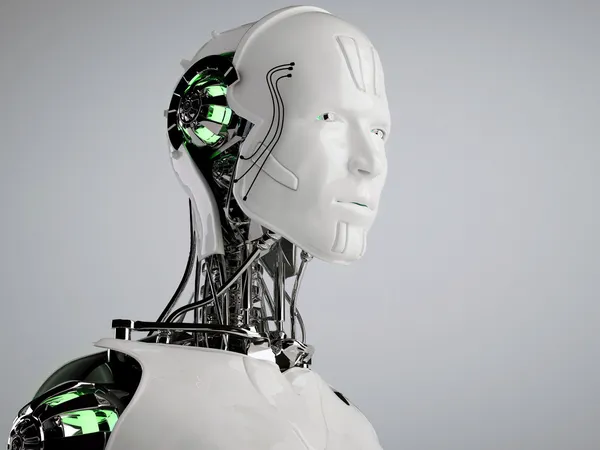
In the CATL Zhongzhou factory, based in the province of Henan, the humanoid robot, Xiaomo, developed jointly between Hangzhou-based developer Spirit AI and CATL, has already replaced the critical stages of End of Line tests and Direct Current Internal Resistance tests. The stages of the tests required for battery pack functionality verification were previously conducted with human experts manually connecting the high-voltage plugs.
Xiaomo brings with it batteries made by CATL, and it comes with a Vision Language Action model, which is an advanced AI model. This means that the robot can detect even the smallest amount of change in the vicinity. For example, while handling the component, the factor of flexibility is most important. It was able to accomplish over 99 percent success in doing the same thing as human labor.
Apart from dealing with the connectors, Xiaomo is also responsive to issues that might arise in the quality of the wiring harness, thus decreasing any defects. Even during production stoppages, it has the ability to work in inspect modes, which is another factor that improves the quality of the production line. According to CATL, Xiaomo has the ability to process a load that is twice that of manual operation, without any breaks or downtime, as reported by CATL.
This trend towards humanoid robots is indicative of the kind of development that is being witnessed within the realm of manufacturing automation. Within the battery manufacturing sector, robotic technology is being used for cell sorting and stacking, as well as welding. AI-fueled quality inspection via strategically designed cameras has become quite usual.
Overall development within the realm of automated testing has created test equipment capable of managing charge and discharge tests, as well as life tests. All these tests are being executed within IoT-enabled systems that test overall performance. CATL’s humanoid robots deal with automation requiring touch as well as safety aspects, which are quite imperative but less effective within conventional robots. The choice regarding the integration of humanoid robots into battery production lines also impacts the fluctuating battery industry.
The total global battery demand has broken the limit of 1 TWh in the year 2024. It has a production capacity of 3 TWh and may triple in the next five years. The production market is dominated by the Chinese, with a significant presence above 75 percent in the global market. CATL dominates the global EV battery market by itself with a staggering 38.1 percent. Efficiency and production capacity are significant in the competition prevailing in the battery industry. On the other hand, humanoid robots in the manufacturing industry are also on the increase, with CATL, a Chinese battery maker, not being the only one leading in their adoption.
Automakers and technology firms in China are investing huge amounts in humanoid robots, with Changan Automobile leading in robotics investments to the tune of 225 million yuan in its robotics department, not to forget trials conducted by Xpeng and UBTech Robotics in the car manufacturing industry. However, R&D in battery technology for humanoid robots has its own set of difficulties too. Smartron, for example, uses ternary lithium batteries, which are lithium iron phosphate batteries, limiting their application to a maximum of two hours only.
However, CATL’s interest in Beijing-based Galbot, a firm, clearly indicates their interest in meeting the battery requirements for robots, including, possibly, solid-state batteries, which will help in enhancing energy density, providing better safety, and enabling fast charging, making it possible for humanoid robots to perform complex operations in any industry. CATL’s move to incorporate humanoid robots in its manufacturing plants not only indicates their development in automation, as mentioned above, but also their foray in advance robots’ integration with industries, including manufacturing, which give primacy to preciseness, thus connecting to China’s emphasis on embodied intelligence.