

Solar Storms and the 2.8-Day Countdown to Orbital Chaos

The pace of congestion in low Earth orbit, or LEO, has reached the tipping point, and the numbers paint an ominous and pressing picture. There is now a proposed method to measure just how quickly things have to change to prevent catastrophe when collision avoidance systems for satellites fail a method known as the Collision Realization and Significant Harm Clock, and this clock reads 2.8 days.
1. The CRASH Clock and the Shrinking Safety Window
Created by scientists to quantify stress in the orbital environment, the CRASH Clock estimates how quickly a catastrophic collision would occur if there were a loss of maneuvering or awareness. This number, at 121 days in 2018, prior to the mega-constellation rush, has decreased by over forty-fold due to satellite proliferation by mid-2025. Analysis by the research team has indicated that, within 24 hours of a loss of avoidance, there is 30% and 26% chance of collision involving two resident space objects and a Starlink satellite, respectively.
2. Mega Constellations as Drivers of
The Megaconstellation with the highest number of operational satellites in LEO is, by a huge margin, SpaceX’s Starlink constellation with over 9,300 in orbit, accounting for more than half of all active spacecraft. For all megaconstellations, passes with a distance of less than 1 km occur every 22 seconds. For the denser shells of Starlink, passes occur every 11 minutes. Based on collision probability assessments, the Megaconstellations have caused a 16.79% enhancement in weekly passes compared to pre-launch conditions, enhancing the one-week collision probability from 6.58% to 31.34% with no further action.
3. Solar Storms: The Catalyst of Catastrophe
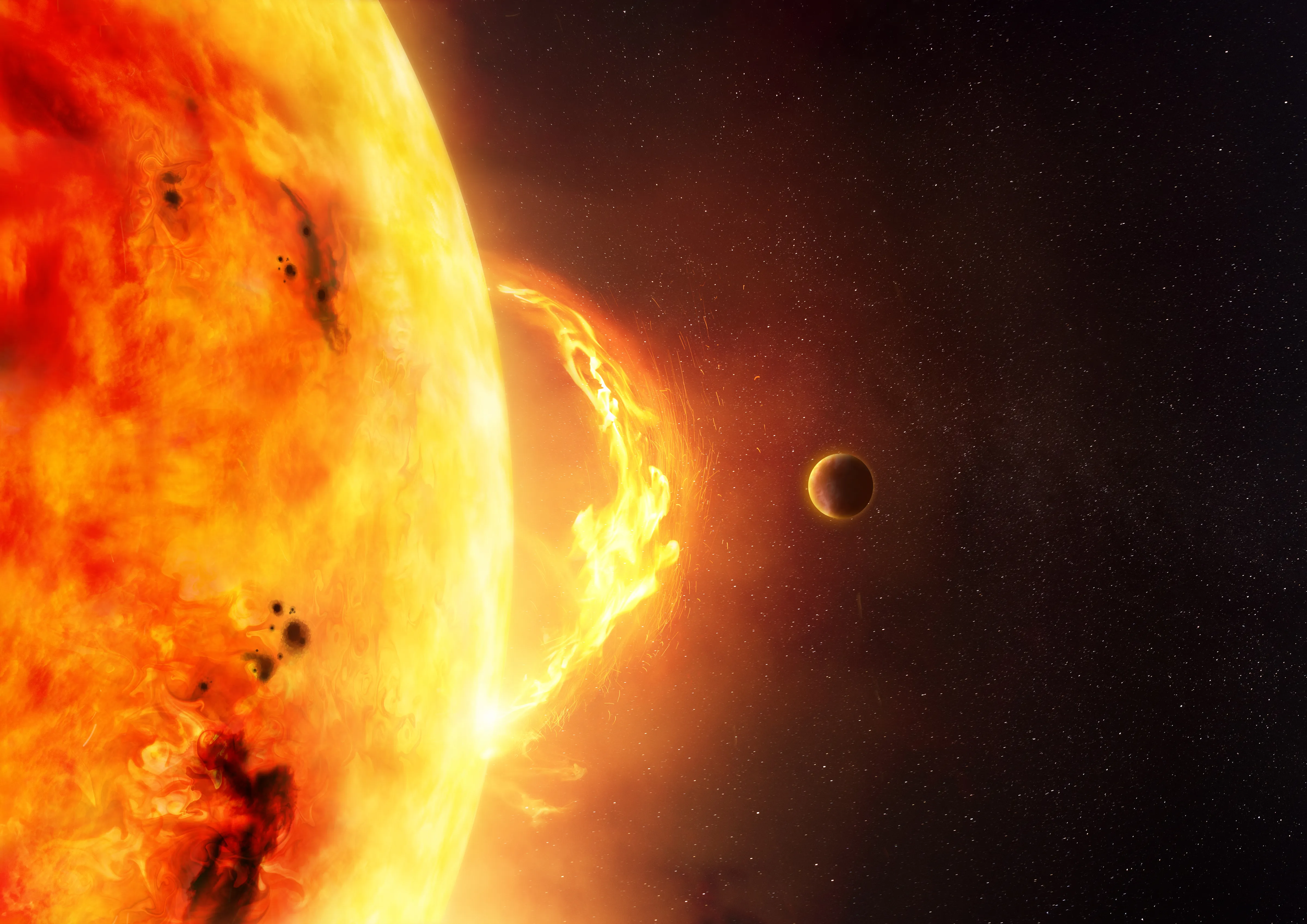
Geomagnetic storms can strike satellite missions in two different ways. First, these storms cause heating of the upper atmosphere, which increases drag on satellites and changes their orbits. Secondly, geomagnetic storms can damage guidance and communication systems of satellites, leaving the operators with no control over them. During the “Gannon Storm” of May 2024, which turned out to be the strongest in two decades, over half of all the satellites in low Earth orbit had to use their propellant reserves to relocate satellites. In February 2022, a weak storm, along with low deployment orbits, led to the untimely re-entry of almost 40 satellites from the Starlink constellation when the density of thermosphere intensified by up to 50%.
4. Chain Reaction Risk: Early-Stage Kessler Syndrome
“A single event in today’s densely populated LEO could produce thousands of debris fragments, many of which would be triggered by secondary and tertiary collisions.” Thus, although “a Kessler Syndrome where debris is sufficiently dense in certain orbits would require several decades” to develop, “the CRASH Clock” picks up on “the short-term threat of a debris-generating event occurring” in a matter of days, increasing “collision threats” for all “operational” satellites downstream as a “result.”
5. Strategies for Reducing Under Pressure
International guidelines encourage end-of-life deorbiting and limit orbital lifetimes, but compliance is uneven. Active debris removal concepts robotic arms, nets, harpoons are being tested by companies like Astroscale and ClearSpace, yet face high costs and legal hurdles. The short-term collision risk models underscore that even perfect removal plans cannot prevent disaster if maneuvering capacity is lost during a major solar storm.
6. Space Weather Forecasting for Operators
Improving the prediction of solar weather is a pressing need. With the integration of real-time satellite data, ground-based ionospheric stations, and AI, it might be possible to advance the warning times from hours to minutes. Initiatives such as the ‘Meridian Project’ by China are already providing high-detail real-time observations of ionospheric and magnetospheric conditions, allowing data points to be customized for a particular orbit shell.
7. Visual Hazard: Satellite Trails and Observation Loss
The increase in the number of vibrant satellites also affects scientific research. Analysis indicates that if the proposed constellations go ahead and reach a total of 560,000 satellites in space, Xuntian space telescopes in LEO would be able to observe the trails of 92 satellites within the field of vision, thereby compromising more than 96% of the images obtained. Although this is another risk associated with the functionality of the satellites, it arises from the same issue: when the number of objects in space increases, all associated risks increase as well.
8. Policy and Coordination Imperatives
Space weather and orbital debris are both international in scope, and the only way to mitigate them effectively is to have unified governance to address collision avoidance systems, shared data regarding the location of objects in space, and joint emergency preparedness exercises. The alarming statistics presented by the CRASH Clock are an urgent reminder that the chain reaction effects of just one solar event could cripple satellite infrastructure for years to come.
High density megaconstellations, unpredictable levels of solar activity, and limited maneuvering windows have turned LEO into a dangerous environment. With only 2.8 days remaining on the CRASH Clock, there is no room for error leaving the orbital “house of cards” unstable and ripe for an implosive event triggered by one perturbing incident.