

SpaceX and ULA Face Delays Amid Packed Lunar and Crewed Launch Schedule
Weather scrubs and issues from the groundside have forced two of the Space Coast’s most anticipated year-end launches into new timeframes, putting a dent in an already-ruled jammed early-2024 manifest: SpaceX’s Falcon Heavy and United Launch Alliance’s Vulcan Centaur, each carrying high-profile payloads into space, are now set to fly within weeks of one another alongside NASA’s Commercial Lunar Payload Services, or CLPS, missions and the first crewed flight of the year to the International Space Station.
1. Falcon Heavy’s USSF-52 Mission Delayed
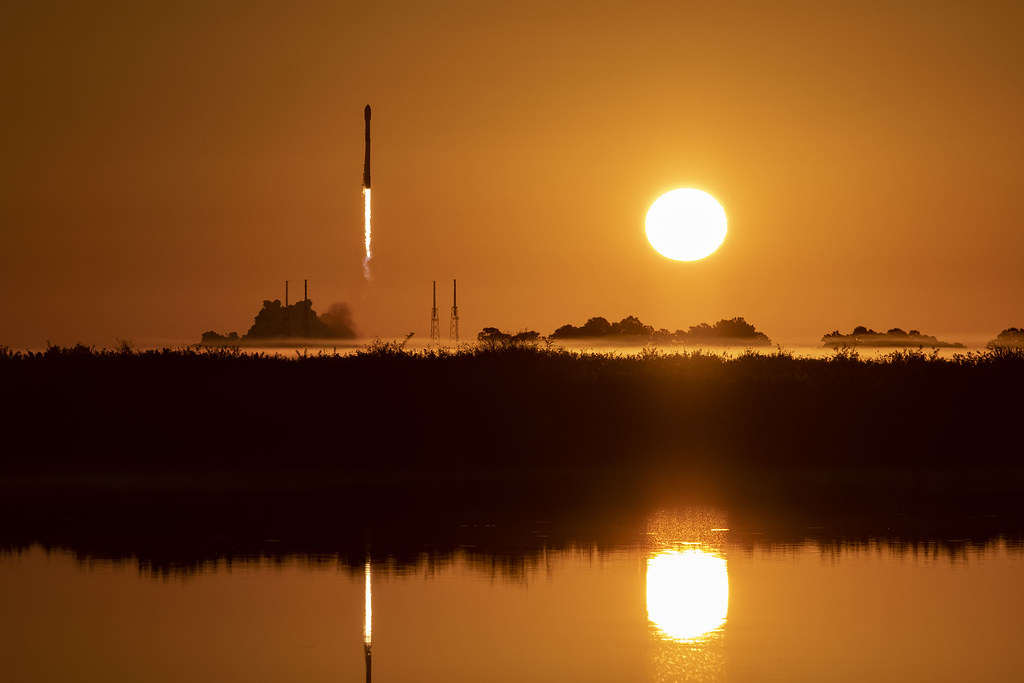
SpaceX’s ninth Falcon Heavy launch, designated USSF-52 for the U.S. Space Force was within an hour of liftoff at Kennedy Space Center’s Launch Pad 39A when a “ground side issue” halted the countdown. Subsequent severe weather forced a scrub, pushing the launch to no earlier than Dec. 28. The mission carries Boeing’s X-37B Orbital Test Vehicle on its seventh trip to orbit, expected to last years. Falcon Heavy’s triple-core configuration generates 5.1 million pounds of thrust, and its two side boosters will attempt synchronized landings at Cape Canaveral Space Force Station, producing the signature double sonic booms heard across Central Florida.
2. Certification Flight of Vulcan Centaur
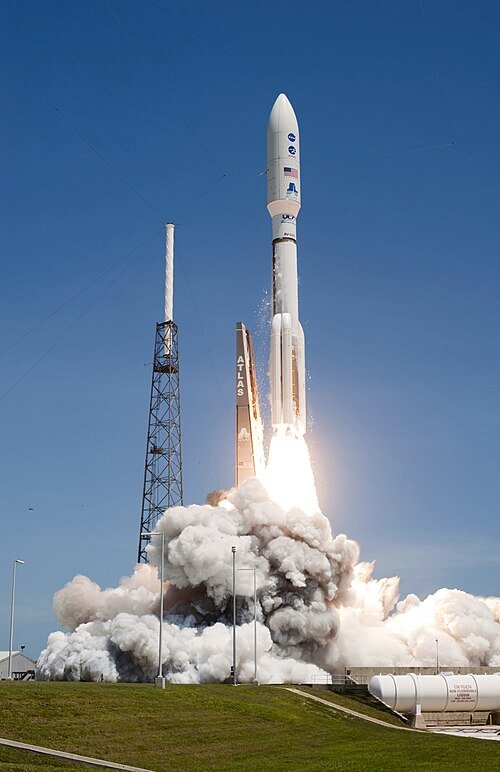
ULA’s Vulcan Centaur, slated to succeed the Atlas V and Delta IV Heavy, was targeting a Christmas Eve debut but slipped into Jan. 8 after wet dress rehearsal delays. The inaugural Cert-1 mission lifted off at 2:18 a.m. Eastern carrying Astrobotic’s Peregrine lunar lander and a memorial payload from Celestis. Vulcan’s first stage is powered by BE-4 engines from Blue Origin, burning liquid methane and oxygen, while its Centaur upper stage uses RL10 engines for extended-duration missions. “Yeehaw! I am so thrilled, I can’t tell you how much,” said ULA CEO Tory Bruno post-payload separation.
3. Peregrine’s CLPS Milestone
Peregrine is the first U.S. lunar lander since Apollo and the first to fly under NASA’s CLPS program. It carries 20 payloads, including five NASA science instruments funded at $108 million. NASA’s Joel Kearns emphasized the program’s “shots on goal” philosophy, acknowledging the less-than-50% historic success rate for lunar landers. The spacecraft targets a Feb. 23 landing near the Gruithuisen Domes, delivering instruments like the Near-Infrared Volatile Spectrometer System and Neutron Spectrometer System. This mission is Astrobotic’s first after 16 years in development.
4. Intuitive Machines IM-1 Close Behind
Teledyne Brown Engineering’s Peregrine lunar lander launching on the VLC-001 mission Jan. 9 atop a Vulcan Centaur. SpaceX will launch Intuitive Machines’ Nova-C lunar lander on the IM-1 mission Jan. 12 from a Falcon 9. It is possible that the IM-1 trajectory design will enable it to reach the Moon ahead of Peregrine even though it launches about three days later. Both missions represent part of NASA’s use of commercial partners for delivery of science to the Moon; several more CLPS flights are scheduled through 2026.
5. Multinational crew flight of Axiom-3
The private Axiom-3 mission will fly a crew representing five nations to the ISS for a two-week stay starting Jan. 9, launching atop a Falcon 9 and Crew Dragon Freedom. Commander Michael Lopez-Alegria, pilot Walter Villadei, and mission specialists Alper Gezeravci and Marcus Wandt will perform more than 30 experiments, such as radiation shielding all the way to CRISPR-based plant studies. The mission may launch from KSC or Cape Canaveral, as SpaceX nears completion of a new crew access arm at its Canaveral site.
6. Space Coast’s Record Cadence
The year 2023 finished with the Space Coast launching 68 orbital missions, the majority coming from SpaceX, and 2024 will see that number swell to near 100. Tight launch spacing has become normal; both launchers, SpaceX and ULA, performed launches three times within 24 hours in 2023, while November saw four missions from four pads in 34 hours. History still remains: two launches occurred 97 minutes apart during the Gemini program in 1966.
7. Infrastructure and Pad Management
The ability of SpaceX to operate from multiple pads-SLC-40, LC-39A, and soon a crew-capable Canaveral site-will be crucial in meeting the aggressive schedule for 2024. Pad juggling will be required as Falcon Heavy, Falcon 9 crewed flights, and lunar missions converge on top of each other within days, all while Starlink deployments continue at high frequency. As the bad weather pattern and technical checks will define the readiness of launch, so the early weeks of 2024 are going to test operational agility for both SpaceX and ULA. These overlapping timelines of national security, lunar science, and commercial crew underpin the transformation of the Space Coast into a high-tempo launch hub-to-diverse payloads and destinations.