


Lobster Shell Waste Transformed into Sustainable Biohybrid Robots
It just so happens that the detritus of a seafood dinner can support half a kilogram, gently pick up a tomato, and swim at up to 11 centimeters per second. In a proof-of-concept demonstration melding the mechanical elegance of crustacean anatomy with recyclable synthetic augmentation, discarded langoustine shells have been transformed into working robotic components by engineers at the École Polytechnique Fédérale de Lausanne.

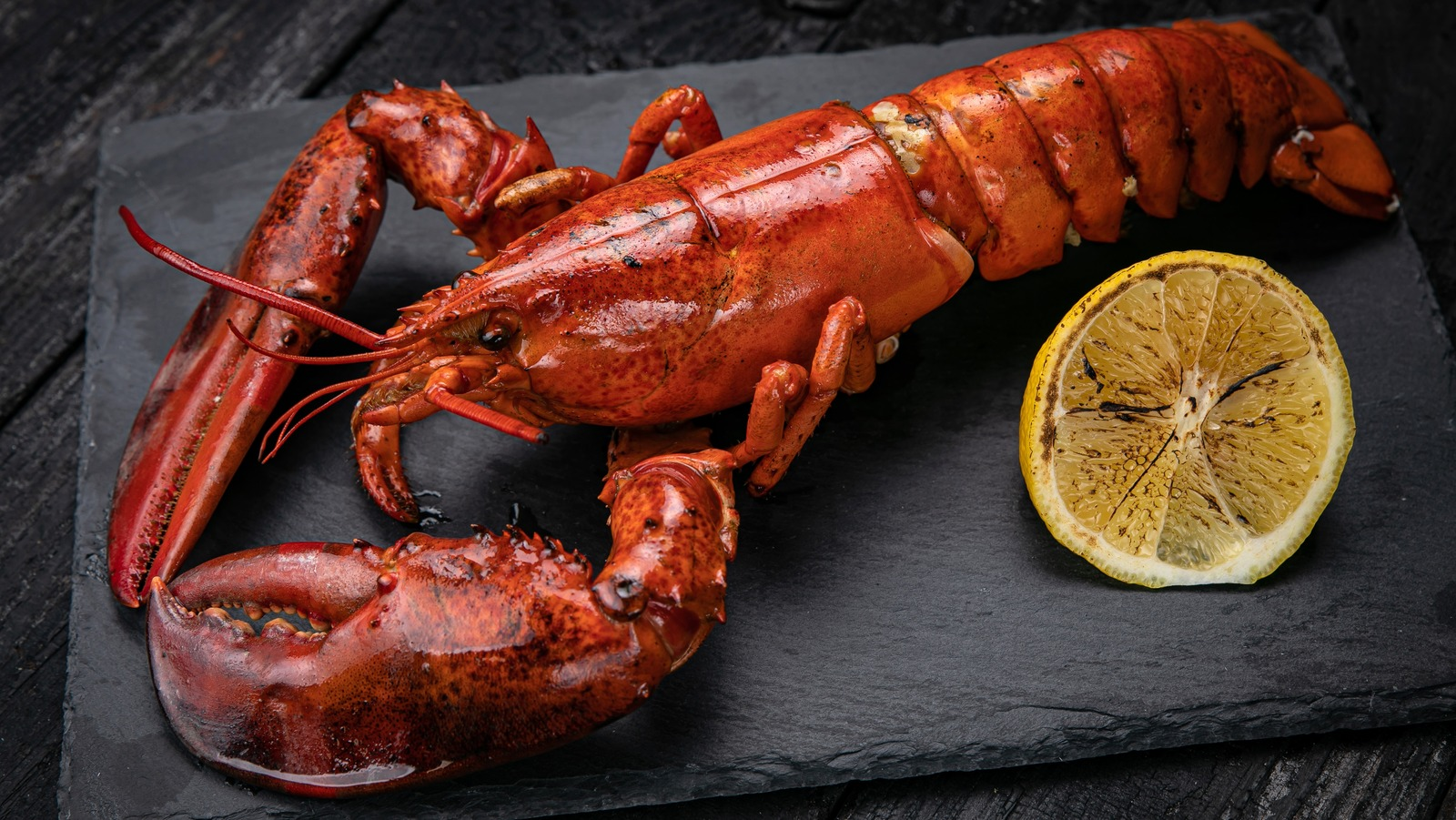
The EPFL team focused on the segmented abdomen of Norway lobsters, which naturally integrates rigid mineralized plates with flexible joint membranes. This architecture, refined over millions of years for underwater agility, provides both load-bearing strength and large bending angles qualities that are difficult to replicate in purely synthetic soft robotics. “Exoskeletons combine mineralized shells with joint membranes, providing a balance of rigidity and flexibility that allows their segments to move independently,” notes CREATE Lab head Josie Hughes. To harness these properties, engineers embedded a soft elastomer along the dorsal side to add restoring force, routed inextensible tendons through ventral segments acting as pulleys, and sealed the assembly in silicone to prevent dehydration.
In tests, a single modified shell section lifted about 500 grams; two shells mounted in parallel created a gripper that could passively conform to objects from pens through to fragile produce. When configured as flapping fins on a motorized base, paired exoskeletons propelled a small robot through water at as fast as 11 cm/s, performance comparable to bioinspired undulating propulsion systems that mimic the motion of fish fins.
The approach is as much about sustainability as mechanical ingenuity. When the biological structure reaches end-of-life, the synthetic components-motors, elastomers, tendons-can be detached and reused. The shell itself is biodegradable, returning harmlessly to the environment. Lead author Sareum Kim says, “To our knowledge, we are the first to propose a proof of concept to integrate food waste into a robotic system that combines sustainable design with reuse and recycling.”
This circular design philosophy tackles a longstanding challenge in robotics: most machines are made from metals, plastics, and composites that are hard to separate for recycling. This biological source material is plentiful anywhere the langoustines are eaten and needs only to be cleaned to prepare it for augmentation. Each abdomen consists of six articulated segments: joints flex with virtually no resistance, while extension provides locks at geometric limits to give spikes in stiffness as high as 3.3 N·mm per degree. This directional asymmetry provides effective thrust generation in water with a ratchet-like action against resistive media. In the case of swimming applications, symmetric cyclic strokes provided better performance than asymmetric patterns; this is probably due to rapid oscillations causing incomplete fin deployment.
From the fabrication perspective, this work leverages principles now common to recycling-oriented soft robotics. The mechanical fastening of shells to synthetic bases dispenses with adhesives complicating disassembly. Elastomers and fishing line tendons can either biodegrade or be disposed of with minimal waste, and motors and electronics transfer intact into new builds. This follows the modular design of tools where worn handles are replaced but functional blades are retained.
Challenges remain in standardizing performance; no two shells bend identically, and biological variability affects load capacity and kinematics. These may be overcome with adaptive control algorithms or sorting exoskeletons by their measured mechanical properties. However, as the pressures of sustainability begin to push harder, tolerating variability may become much more practical than eliminating it, at least for those applications where precision is less vital than environmental impact.
The implications go far beyond novelty. Similar segmented exoskeletons occur across arthropods-from beetles to crabs-offering a spectrum of mechanical properties for different scales and tasks. Potential future uses include biodegradable biomedical implants and temporary environmental monitoring robots that leave no waste footprint. By proving that discarded seafood shells can be engineered into capable, recyclable machines, the EPFL team has expanded the palette of bioinspired materials available to robotics, turning what was once kitchen refuse into a platform for sustainable mechanical design.