

Tryptophan Discovery on Bennu Reveals Space-Cooked Ingredients for Life
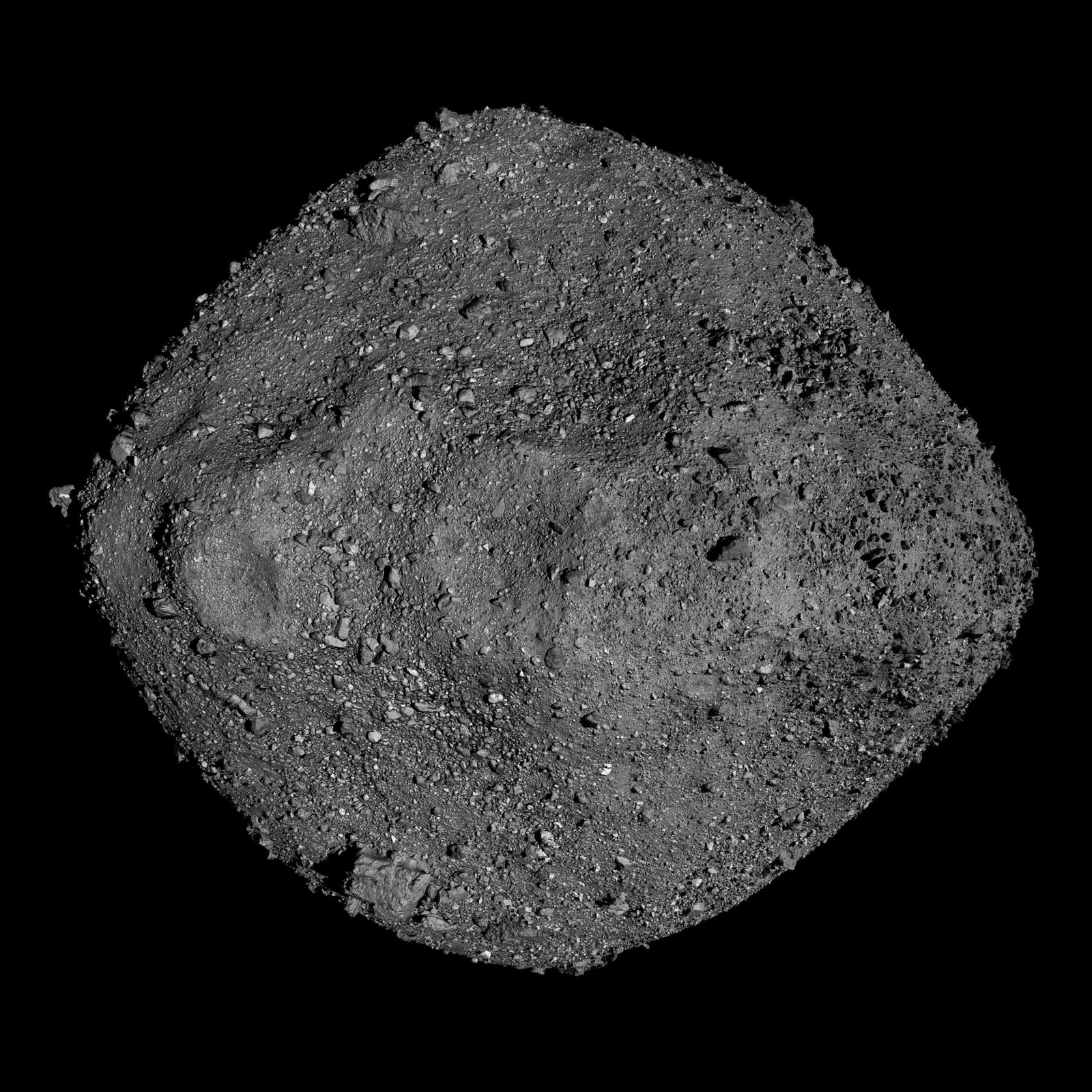
“Asteroids were the early Earth’s grocery delivery service,” said Kate Freeman of Penn State University, commenting on finding one such asteroid delivery that has thrilled the astrobiology world. These OSIRIS-REx results reveal that the asteroid Bennu contained tryptophan amino acids, which have never been observed in any meteorite or extraterrestrial matter in the past, explained NASA.

Tryptophan is one of the 20 amino acids that build proteins in living organisms. Tryptophan is classified in the essential amino acid group, meaning that it is not synthesized in the human body and must be ingested in food. Tryptophan contains such a complicated structure that many scientists thought it impossible to be created in outer space. “Finding tryptophan in the Bennu asteroid is a big deal, because tryptophan is one of the more complex amino acids, and until now it had never been seen in any meteorite or space sample,” said NASA scientist José Aponte of the Goddard Space Flight Center.
OSIRIS-REx retrieved 4.3 ounces (121.6 grams) of rock and dust from the asteroid Bennu in 2020 and returned them to Earth in 2023. Analysis of just 50 milligrams of this material, smaller than a fingernail clip, led to this historic discovery. “Because OSIRIS-REx returned these samples pristine, we’re finally seeing the fragile salts, minerals, and organics that meteorites lose on entry.,” explained OSIRIS-REx Principal Investigator Dante Lauretta.
Bennu’s chemistry is like a fossil or snapshot of what the solar system looked like 4.5 billion years ago, and it originated in the asteroid belt between Mars and Jupiter when it separated from a parent asteroid between 2 billion and 700 million years ago. It has been orbiting Earth for at least 1.75 million years and is sometimes described as a “time capsule” of planetary emergence and evolution. Its regolith contains ammonia, minerals, and now 15 of the 20 amino acids and the Five Nucleobases that provide the building materials for life on Earth in the life soup of DNA and RNA.
The finding of tryptophan lends further credence to the belief that asteroids were the delivery systems for pre-biotic building materials on the early Earth. “jigsaw pieces that are not yet assembled,” said Angel Mojarro, lead author of the study, emphasizing that while Bennu contains many of the building materials of life itself, it is not alive. Other findings of amino acids have originated from Japan’s Hayabusa2 mission to Ryugu asteroid and have served as further testament that such materials are potentially ubiquitus in small bodies in our solar system.
Organic analysis of the samples returned from Bennu showed that its organic materials were generated in different ways in aqueous environments on the parent asteroid. Some of these included reaction between ammonia brines and other catalytic reactions on solid surfaces. Different organic material needs different conditions for generation. Some of the undesired materials include glycine and tryptophan amino acids that are derived from amino alcohols and amino nitriles, respectively. Other materials may have come from different amino alcohols and amino nitriles. However, the findings are also evidence of the need for sample return missions.
Thousands of meteorites are at hand for analysis, yet many are contaminated or altered in some way. Fresh extraterrestrial matter, preserved in controlled conditions to prevent contamination, give insights unencumbered by Earth’s biasing influence. Sara Russell of the Natural History Museum in London observed: “The discovery of tryptophan in particular is surprising, as we don’t see this in meteorites, perhaps because it does not survive the fall through the Earth’s atmosphere and impact on Earth” By the hot furnaces of past supernovae and the slow chemistry of asteroid brine, the building materials of life have been transported for billions of years and millions of miles to this point on the asteroid Bennu.
And now, in human labs on Earth, those same building materials are yielding a tale that stretches from the origins of our solar system to the beginnings of life itself a tale in which complicated amino acids such as tryptophan may have been prefigured in space well before the arrival of life on Earth.