

Multisensor Drone Startup Advances Agricultural Research
In West Lafayette, Indiana, an agbioscience startup affiliated with Purdue University is accelerating its growth despite operational shifts brought on by the COVID-19 pandemic. GRYFN, specializing in research-grade multisensor drone data collection, is expanding its team and facilities while pushing advanced aerial sensing technology into the hands of agricultural researchers.

Chief Operating Officer Trenton Lindenman explained the operational changes necessitated by the pandemic. “The pandemic forced us to change the way we train and onboard new clients, and we moved to a larger, more traditional office space at the Purdue Research Park to accommodate growth and a safer workplace,” he said. The company has used this period to strengthen its capabilities, adding personnel and exploring new sensing technologies aimed at empowering plant breeders and agricultural scientists.
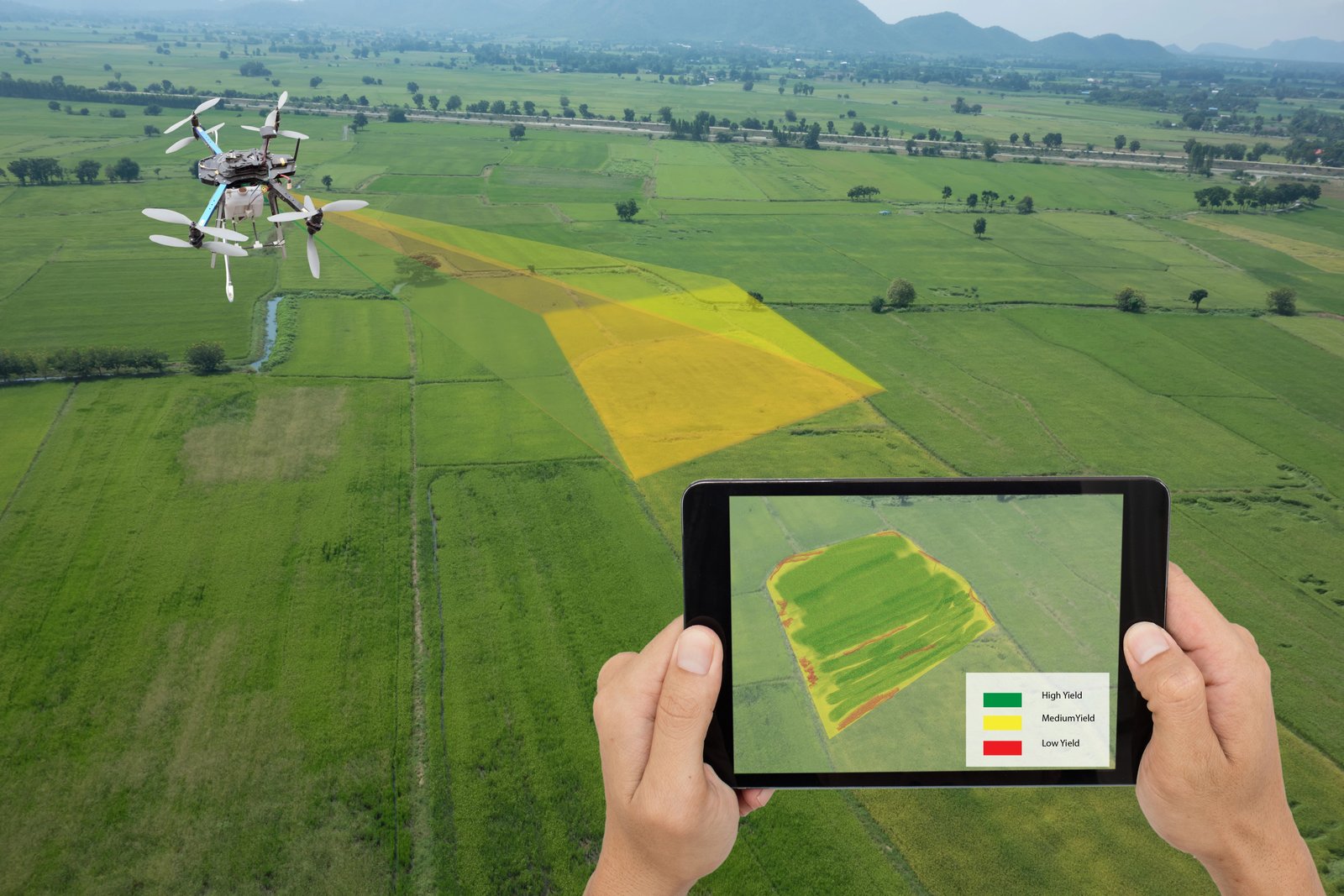
GRYFN’s technology originated at Purdue and was licensed through the Purdue Research Foundation Office of Technology Commercialization. At its core is an unmanned aerial vehicle platform equipped with a coaligned sensor suite: visible RGB imaging, LiDAR, and very near infrared hyperspectral sensors. This combination enables precise, repeatable data capture for high-throughput phenotyping and other field applications. The coalignment of sensors ensures that data from multiple modalities can be directly compared and integrated, a critical factor for scaling research operations without compromising measurement fidelity.
The company’s staffing growth reflects its expanding operational scope. “We have added a full-time pilot and analyst to help with data collection and processing, a director of solutions for hardware-software integration and support, and we are actively recruiting a research scientist,” Lindenman noted. He emphasized that the past year focused on operational excellence, evidence gathering to validate capabilities, and incorporating collaborator feedback. With that foundation, GRYFN is now prioritizing outreach, sales, and customer support for the upcoming agricultural season.
Research and development efforts continue to broaden the sensing capabilities of the platform. The team is integrating thermal imaging and short-wave infrared hyperspectral sensors for deployment in 2021, expanding the range of environmental and physiological parameters that can be monitored from the air. Such enhancements are particularly valuable for detecting plant stress responses that are invisible to conventional imaging.
In a notable demonstration, GRYFN leveraged a special FAA waiver to conduct both day and night flights over cornfields in collaboration with Purdue researchers. These missions were designed to study nighttime crop stress induced by heat and drought, a phenomenon that can be critical for understanding plant resilience and optimizing breeding strategies. Nighttime aerial sensing presents unique challenges, including reduced ambient light and altered thermal profiles, making the demonstration an important proof of operational capability.
GRYFN’s roots trace back to the Transportation Energy Resources from Renewable Agriculture (TERRA) program, funded by a $6.6 million ARPA-E grant awarded in 2015. The startup later partnered with Purdue to secure a $2.25 million sub-award grant from ARPA-E, supporting further development and deployment of its technology. The founding team comprises eight Purdue professors with expertise spanning aeronautic technology, biology, plant sciences, agricultural and biological engineering, civil engineering, and electrical and computer engineering—an interdisciplinary foundation well-suited to the complex demands of agricultural remote sensing.
The company’s relocation within Purdue Research Park West Lafayette provides expanded space for operations and collaboration. This setting offers proximity to Purdue’s innovation ecosystem, including the Purdue Foundry and the Office of Technology Commercialization, both of which play key roles in nurturing university-affiliated startups. Purdue’s broader reputation for innovation is underscored by its ranking as the No. 5 Most Innovative University in the United States by U.S. News & World Report, and its standing among the top institutions for startup creation and patents.
By combining advanced UAV platforms with coaligned multisensor payloads and robust data processing, GRYFN is positioning itself as a critical enabler of precision agriculture research. Its work demonstrates how aerospace-derived technologies can be adapted to meet the pressing needs of modern agriculture, where data accuracy, repeatability, and scalability are essential for advancing crop science.