

Archer’s Electric Air Taxi Prepares for Los Angeles Launch
In Southern California’s sprawling urban landscape, a new chapter in transportation is taking shape above the gridlocked freeways. Archer, a California-based manufacturer of electric vertical takeoff and landing (eVTOL) aircraft, has confirmed that its zero-emission air taxis will be part of Los Angeles’ Urban Air Mobility (UAM) network, slated to begin operations in 2024. This initiative promises to redefine short-range travel in one of the nation’s most congested metropolitan areas.
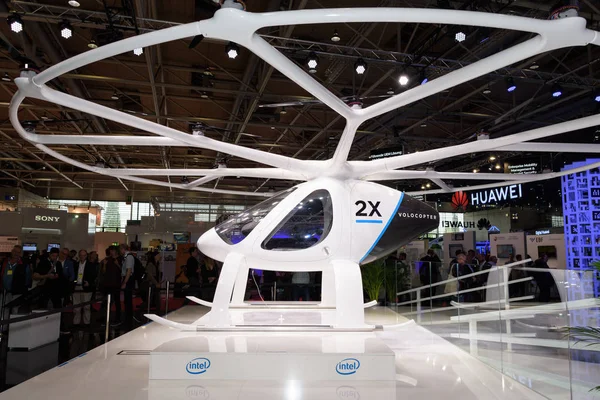
“Our partnership with the City of Los Angeles will be one of our major milestones in bringing quick, safe, affordable everyday flight to dense urban locations,” said Adam Goldstein, co-founder and co-CEO of Archer. The company’s flagship aircraft, Maker, is engineered for trips of up to 60 miles, cruising at speeds near 150 mph. Its design emphasizes environmental responsibility and community compatibility: the aircraft produces zero emissions and registers a noise footprint of just 45 dba, a level that blends into ambient neighborhood soundscapes.
The quiet operation is achieved through electric motors driving propellers at low tip speeds, avoiding the sharp acoustic signature of conventional helicopter blades whose tips approach the speed of sound. This approach not only reduces noise pollution but also reflects the growing trend in aerospace engineering toward urban-friendly propulsion systems.
Safety and reliability are central to Maker’s architecture. Redundant batteries and motors ensure that the aircraft can sustain flight even in the event of component failure. Passenger comfort has also been prioritized, with spacious interiors and a 270-degree wraparound window view that connects travelers to the cityscape below.
Archer’s economic model leans heavily on the reduced maintenance demands of electric propulsion. By eliminating thousands of critical and moving parts found in combustion engines, the company projects ownership costs to be roughly 30 percent lower than those of traditional helicopters. This reduction in mechanical complexity not only cuts costs but also enhances operational uptime, a critical factor for high-frequency urban mobility services.
The company’s momentum has been bolstered by a $1 billion order from United Airlines. “Archer’s commitment to launch their first eVTOL aircraft in one of United’s hubs means our customers are another step closer to reducing their carbon footprint, before they even take their seat,” said Michael Leskinen, United’s vice president of investor relations. Archer’s recent merger with Atlas Crest Investment Corp. has given it a $3.8 billion valuation, underscoring investor confidence in the emerging eVTOL sector.
The surge of capital and innovation in this space is not limited to Archer. Other players, such as California-based Joby and Germany’s Lilium, are advancing UAM networks in regions like Dallas-Fort Worth and central Florida. The rapid pace of development reflects both technological maturation and the willingness of major transportation stakeholders to embrace aerial solutions for urban congestion.
Los Angeles aims to lead the rollout of large-scale UAM networks. Mayor Eric Garcetti announced the city’s Urban Air Mobility Partnership in December 2020, a collaboration between the Mayor’s Office, the Los Angeles Department of Transportation (LADOT), and Urban Movement Labs (UML). The program’s objective is to integrate aerial mobility into the city’s existing transportation framework, supported by infrastructure such as vertiports—specialized hubs for takeoff and landing distributed across the metropolitan area.
UML’s role will be to work directly with Archer on infrastructure planning and deployment. “Working with companies like Archer delivers a unique opportunity to take the perspective of our programs beyond just the two dimensions of roads and railways, and into the skies,” said Lilly Shoup, UML’s executive director. For engineers, designers, and urban planners, this partnership represents a tangible step toward multi-dimensional mobility systems, where airspace becomes as integral to daily transit as asphalt and steel.