

Relativity Space Targets Full Rocket Reusability with Terran R
Relativity Space has announced its most ambitious project to date: the Terran R, a fully reusable launch vehicle designed to rival the capabilities of SpaceX’s Falcon 9. Building on the architecture of its smaller Terran 1 rocket, Terran R will share the same propellant, factory, avionics, and additive manufacturing processes, while scaling up dramatically in payload capacity. “It’s the same architecture, the same propellant, the same factory, the same 3D printers, the same avionics and the same team,” said Tim Ellis, Relativity’s CEO. He emphasized that reusability is central to the company’s vision: “I’ve always been a huge fan of reusability. No matter how you look at it – even with 3D printing, and dropping the cost, and [increasing the] automation of a launch vehicle – making it reusable has got to be part of that future.”

Terran R is designed to lift over 20,000 kilograms to low Earth orbit, approaching the Falcon 9’s stated capability of 22,800 kilograms. This marks a nearly twentyfold increase over Terran 1’s 1,250-kilogram capacity. While Relativity has not disclosed launch pricing for Terran R, Ellis confirmed the company intends to be competitive. SpaceX currently advertises Falcon 9 launches at $62 million, with internal estimates of $28 million per launch cost. Ellis noted that customer interest is evenly split between Terran 1 and Terran R, with several billion dollars in contracts “in active dialogue” and binding agreements already in place for Terran 1.
The company’s additive manufacturing approach remains central to its strategy. Over 90% of Terran R’s parts will be produced using the world’s largest 3D printers, dubbed “Stargate,” enabling rapid iteration without the need for traditional fixed tooling. “The printers, straight up with software changes, will build Terran R,” Ellis said. He contrasted this with conventional aerospace manufacturing, which often requires years of development and extensive retooling for even minor design changes. By leveraging 3D printing, Relativity can incorporate exotic and traditionally difficult-to-manufacture materials, enhancing both first- and second-stage reusability.
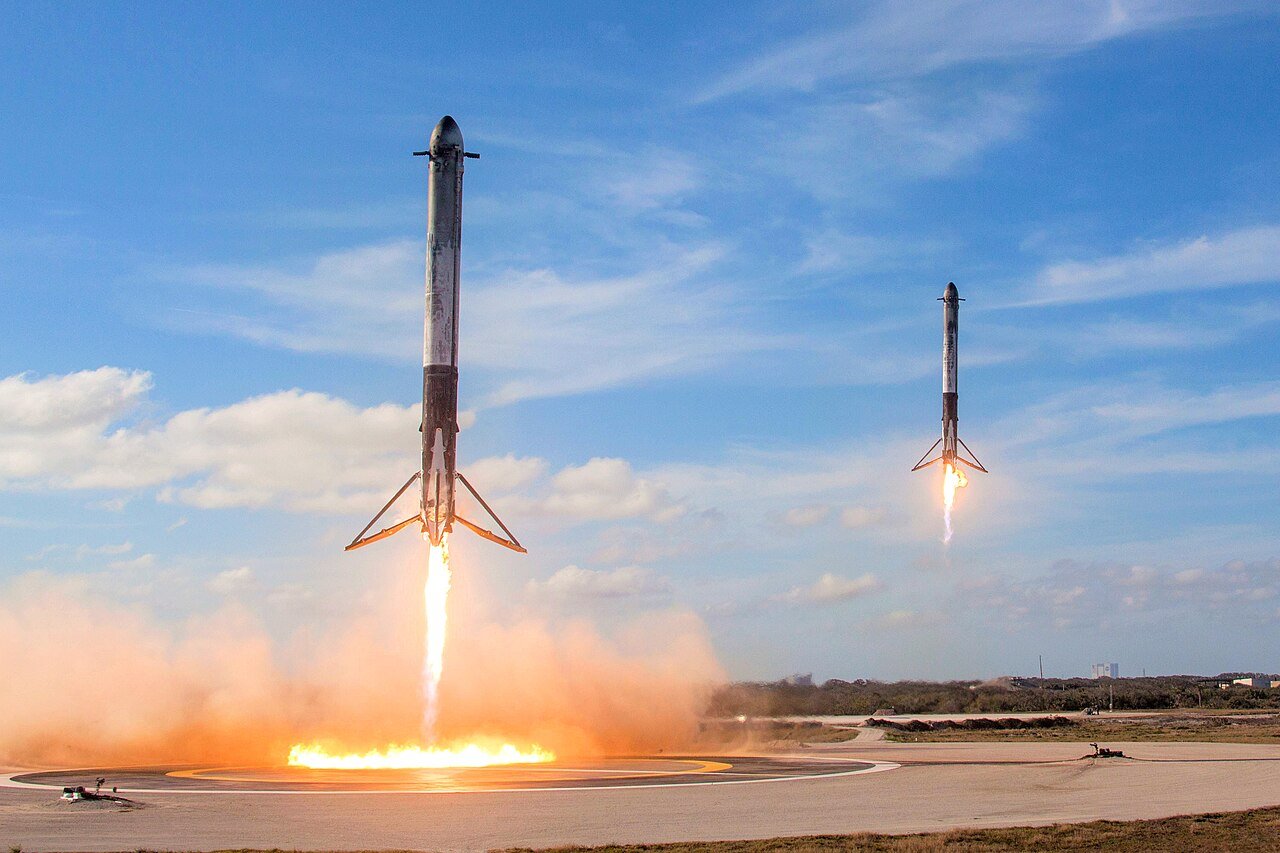
One of Terran R’s defining goals is to recover both stages of the rocket, a step beyond SpaceX’s current partial reusability. Falcon 9 boosters and nosecones are routinely recovered, but second stages are expended. Ellis believes additive manufacturing can enable designs that make full recovery feasible: “We will be able to print far more exotic and traditionally difficult-to-manufacture materials that make both first- and second-stage reusability much better.”
Relativity’s infrastructure has been prepared with this evolution in mind. Terran 1’s liquid oxygen and liquid methane propellants are aligned with next-generation reusable rocket requirements, and the company’s test facilities at NASA’s Stennis Space Center are already sized for Terran R’s larger engines. The new Aeon R engine is under development for Terran R, complementing the Aeon 1 engines used on Terran 1. Ellis confirmed that the upper stage engine for Terran R is a copper chamber design, identical to that on Terran 1’s upper stage, and that full-duration mission duty cycle tests are imminent.
Ellis stressed that despite the announcement of Terran R, the company remains focused on achieving Terran 1’s first launch, expected later in 2021. “We’re not pulling a ‘Falcon 1 to Falcon 9’ change,” he said, referencing SpaceX’s early shift from its smaller rocket to the larger Falcon 9. Terran 1 will remain in production long term, serving a segment of the market between Rocket Lab’s Electron and the Falcon 9 in both price and capability.
Relativity plans to launch Terran R from Cape Canaveral’s LC-16, where construction of its pad is underway. The company’s growth has been fueled by over $680 million in funding from investors including Tiger Global Management, Fidelity, Baillie Gifford, and Mark Cuban, giving it a valuation of $2.3 billion. Ellis sees market demand as a driving force: “There’s actually going to be a launch shortage, if you look at how many people are trying to launch payloads to space. Almost every model we’ve looked at, there need to be more launch vehicles to deploy even a fraction of the plans that people are talking about.”