

How Social Robots Reveal Human Curiosity Dynamics
Novel social interactions are inherently dynamic, requiring participants to adapt, react, and gather contextual information. A recent study employed social robots to probe the psychological determinants of human behavior in such settings, focusing on curiosity and psychological inflexibility. By removing human confederates, the researchers achieved a controlled, repeatable environment, eliminating interpersonal variability while preserving the complexity of social cues.
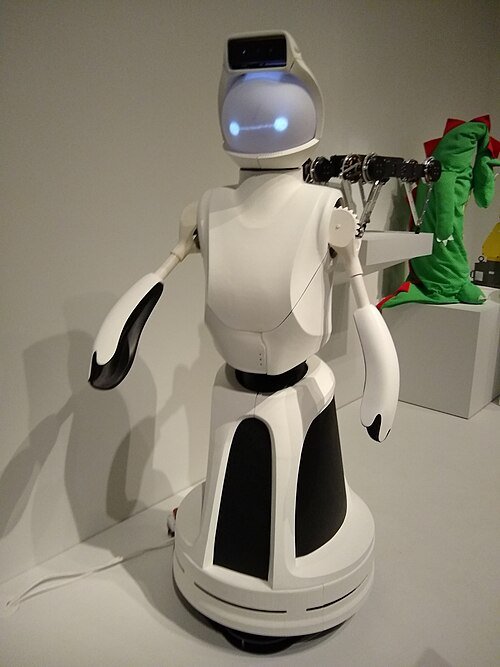
The team used NAO humanoid robots programmed with a “relationship matrix” dictating attitudes between robots and toward the human participant. Interactions were entirely non-verbal, relying on gestures validated in a preliminary study. These gestures, derived from human non-verbal behavior literature, were rated by naive observers for valence and ambiguity, yielding probability distributions that informed a Bayesian gesture-selection algorithm.
In the main experiment, three NAOs interacted among themselves and with the participant, while a fourth acted as the robotic experimenter. Eye-tracking captured participants’ gaze, which influenced the sequence of gestures—attention created action. The participant’s task was to infer the robots’ interrelationships. Learning was assessed via targeted questions after each round, while information-gathering behavior was quantified as Behavioral Error (BE), a measure of deviation from an optimal gaze strategy.
The protocol comprised six rounds: an initial, instruction-free round; four structured rounds with changing relationship matrices; and a final free-exploration round. Psychological inflexibility was measured both by self-report (Acceptance and Action Questionnaire-II) and objectively via the Wisconsin Card Sorting Test. Curiosity was assessed using the Curiosity and Exploration Inventory-II. Additional scales gauged attitudes toward robots (NARS) and perceptions of robot traits (Godspeed).
Analysis revealed distinct temporal patterns. Behavioral Error dropped significantly from round 1 to round 2, indicating rapid adaptation. Learning scores rose steadily from rounds 2 to 5, with the first round indistinguishable from random choice. Curiosity and psychological inflexibility influenced these measures at different stages: objectively measured inflexibility correlated positively with BE in early rounds, consistent with the idea that rigid cognitive styles hinder initial exploration. Self-reported curiosity showed a negative association with learning in round 1, possibly reflecting distraction from novelty, but emerged as a positive factor toward the end.
The study also examined whether attitudes toward robots moderated these effects. Robot-specific measures influenced learning primarily in early rounds, suggesting that anthropomorphism and emotional responses to robots shape initial engagement but fade as participants acclimate. Notably, curiosity effects were not significantly moderated by robot attitudes.
The findings align with established models of curiosity, such as Hebb’s and Berlyne’s inverted-U relationship between arousal and exploratory drive. High psychological inflexibility appeared to dominate when anxiety and arousal were elevated at the outset, suppressing curiosity’s role. As participants habituated, curiosity became a stronger motivator for information gathering.
By distinguishing implicit measures (BE, driven by unconscious gaze patterns) from explicit measures (learning scores from conscious responses), the study highlighted that these processes can diverge. Participants may unconsciously optimize information gathering even when explicit understanding lags, or vice versa.
Methodologically, the use of fully autonomous robots offered advantages: precise control over non-verbal cues, elimination of human confederate bias, and repeatable interaction dynamics. The gesture repertoire, quantified for valence and ambiguity, enabled probabilistic modeling of social signals—a tool potentially valuable beyond psychology, in human-robot teaming for aerospace, manufacturing, or service robotics.
Limitations included the small, predominantly student sample and the absence of verbal communication, which in human interaction carries significant informational weight. Future work could integrate speech, intonation, and emotional prosody, or test larger, more diverse populations. The framing of robot behaviors as “social interaction” by the experimenter robot may also have primed perceptions, an effect worth isolating.
Ultimately, the study demonstrated that curiosity and psychological inflexibility predict human exploratory behavior in robot-mediated social contexts, but their influence is time-dependent. Early phases are shaped more by cognitive rigidity, while later phases benefit from curiosity once novelty-induced arousal subsides. These insights not only advance social cognition research but also inform the design of adaptive, engaging robotic systems capable of eliciting and sustaining human exploration.