


Meta’s Soft Robotics Glove Brings Touch to VR
For seven years, Meta’s Reality Labs has been developing a haptic glove designed to replicate the sensation of touching and manipulating objects in virtual and augmented reality environments. The prototype, revealed publicly for the first time, integrates soft robotics principles to deliver tactile feedback without relying on bulky mechanical systems.

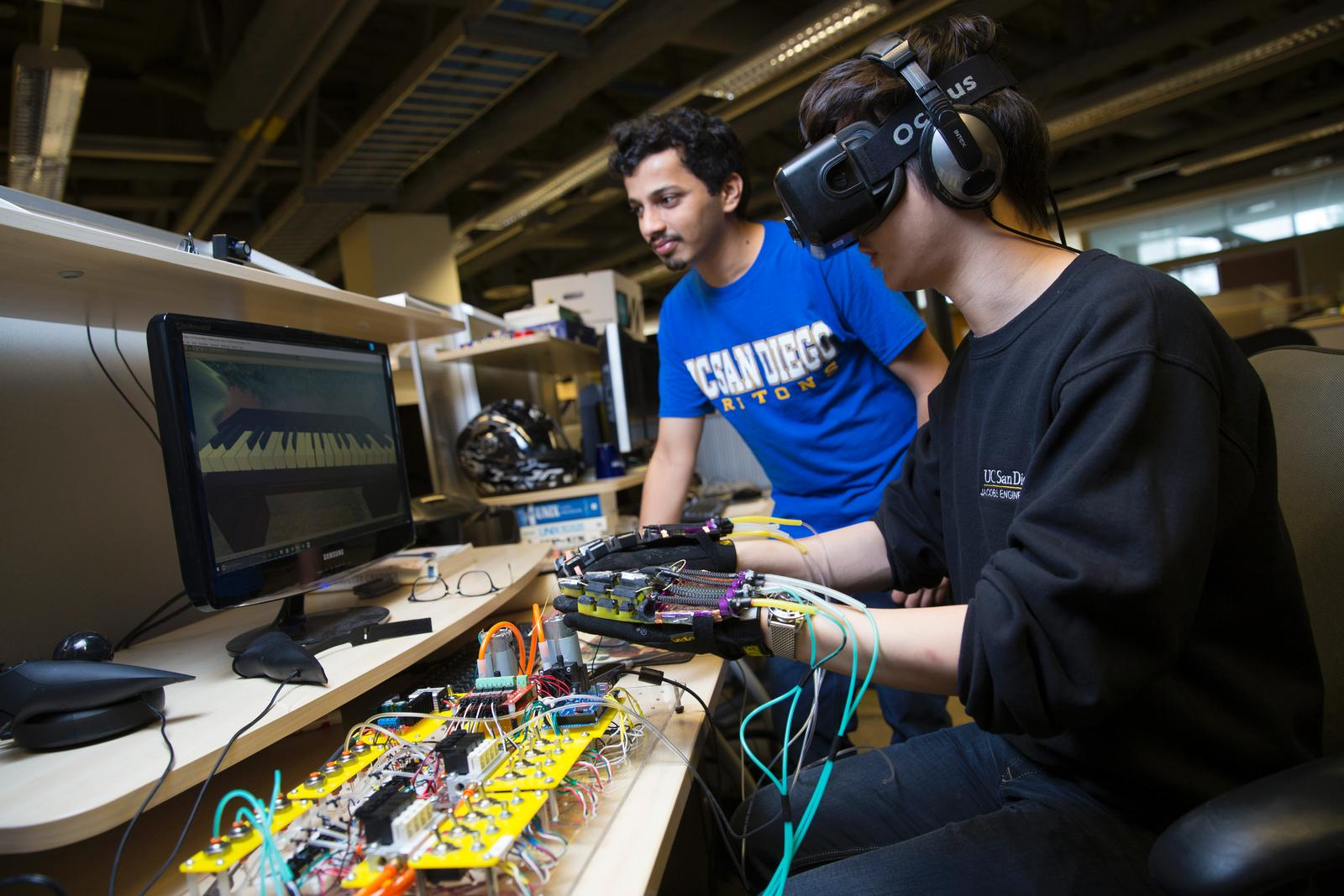
The glove’s structure features approximately 15 ridged, inflatable plastic pads—actuators—strategically positioned along the palm, underside of the fingers, and fingertips. These actuators inflate or stiffen under precise control, applying localized pressure to simulate contact with virtual surfaces or resistance when gripping virtual objects. The back of the glove is fitted with small white tracking markers for optical motion capture, while internal sensors measure finger bend angles, enabling it to function as a VR controller.
Michael Abrash, head of Reality Labs, recalls an early milestone in 2015 when a single actuator prototype convincingly simulated the feel of a ceramic plate. “I saw the plate, and I saw my finger on the plate, and I heard the sound — that kind of scraping sound across it — and I felt the vibration,” he says. “And I will tell you, I was running my finger over a ceramic plate.” This integration of tactile, visual, and auditory cues forms the foundation of the glove’s immersive potential.
The technology draws on advances in soft robotics, replacing traditional motors with miniature air valves for lightweight, responsive actuation. While other companies have explored haptic wearables—some incorporating temperature feedback—Meta’s consumer hardware ecosystem, anchored by the Quest VR system, positions it uniquely to standardize such devices for mass-market use. This would encourage developers to design applications that leverage tactile interaction alongside visual and audio immersion.
Reality Labs envisions haptic gloves as one of several input methods for future AR and VR systems, complementing electromyography (EMG) wristbands that detect nerve signals to translate muscle activity into digital commands. Meta’s acquisition of CTRL-Labs in 2019 brought EMG expertise into the fold, though the haptic and EMG teams work independently. Abrash draws historical parallels to transformative interface innovations: “[Doug] Engelbart and Xerox PARC are the only time that fundamentally the way we interact with the digital world has ever changed… AR glasses are going to require that to happen.”
Significant engineering challenges remain before the gloves reach consumer readiness. Increasing actuator density from tens to hundreds or thousands is a priority, enabling finer distinctions between textures and surface contours. As engineer Katherine Healy notes, “You could pet a dog, but you wouldn’t feel the texture… You need high-density actuation to be able to really get that sensation, and this glove does not do that.”
Miniaturization is equally critical. Although slimmer than early gaming gloves like the Nintendo Power Glove, the current prototype must become lighter, fully wireless, and unobtrusive enough for natural interaction in both real and virtual contexts. Fit precision presents another hurdle, potentially requiring custom sizing through techniques such as 3D knitting. Durability and maintenance add complexity; Healy emphasizes the importance of washability for wearable garments, a capability not yet achieved in the prototype.
Privacy and data security considerations accompany the glove’s biometric sensing capabilities. Abrash compares EMG input to keyboard typing, yet acknowledges that fine-grained motion data could reveal sensitive health information, such as early signs of neurological conditions. Policies governing data retention, device-local processing, and third-party access will be essential to safeguard users.
Ultimately, the project aims to balance realism with practicality. “One of the interesting things about haptic gloves is that obviously we can’t reproduce reality exactly, which is different from audiovisual stuff,” Abrash explains. While high-resolution displays and precise audio can closely mimic real-world stimuli, haptic systems must rely on perceptual thresholds—creating sensations convincing enough for users to accept virtual objects as tangible. “There’s a new physics where nothing is solid on a large scale.”
As Abrash suggests, future iterations may allow users to pet a virtual dog. The tactile experience may differ from reality, but “emotionally, experientially — it will feel as real.”