

Autonomous Drones Target Water Pollution with Precision
At Western Kentucky University’s Gatton Academy of Mathematics & Science, a high school program known for fostering advanced STEM research, student Sahil Krishnani has been applying autonomous aerial systems to environmental monitoring. In less than two years at the academy, he has undertaken three research projects, the most recent focusing on detecting water pollution using drone-based hardware and software.
The project, titled “Water Pollution Detection Using Autonomous Drone Hardware and Software,” was developed with fellow Gatton students Harrison Gover and Nishu Anekere. It leverages aerial autonomy to identify contaminants without direct water contact. As Krishnani explained, “By doing this we are able to identify 85% of water pollution at a 90+% success rate without touching the water. This not only helps keep our bodies of water safe for us but also for the living things in the environment as well.”
The team’s approach builds on Krishnani’s earlier work in drone systems, refining it toward a practical application relevant to their community. “As I had previously done drone research, my team and I looked to expand our previous project into something a little more applicable and focused so we looked at something that could help our community. One thing that we saw is that water pollution is an issue that is very close to home with the Ohio River, Barren River Lake, and Tug Fork being affected by it. With our project, we are able to identify the pollution effectively and alert authorities immediately which causes less environmental damage and keeps the waters safe for everybody.”
Prior to this environmental monitoring effort, Krishnani had completed two other drone-focused projects: “Developing Autonomous Drone Hardware and Software Using Python/Swift and Rpi” and “The Best Laid Plans of Drones in Flight: Drone Trajectory Planning and Object Avoidance.” These earlier studies provided the technical foundation for integrating sensing payloads, optimizing flight paths, and implementing object avoidance algorithms—capabilities essential for safe and efficient environmental data collection.
His research is conducted within WKU’s Center for Energy Systems (CES), where he is one of three Gatton students serving as student research assistants. The CES operates with a mission to create a multidisciplinary environment in which students gain practical skills through the delivery of industrial projects. Successful outcomes are intended to advance scientific knowledge and foster technological development for industrial partners. This environment has given Krishnani access to resources, mentorship, and the opportunity to present his work in competitive forums.
“I have taken part in research at WKU Center for Energy Systems, which has allowed me to find my passion and given the opportunity to present in a lot of places as well — one of which is going to be the International Science and Engineering Fair for High School Students in May. Without the opportunities through WKU and Gatton in particular, I think that I would be a completely different person, but now I feel as if I am ready to tackle the challenges I am going to face head-on and most importantly with a smile on my face,” Krishnani said.
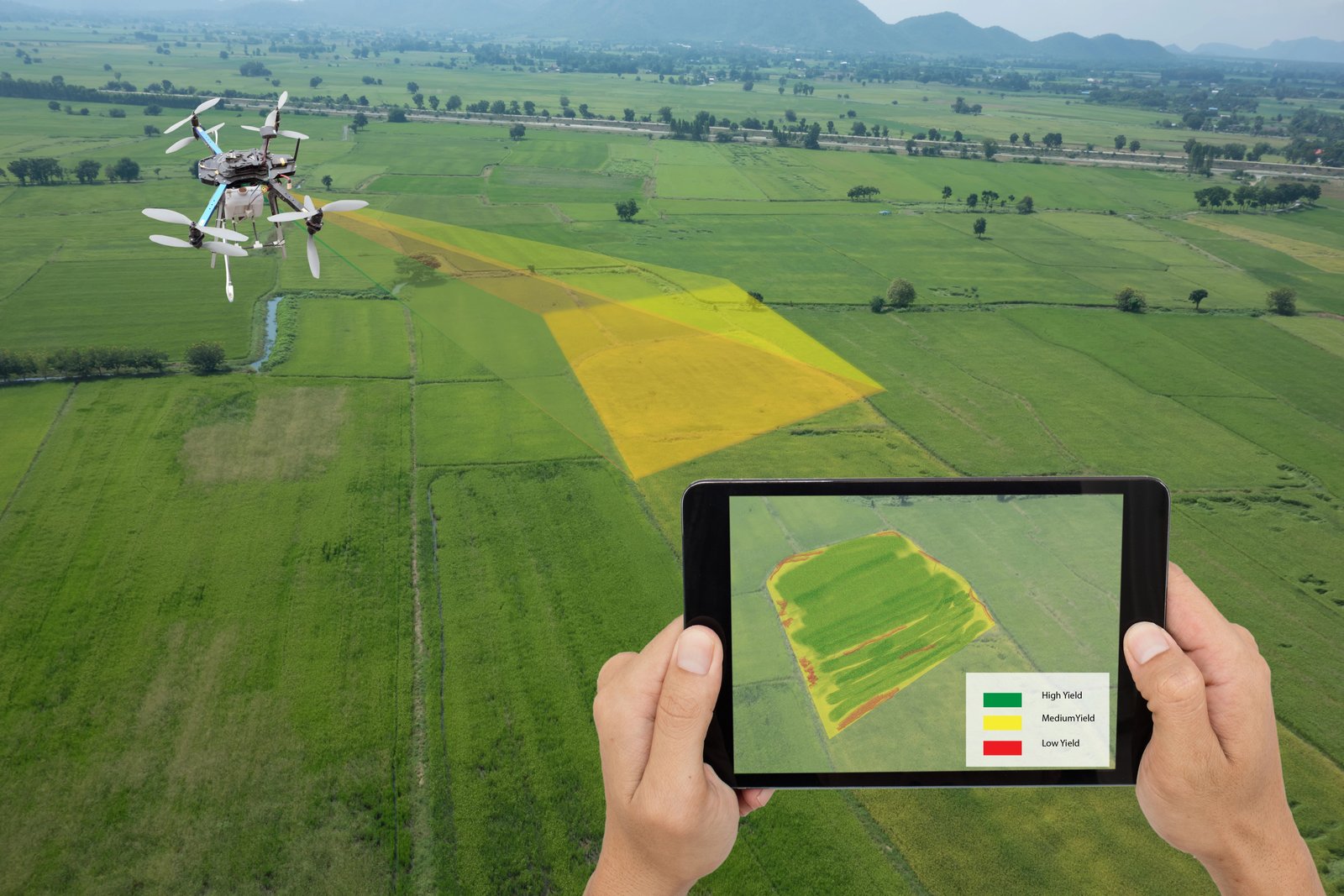
From a technical standpoint, the team’s method aligns with a growing trend in environmental engineering: deploying unmanned aerial vehicles (UAVs) equipped with optical or multispectral sensors to detect pollutants. By flying over targeted waterways, drones can collect high-resolution imagery and spectral data, which is then processed using machine learning algorithms to classify contamination levels. This approach reduces the need for manual sampling, minimizes human exposure to hazardous substances, and enables rapid response.
The success rates cited by Krishnani—identifying 85% of pollution with over 90% accuracy—suggest effective calibration between sensor data and classification models. Achieving such performance requires careful integration of onboard processing hardware, reliable communication links, and robust flight control software. His earlier work with Raspberry Pi-based systems and programming in Python and Swift likely contributed to building these capabilities.
Outside of the lab, Krishnani participates in Arabic Club and other activities, crediting his peers for enriching his experience. “My friends and fellow Academy students have really shaped my experience and shown me some of the great things in life,” he said. Looking ahead, he plans to establish a company focused on using robotics to improve quality of life through creative engineering solutions.