

Inside SpaceX’s Falcon 9: Engineering and Legacy
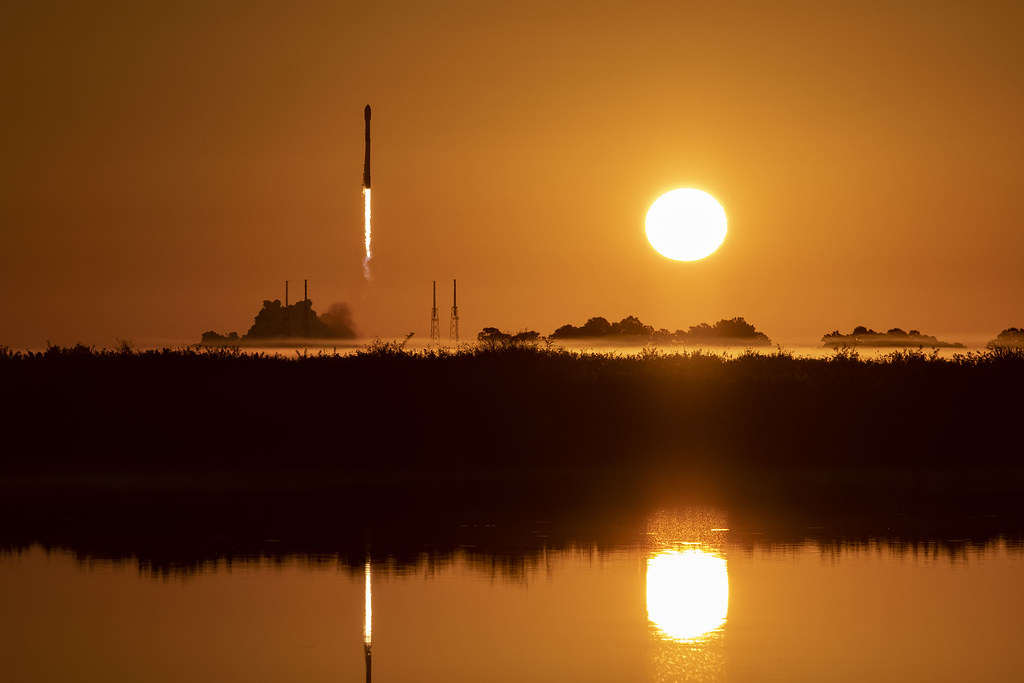
On January 24, 2021, SpaceX’s Falcon 9 rocket lifted 143 small satellites into orbit from Space Launch Complex 40 at Cape Canaveral Space Force Station, marking the Transporter-1 rideshare mission. This launch underscored Falcon 9’s versatility as the primary vehicle for delivering satellites, Dragon cargo spacecraft, and Crew Dragon missions to orbit.
Falcon 9 has become a workhorse for transporting the Dragon spacecraft to the International Space Station (ISS). Dragon’s first visit in October 2012 marked the inaugural private spacecraft docking with the ISS, and since then, more than 25 cargo missions have been completed. Since 2020, Falcon 9 has also carried astronauts to the ISS under NASA’s Commercial Crew Program and for other clients.
The rocket’s design reflects SpaceX founder Elon Musk’s vision for reducing spaceflight costs through reusability. The first stage is engineered to return to Earth, landing either on solid ground or on drone ships stationed at sea. This capability supports missions ranging from Starlink broadband satellite deployments to classified payloads for the National Reconnaissance Office.
Crew Dragon missions have expanded beyond NASA to include Axiom Space, the Polaris Program, and other commercial ventures, with destinations in low-Earth orbit and the ISS. Falcon 9’s engineering also feeds into the Falcon Heavy, a larger cargo vehicle that incorporates a reinforced Falcon 9 core and two additional Falcon 9 first stages as strap-on boosters.
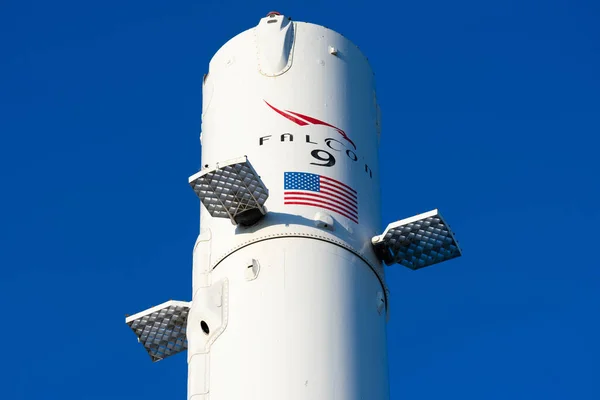
Technically, Falcon 9 stands 229.6 feet tall with a diameter of 12 feet, and a mass of 1,194,000 pounds. It can deliver 28,991 pounds to low Earth orbit and 10,692 pounds to geosynchronous transfer orbit. The first stage, powered by nine Merlin engines, produces 1.53 million pounds of thrust at sea level, burning for 162 seconds. The second stage, with a single Merlin engine, delivers 210,000 pounds of thrust over a 397-second burn. Both stages use aluminum-lithium alloy tanks holding liquid oxygen and RP-1 kerosene, connected by a carbon-fiber aluminum-core composite interstage.
Later iterations of Falcon 9 introduced grid fins for aerodynamic control during descent and deployable landing legs for touchdown. These refinements have enabled consistent recovery of first stages, a milestone in orbital launch economics.
SpaceX announced Falcon 9 in 2005, initially pricing flights at up to $35 million. Development cost exceeded $300 million, with NASA’s Commercial Orbital Transportation Services (COTS) contract providing up to $278 million contingent on milestone completion. In 2014, NASA awarded SpaceX $2.6 billion under the Commercial Crew Program, leading to the first crewed ISS mission in 2020. Additional revenue streams include launches for the National Reconnaissance Office and commercial customers purchasing payload capacity.
The rocket’s primary structure was completed in April 2007, with multiple engine firings beginning in January 2008. By November that year, SpaceX achieved a full mission-length firing, highlighting Falcon 9’s ability to compensate for engine failures mid-flight. The first vertical integration at Cape Canaveral occurred in January 2009, and the inaugural launch followed on June 7, 2010. Falcon 9’s first Dragon flight in December 2010 returned safely to Earth, but early missions faced challenges, including engine issues in 2012 and a failed satellite deployment.
A major setback occurred in June 2015 when a faulty strut caused a mid-air explosion during a Dragon resupply mission. Flights resumed in 2016, and the rocket has since maintained a strong reliability record.
Falcon 9’s role extends to flagship projects like Starlink, which aims to deliver broadband to remote regions via thousands of satellites. It has also supported high-profile crewed missions such as Inspiration4 in 2021, commanded by Jared Isaacman to benefit St. Jude Children’s Research Hospital. Isaacman’s Polaris Program plans further missions, with Polaris Dawn targeted for 2022.
Falcon Heavy’s debut on February 6, 2018, famously carried a Tesla Roadster with the mannequin “Starman” into space. Both Falcon 9 and Falcon Heavy are expected to be succeeded by Starship, selected by NASA for Artemis lunar landings and envisioned by Musk for eventual Mars missions. Starship has conducted several test flights and awaits FAA environmental approval for its first orbital attempt.