

Perseverance Explores Ancient Martian Delta for Signs of Life
Perseverance, NASA’s Mars 2020 rover, has entered a pivotal stage in its mission, now focused on the ancient river delta within Jezero Crater. This region, shaped roughly 3.5 billion years ago, holds layered sedimentary deposits from a time when liquid water flowed across the Martian surface. Ken Farley, W.M. Keck Foundation Professor of Geochemistry at Caltech and project scientist for Perseverance, described the delta as “a very good place to look” for evidence of ancient life, noting that lakes are inherently habitable environments.
The rover’s second major science campaign, termed the “Delta Front,” began on April 18, the 415th sol of the mission. This phase follows a year-long exploration of the crater floor, where all collected samples were igneous rocks, not the sedimentary deposits originally expected. Farley explained that while orbital images suggested lakebed materials might be present, ground observations revealed a different geologic history—one where sedimentary rocks may have eroded away over billions of years.
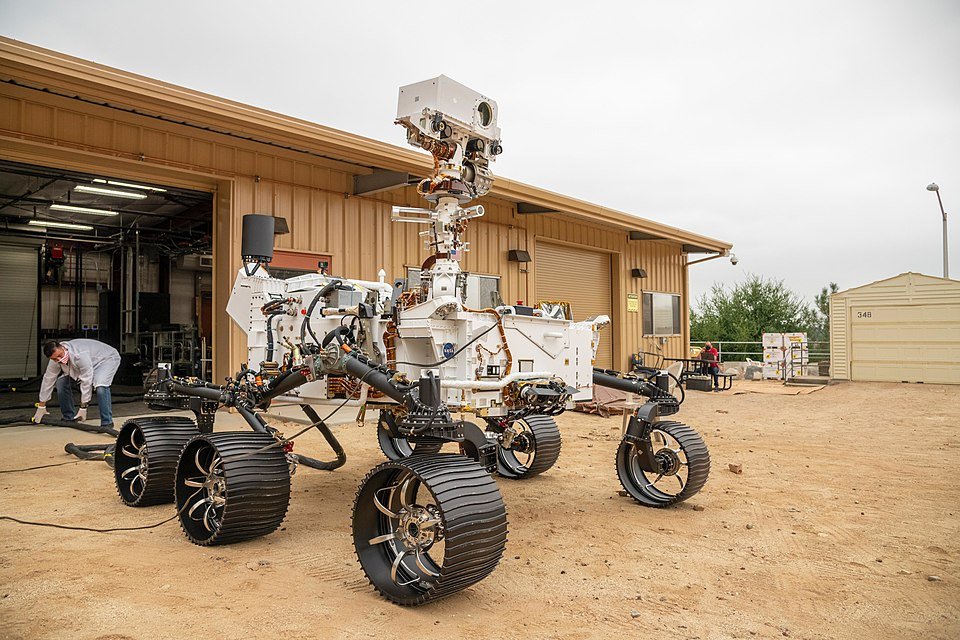
Perseverance has so far collected four distinct rock samples, each in duplicate, filling eight sample tubes. The selection process is guided by a “notional cache” concept developed years before landing, aimed at capturing a diverse set of rock types. The rover’s instruments, including Mastcam-Z, SHERLOC, PIXL, and MOXIE, are used to assess each candidate site. Mastcam-Z’s high-resolution mosaics are described by Farley as “the first thing I look at… because they just make me feel like I’m there.”
Navigating the delta presents new challenges. The base of the Delta Front forms a steep cliff, but the team identified a valley-like cut allowing a shallow-grade ascent. The terrain features sand ripples between geologic targets, requiring careful route planning. Currently, Perseverance is in the “Cannery Passage” loop, imaging exposed layers before driving onto the delta itself.
The mission’s engineering assets extend beyond the rover. Ingenuity, the Mars helicopter originally intended for a short technology demonstration, has become a valuable scout. Farley noted that Ingenuity “shows no indication of not being able to survive for the long term” and now assists in terrain reconnaissance and even imaging the rover’s entry, descent, and landing hardware. Ingenuity’s ability to take shortcuts over terrain impassable to the rover has helped it keep pace during long drives.
Perseverance’s sample handling system—a complex internal mechanism—remains mission-critical. Farley recalled seeing early testbed videos and realizing “this thing is so complicated and it must work.” Despite encountering a pebble jam months ago, the system was cleared and continues to operate successfully.
Unexpected scientific findings have emerged. The igneous rocks on the crater floor show signs of interaction with water, possibly groundwater, suggesting past habitable conditions. This underscores the unpredictable nature of planetary exploration: orbital data can guide hypotheses, but in-situ observations often reveal surprises.
The rover’s autonomy is another advancement. A dedicated image-processing processor enables drives up to 300 meters in a single sol, with onboard navigation reducing reliance on ground commands. Farley emphasized that increasing spacecraft decision-making capability “will really speed everything up” in future missions.
Looking ahead, after completing the Delta Front campaign over the next six to eight months, the mission plans to traverse marginal units near the crater rim—potentially lakeshore or carbonate deposits—before ascending nearly a kilometer to Nili Planum, a geologically distinct region. These steps align with the overarching goal: collecting and caching samples for eventual return to Earth, where laboratories can perform detailed analyses impossible with current rover instruments.
For the engineering and science teams—spread across the globe and often collaborating remotely—the mission is a testament to coordinated effort. Farley highlighted the importance of trust within such a large team, noting that “people, individuals built this marvel bit by bit.” Perseverance’s journey through Jezero’s delta represents not only a search for ancient life but also a demonstration of advanced robotics, materials engineering, and operational ingenuity on another world.