

Harnessing the ISS to Ignite STEM Curiosity
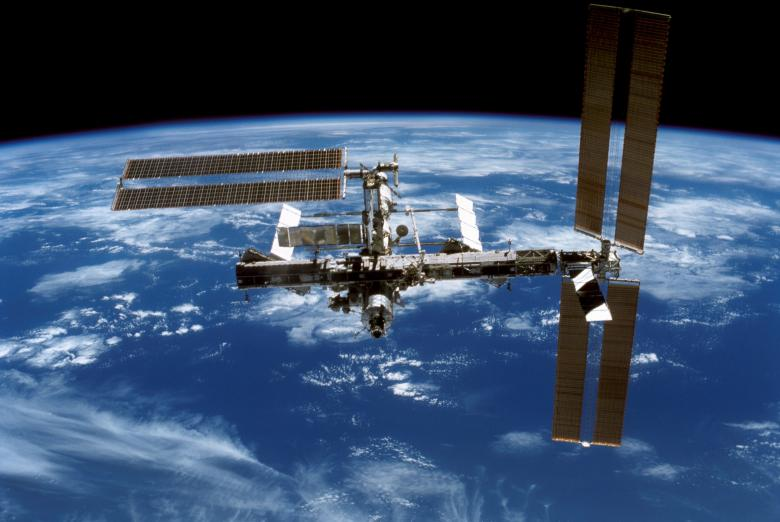
Fifty-three years after Apollo 11’s televised lunar landing sparked a generation’s fascination with space, the International Space Station is being positioned as the next great catalyst for scientific inspiration. At the 11th Annual International Space Station Research and Development Conference (ISSRDC), a panel of educators, astronauts, and innovators explored how STEM-focused educational experiences can propel students toward careers that advance technology and exploration.
The ISSRDC, hosted by the Center for the Advancement of Science in Space, NASA, and the American Astronautical Society, is the only conference dedicated exclusively to showcasing how the ISS drives science, technology, and a sustainable low Earth orbit (LEO) economy. This year’s event highlighted a decade of research conducted aboard the station, including experiments conceived and led by students. These projects often yield tangible scientific contributions and result in peer-reviewed publications, underscoring the ISS’s dual role as both a laboratory and a learning platform.
For students of the 1960s and 1970s, the Apollo program was a touchstone—its engineering triumphs and human exploration milestones ignited passions that evolved into careers in science and technology. Today, advocates hope the ISS can replicate that effect for a new generation. Alex Dainis, owner of Helicase Media, develops digital educational content aimed at sparking interest in science. She collaborates with Genes in Space, an annual national research competition for grades 7 through 12 funded by Boeing and miniPCR bio, and supported by the ISS National Laboratory and New England BioLabs. The program invites students to design DNA-based experiments that exploit the ISS’s microgravity environment to address real-world challenges.
“I think using something like space, and to open that up to students, is great; there’s already so much wonder and excitement around the idea of exploration,” Dainis said during the panel. “I think that using tools like the ISS and using tools like space education are a great way to open up crucial fields like biology, chemistry, and genetics to students.”
NASA astronaut Jeanette Epps emphasized that inspiration alone is not enough; accessibility is equally critical. “We need to re-engage students like with the Apollo era, because through space, you can inspire a whole generation,” Epps said. “We need to get that passion back and drive more students into engineering, math, and science so that we can continue to not only further innovation in this country but the world as well.” She linked this effort directly to future exploration goals, noting that a sustained presence on the Moon and eventual missions to Mars will depend on a robust pipeline of STEM talent. Epps sees outreach as part of her mission, leveraging her role to transmit enthusiasm for space and science to young audiences.
Maynard Okereke, founder of Hip Hop Science and moderator of the discussion, framed curiosity as the engine behind both personal achievement and scientific progress. “A lot of us are here because we’re curious—curious about the future of space exploration and what it has in store,” he said. “Curiosity is what drives everything I do, and curiosity is nature’s Ph.D. I’ve been able to accomplish a lot because I’ve been curious, and I want to use that to inspire others.”
The ISS National Lab’s educational initiatives aim to translate that curiosity into capability. Through its Space Station Explorers program, it connects educators, learners, and organizations to the unique opportunities the ISS offers. These collaborations produce hands-on STEM experiences, from designing experiments for launch to developing classroom resources that integrate space-based research. By fostering scientific literacy and problem-solving skills, the ISS National Lab is cultivating the workforce that will sustain and expand the LEO economy.
For engineers, students, and enthusiasts alike, the ISS serves as a tangible reminder that space is not only a frontier for exploration but also a laboratory for innovation, a classroom without borders, and a stage where the next generation of scientists and engineers can take their first steps toward shaping humanity’s future beyond Earth.