

Rafael Unveils Upgraded Naval Weapon Systems at NAVDEX 2023
Rafael Advanced Defense Systems presented significant upgrades to two of its flagship naval weapon solutions at NAVDEX 2023, underscoring the company’s push to integrate advanced counter-unmanned aerial system (C-UAS) capabilities and extended-range precision strike options into maritime platforms.

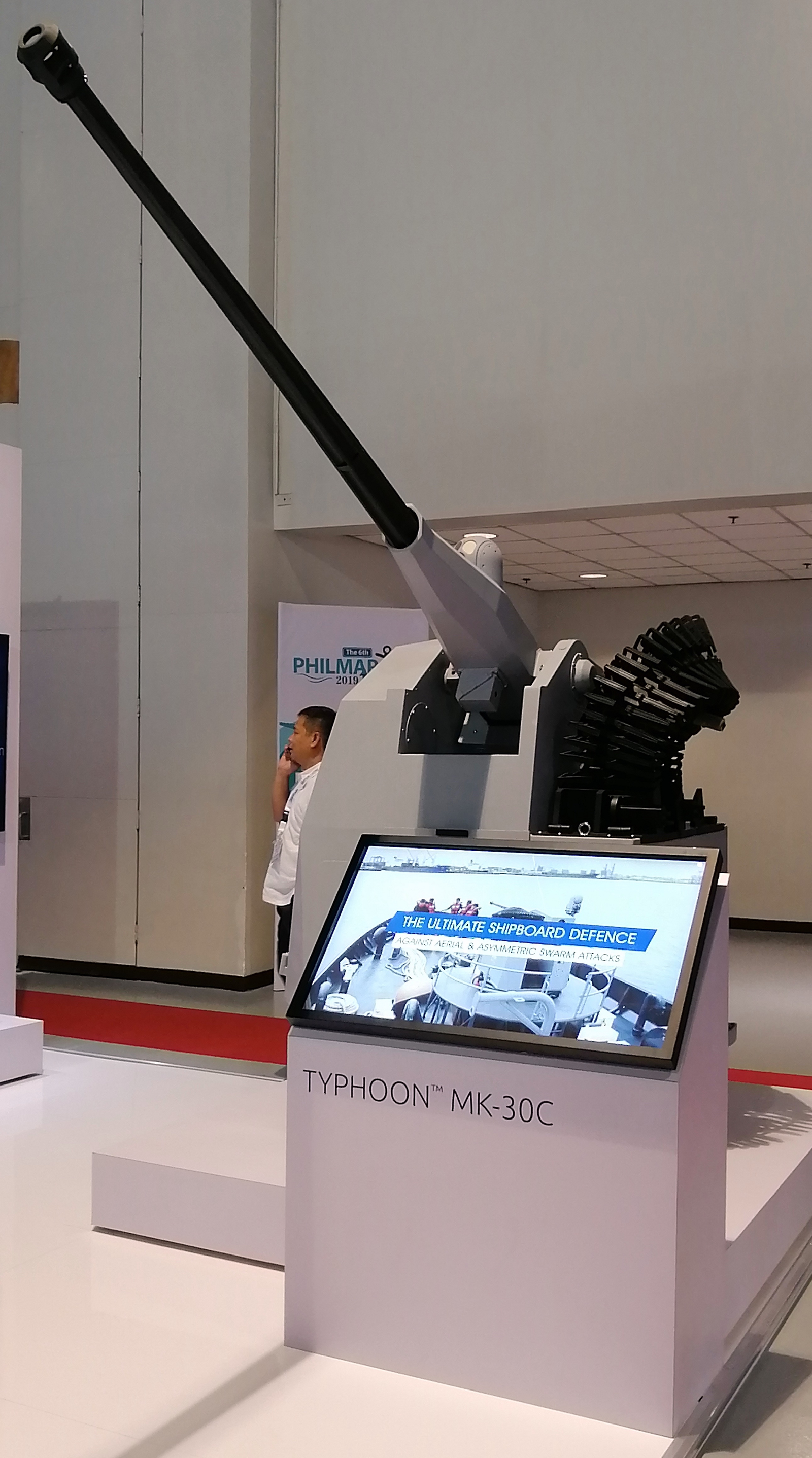
The enhanced TYPHOON C-UAS configuration builds on Rafael’s long-standing Remote Controlled Weapon Station (RCWS) lineage, which has accumulated a global installed base exceeding 750 medium-caliber stabilized systems. The TYPHOON Mk30-c and 25 mm-class variants are already in service with multiple navies, including the US Navy, and have been adapted to counter airborne, marine, and shore-based threats. In a recent live-fire series, the system demonstrated interception of small and medium unmanned aerial systems under varied maritime conditions. Rafael confirmed that these trials achieved “successful interception rates” and will be presented with recorded footage from at-sea engagements.
Key to the improved performance is the integration of AI-powered Automatic Fire Correction and Automatic Target Recognition (ATR). These functions process data from a synchronized suite of multi-spectral sensors, enabling the RCWS to track, classify, and engage targets with high accuracy. Intelligent effectors, paired with stabilized gun mounts, allow rapid engagement cycles even in high sea states. This approach reflects a broader industry trend toward sensor fusion and automated fire control in naval close-in defense systems.
The TYPHOON family’s recent contracts illustrate its growing footprint in the Asia-Pacific region. In late 2022, Rafael secured a major order from a leading Asian navy for the Mk30-c variant. Additionally, the Philippine Navy has commissioned TYPHOON and mini-TYPHOON RCWS aboard its FAIC-M / SHALDAG Mk5 fast attack craft as part of a complete Rafael combat suite. These deployments highlight the system’s adaptability to both large surface combatants and smaller patrol craft.
Alongside the TYPHOON upgrades, Rafael showcased the sixth-generation Naval SPIKE NLOS (Non-Line-of-Sight) missile system. This iteration extends the missile’s maximum range to 32 km while retaining electro-optical guidance and advanced fire control. The system is designed to enable offshore patrol vessels and similar platforms to engage naval and coastal targets with precision from beyond visual range. Compatible with multiple warhead types—including High Explosive Anti-Tank (HEAT), Penetration Blast Fragmentation (PBF) with detonation control, and fragmentation—the Naval SPIKE NLOS offers flexible lethality against diverse threat sets.
Operational in various navies and fielded across 39 countries, including 19 NATO members, the SPIKE family’s modular architecture supports integration into different launch configurations. The 6th-generation enhancements focus on improved seeker performance, enhanced datalink robustness, and refined targeting algorithms, ensuring accurate engagement even in contested electromagnetic environments.
Rafael also brought attention to its C-GEM shipborne off-board RF Active Decoy (RFAD) system. Designed to counter modern anti-ship missile threats, C-GEM operates by manipulating the electromagnetic spectrum to jam and deceive incoming seekers. The system deploys from the host vessel but functions independently of ship maneuvers, creating multiple false targets and complicating enemy targeting solutions. This capability addresses the increasing sophistication of radar-guided missile systems and complements hard-kill defenses by adding a soft-kill layer to a vessel’s survivability suite.
The combined display of these systems at NAVDEX 2023 illustrates Rafael’s approach to layered maritime defense: pairing automated, high-precision gun systems for close-in engagements with long-range precision missiles and advanced electronic countermeasures. By integrating AI-driven fire control, multi-spectral sensing, and adaptable effectors, the company is positioning its solutions to meet the evolving demands of naval operations in both littoral and blue-water environments.