

Eurodrone Design Delays Highlight Complex European Collaboration
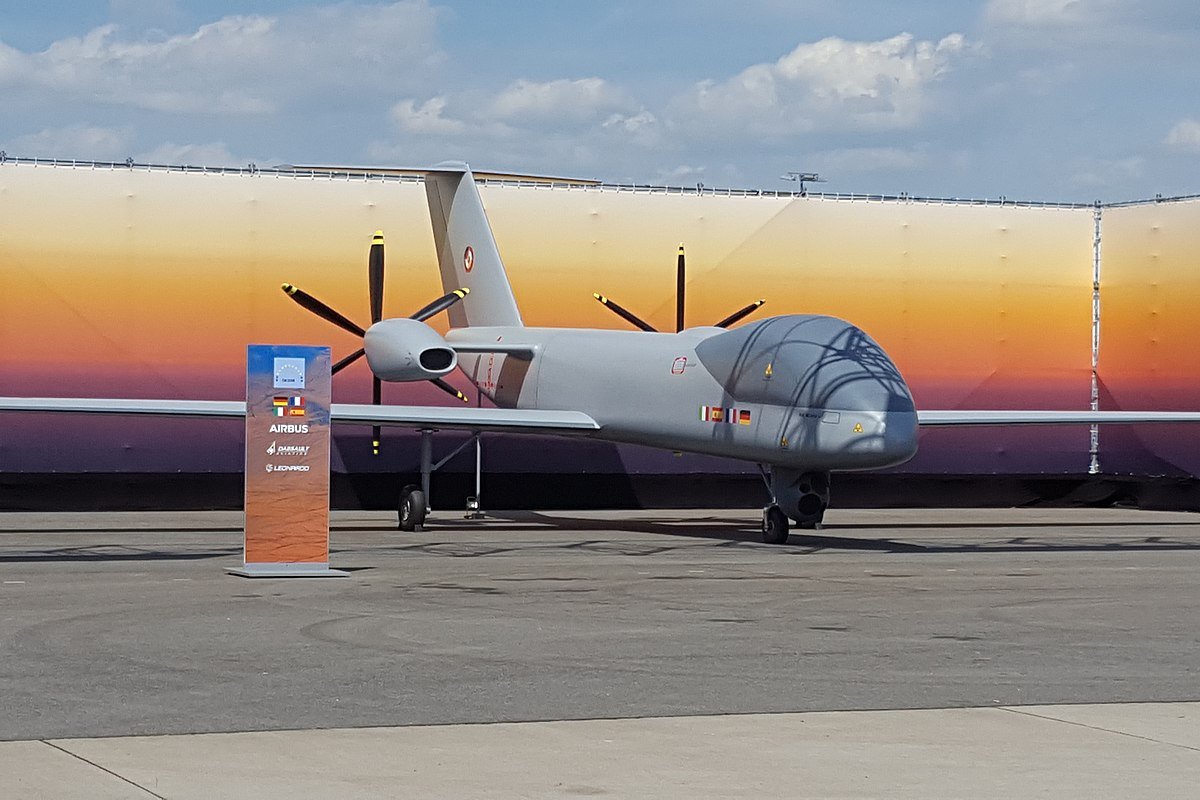
Airbus is extending the timeline for the preliminary design review of the Eurodrone, a medium-altitude, long-endurance unmanned aerial vehicle backed by four European nations. Chief Executive Guillaume Faury described the review as “a very important milestone of each and every program, when we freeze the general design, meaning all specifications can be reached based on this general design.” He confirmed the milestone has been postponed, citing challenges in aligning specifications with the evolving design.

A French business publication reported that the delay in the preliminary design has pushed back the critical design review, originally expected later this year. Drawing on a German defense ministry report, the article pointed to a perceived lack of coordination between Airbus and Dassault Aviation as a contributing factor. Airbus Defence and Space serves as prime contractor, with Airbus DS in Spain, Dassault in France, and Leonardo in Italy as key partners.
The €7.1 billion program, launched in February 2022, calls for 20 systems—comprising 60 aircraft and 40 ground stations—distributed among France, Germany, Italy, and Spain. Faury emphasized there was “no communication issue with any of the different partners” and that Airbus continues to act as integrator, moving forward despite the technical convergence challenges.
Dassault, responsible for the flight control system, is awaiting specifications from Airbus, according to the German report. In parallel, the European arms procurement agency Occar initiated certification work for the Eurodrone’s engine with the European Union Aviation Safety Agency on February 7. The chosen powerplant is the Catalyst engine from Avio Aero, an Italian unit of General Electric Aerospace. Occar noted, “The Eurodrone will integrate the Catalyst engine produced by AVIO AERO, fully ITAR free and produced in Europe, that is planned to receive a full civilian certification released by EASA.” The ITAR-free status ensures freedom from U.S. export control restrictions.
Airbus DS selected the Avio Aero engine over a competing Safran design, a decision that sparked debate in France. Safran will nonetheless contribute the undercarriage and its Euroflir 610 electro-optical system. The program also gained an international dimension when Japan joined as an observer in November 2023, after requesting the status in September. Occar highlighted “Japan’s willingness to explore opportunities to collaborate on subjects of common interest and its recognition of the importance of cooperation between Japan and Europe.” Japan is also a partner in the Global Combat Air Program alongside Britain and Italy, developing a stealth fighter for a planned 2035 debut.
Occar’s website describes the European MALE RPAS as “a key enabler for future operations ensuring to European nations state of the art capabilities” and “a key pillar in any FCAS to improve the collaborative combat capabilities.” France, Germany, and Spain are pursuing their own Future Combat Air System, which will compete with the Tempest program. The twin-engine, turboprop Eurodrone is slated for a first flight in 2030.
In France’s private sector, Turgis & Gaillard is preparing flight tests for its Aarok unmanned combat aerial vehicle prototype in the first half of the year. The aircraft, shown at the Paris Air Show in 2023, has been fitted with a temporary manned cockpit for initial trials. Chief Executive Patrick Gaillard stated, “We will also test the sensors, communications, and then the air-to-ground capability.” Two former military pilots will conduct the flights, which are expected to run through the year. The company is seeking a launch order to fund further testing toward certification.
Turgis & Gaillard has signed an agreement with Ukrainian manufacturer Antonov to act as local partner should Ukraine order the drone. Interest has centered on the Aarok’s communications, intelligence, surveillance, and reconnaissance functions, as well as its ability to carry the AASM powered smart bomb. The firm accompanied French Armed Forces Minister Sébastien Lecornu on a visit to Kyiv in September 2023.
The war in Ukraine has underscored the operational value of affordable, readily deployable drones, with Ukrainian forces adapting aerial and maritime platforms for strikes against Russian targets. Airbus, meanwhile, reported 2023 adjusted operating profit of €5.8 billion, a four percent increase, and revenue of €65.4 billion, up eleven percent year-on-year.