

Multi-Agent Reinforcement Learning Driving Smart Factory Agility
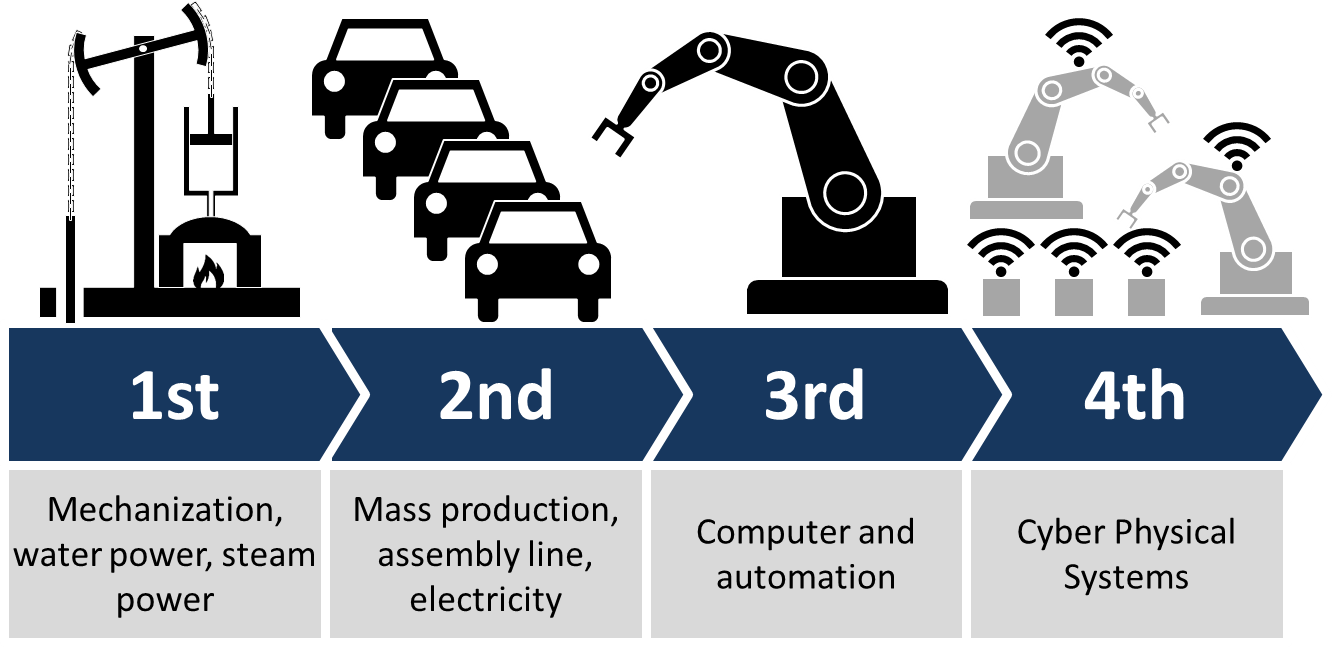
At the core of Industry 4.0, the smart factory integrates automation, mass customization, and self-organization into a highly connected manufacturing ecosystem. These environments are inherently dynamic, with production machines, material handling systems, and autonomous devices making countless real-time decisions. The challenge lies in managing uncertainty—unexpected events such as equipment breakdowns or sudden job insertions—while maintaining efficiency and agility. Traditional optimization methods often falter under these conditions due to their computational demands and inability to adapt rapidly.

Artificial intelligence, particularly reinforcement learning (RL), offers a pathway to intelligent control in such settings. RL enables agents to learn optimal strategies through interaction with their environment, guided by reward signals. However, the distributed nature of smart factories—with multiple autonomous decision-makers—makes multi-agent reinforcement learning (MARL) more suitable than single-agent approaches. MARL allows decentralized agents to cooperate or coordinate, adapting collectively to evolving conditions.
In MARL, each agent’s actions influence the environment and, consequently, the perceptions of other agents, leading to non-stationarity. Solutions range from independent action learners (IALs), which treat other agents as part of the environment, to joint action learners (JALs) that coordinate decisions but face challenges like credit assignment. Value decomposition methods such as QMIX, operating under centralized training and decentralized execution (CTDE), address credit assignment by linking local and global rewards, ensuring that optimal local actions contribute to system-wide performance.
Applications in smart factories span several domains, with scheduling and transportation being the most studied. In job-shop scheduling, MARL has been used to handle dynamic changes, outperforming heuristic methods in metrics like mean flow time and lateness. For example, multi-agent deep Q-networks (DQNs) have coordinated production stages in semiconductor manufacturing, while actor–critic methods have optimized assembly scheduling in aerospace engine production. Decentralized approaches reduce decision latency and computational overhead, enabling agile responses.
Transportation tasks involve autonomous guided vehicles (AGVs), drones, and overhead hoist transporters (OHTs). MARL frameworks coordinate fleets to optimize routing, avoid collisions, and adapt to real-time constraints. Notable examples include PRIMAL, which combines RL with imitation learning for multi-agent pathfinding in partially observable environments, and MADDPG-based systems for UAV task assignment and path planning that balance distance minimization with collision avoidance. In semiconductor fabs, graph neural network-enhanced MARL has improved OHT rebalancing, reducing retrieval times and congestion.
Beyond these, MARL has been applied to maintenance scheduling, energy management, and human–robot collaboration. Predictive maintenance agents learn distributed fault-tolerant policies, while energy management systems coordinate smart grids and fleets of electric vehicles to balance supply and demand efficiently. In human–robot collaboration, MARL accommodates the variability of human behavior, enabling coordinated assembly and manipulation tasks without rigid scripting.
Key technical considerations emerge across applications. Non-stationarity demands strategies like CTDE, asynchronous updates, or sparse communication to balance scalability and informed decision-making. Collaboration often hinges on global rewards, but without effective credit assignment, agents may underperform. Method choice impacts convergence and adaptability: DQN variants handle discrete spaces well, while actor–critic methods suit continuous domains but require more parameters and training time. State variable selection is critical; irrelevant or poorly encoded inputs can degrade performance, especially when deep neural networks are used for function approximation.
Mapping smart factory requirements to MARL capabilities reveals strong alignment. Agility corresponds to decentralized decision-making, reducing delays from centralized control. Automation emerges from self-organizing agents capable of self-assessment, optimization, and adaptation, leading to robustness and self-recovery. Efficiency ties to multi-objective optimization, where MARL’s reward structures and neural network loss functions guide agents toward scalable, flexible, and accurate solutions. This synergy positions MARL as a potent enabler for smart factories, capable of addressing uncertainty while delivering the responsiveness and intelligence demanded by modern manufacturing.