

Centaur C-UAS Proves Its Worth in Red Sea Operations
A Hydra-class frigate of the Hellenic Navy, the Psara, has recently drawn attention for its performance in the Red Sea under the European Union’s ASPIDES mission. Operating in a high-threat environment where Houthi forces have deployed a variety of unmanned aerial vehicles, Psara has managed to safeguard commercial shipping without expending a single RIM-162 ESSM Block 1 missile. Instead, the ship relied on its Mk45 Mod2A 127mm gun and a newly installed Counter-Unmanned Aerial Systems (C-UAS) capability known as Centaur.

Centaur is the product of the Hellenic Aerospace Industry (HAI), Greece’s largest state-owned defense enterprise. Developed entirely with internal resources, the system reflects HAI’s longstanding expertise in electronic warfare, dating back to successful trials on A-7 Corsair II aircraft in the 1990s. Initially conceived for vehicle-mounted applications, Centaur’s adaptation for naval use was driven by urgent operational requirements and the determination of HAI leadership to prove its effectiveness.
Integrating the system into a warship was far from straightforward. Naval platforms impose stringent demands: resistance to vibration and saltwater corrosion, electromagnetic compatibility with existing sensors, and precision targeting under dynamic conditions. HAI engineers reworked the design, making structural changes to meet these constraints within tight deadlines.
Once installed, Centaur demonstrated its capabilities by detecting targets at extended ranges, automatically tracking them, and jamming their control links. This forced hostile UAVs, aircraft, or surface vessels to abort missions. In the Red Sea, Psara’s operators used Centaur to counter multiple UAV threats without missile launches, a stark contrast to allied ships that relied on costly interceptors.
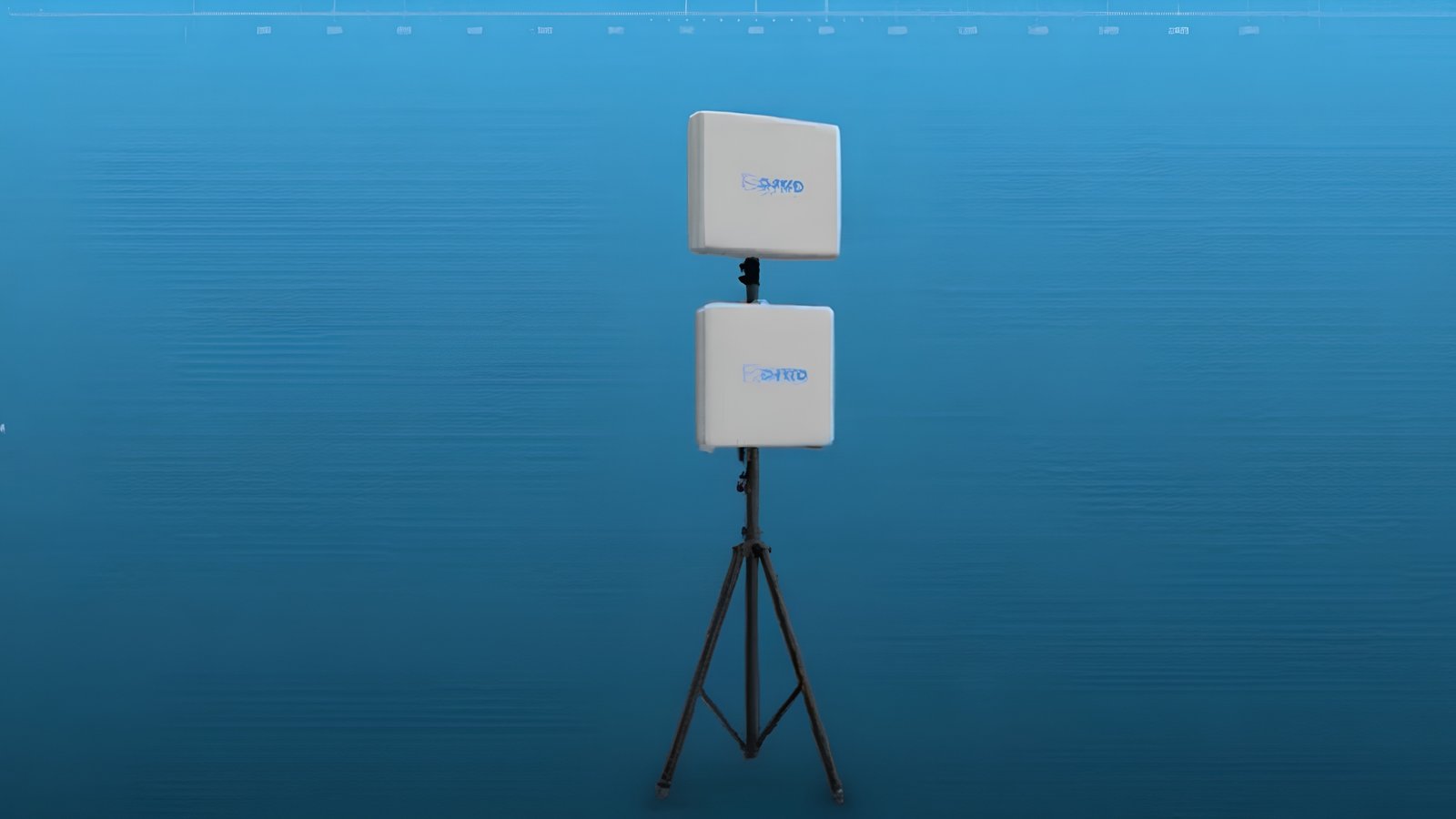
The system’s architecture includes a passive receiver mounted on the frigate’s mast, capable of locking onto multiple targets at long distances. Operator consoles manage the engagement process, while a remotely controlled jammer positioned on the bridge roof covers the forward arc. The jammer employs an advanced algorithm for focused jamming, concentrating energy on the precise frequency used by the target. This targeted approach enhances efficiency and reduces collateral interference.
Operational footage from Psara shows Centaur disrupting a UAV’s control link, prompting its operator to initiate self-destruction rather than risk capture. Observers noted the absence of gunfire or proximity-fuzed projectiles, confirming that the kill was achieved entirely through electronic attack. The precision and discipline of the Greek crew impressed foreign personnel embarked on the mission.
In passive detection mode, Centaur has matched and even exceeded the performance of the ship’s DR-3000 R-ESM system, which replaced the obsolete AR-700. It was able to detect small radar cross-section UAVs at significant distances, a critical advantage in countering low-observable threats. By using focused jamming energy, the system either neutralized targets or forced them to disengage.
The Centaur currently deployed on Psara is not the full production configuration. The urgent fielding meant it was installed without full integration into the ship’s combat management system or the inclusion of higher-spec electro-optical sensors and additional jammers. Future iterations will incorporate these elements, along with planned performance upgrades.
Vice Admiral (retired) Alexandros G. Diakopoulos, President and CEO of HAI, stated: “HAI has several systems in the design and development phase and intends to enter the production of new technology systems dynamically in the near future, either independently or through collaborations. However, we must never forget our core business, which is the MRO of aircraft, helicopters, and engines, as well as aerostructures (we manufacture 30% of the fuselage of the F-16 and 70% of the fuselage of the C-130J).”
Cost is another notable factor. In full configuration, Centaur is priced below €2 million—less than a single ESSM missile. Its scalability, innovative design, and combat-proven record make it a strategic asset for the Hellenic Navy. As a domestically developed system, it enhances operational autonomy and supply security, critical for sustained operations in wartime.