


Humanoid Robots Poised for Rapid Industrial Integration
Long-term demographic shifts are steadily reshaping the U.S. labor market, with a shrinking working-age population placing sustained pressure on productivity. In parallel, breakthroughs in large language models and generative artificial intelligence are unlocking new capabilities across sectors from healthcare to manufacturing. The intersection of these trends is accelerating the push toward humanoid robots—machines with arms, legs, dexterous hands, and AI-driven cognitive systems—designed to operate in environments built for humans.

According to Adam Jonas, Morgan Stanley’s Head of Global Autos and Shared Mobility research, “Think of the great variety of tasks that humans are able to perform with our bare hands or using tools, and then the multitude of machines designed for human hands and fingers. As the growth of the working-age population in advanced economies continues to decline, humanoids may prove to be a requirement for industries that are already facing difficulty attracting enough workers to remain productive.”
Analysts at Morgan Stanley project that by 2040, the U.S. could have 8 million humanoid robots in active roles, influencing $357 billion in wages. By 2050, that figure could rise to 63 million units, with potential implications for 75% of occupations, 40% of employees, and roughly $3 trillion in payroll. Jonas warns that “the commercialization of humanoid robots will face many challenges, chiefly social and political acceptance given their significant potential to disrupt such a large swath of the global workforce,” noting that sectors such as construction, farming, fishing, and forestry could see automation rates exceeding 65%.
From an engineering perspective, humanoids present a different challenge set than autonomous vehicles. While self-driving cars are essentially robots navigating highly dynamic and unpredictable public roads with only three primary actuators—steering, acceleration, and braking—humanoids require dozens of coordinated joints in arms, legs, and hands. However, their deployment environments, such as factories or controlled job sites, are comparatively structured and safer for iterative learning. This contrast suggests that humanoid commercialization could progress faster than autonomous vehicle adoption.
Industries with high physical risk stand to benefit most from humanoid integration. Data from the U.S. Bureau of Labor Statistics identifies transportation and warehousing, construction, manufacturing, agriculture, and mining as among the most hazardous. In such settings, humanoids could reduce injury rates while maintaining output. Repetitive, monotonous, or ergonomically damaging tasks are prime candidates for automation, especially in sectors with high unionization or elevated unit labor costs.
Jonas estimates that “humanoids have the potential to bring about cost savings of roughly $500,000 to $1 million per human worker over 20 years.” Manufacturing costs for these robots could range from $10,000 to $300,000, depending on configuration and intended application. As hardware costs decline and AI capabilities advance, the economic case for deployment strengthens.
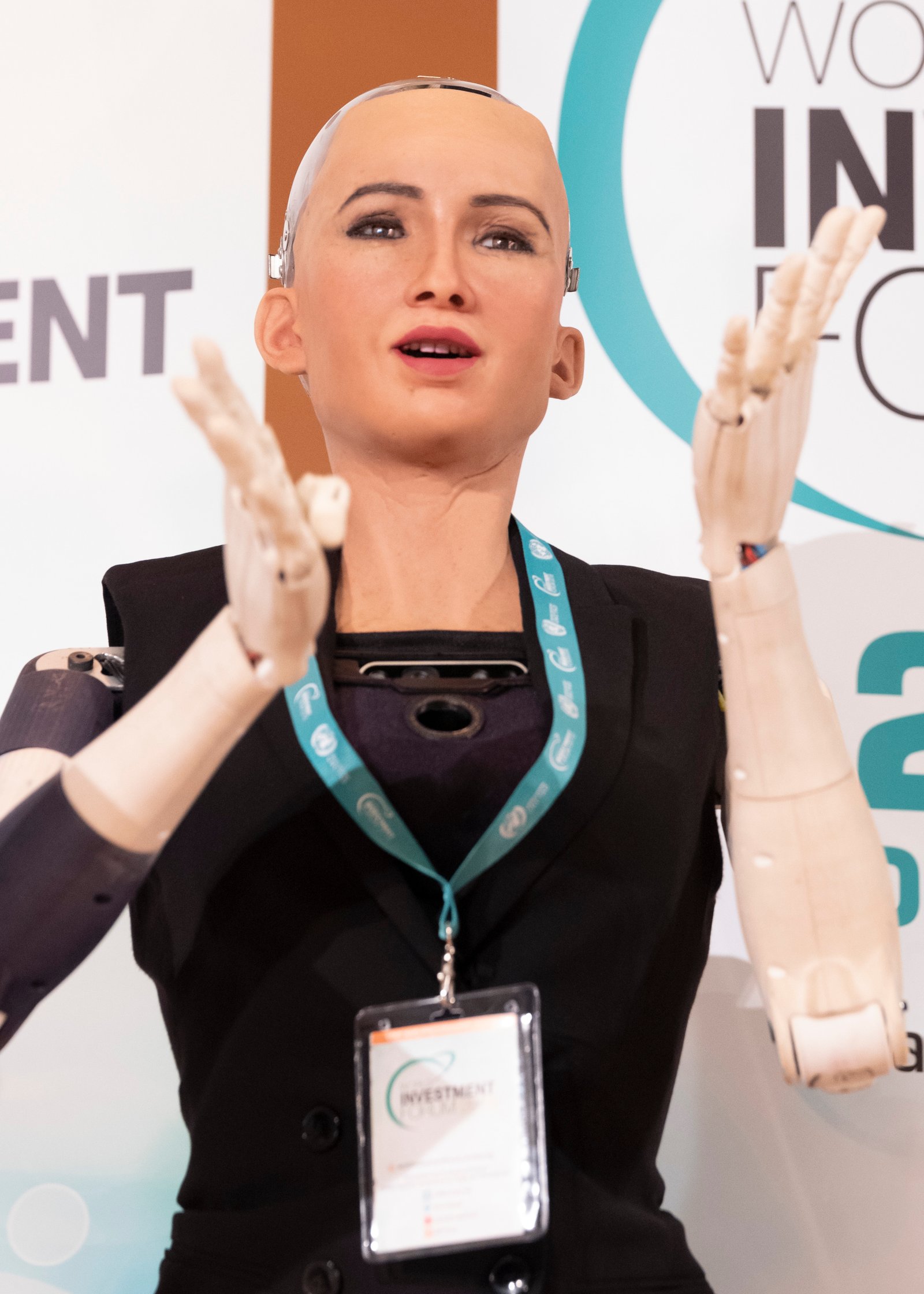
Future iterations may incorporate expressive faces and naturalistic communication, broadening their role into healthcare, education, and collaborative work alongside humans. Achieving such versatility will require continued progress in generative AI, motion control systems, tactile sensing, and energy storage. Battery technology, in particular, remains a limiting factor for mobile, high-duty-cycle humanoids.
Ed Stanley, Head of European Thematic Research at Morgan Stanley, emphasizes the upstream opportunities: “Investors have opportunities in ‘enablers’—the sectors and companies that will build the components and assemble and market the finished humanoids. Those include companies making the generative AI that will power the robots’ brains, the mechanics that make their bodies run, and the battery storage needed to power them. Further development in those three areas will be key to achieving humanoid commercialization.”
Societal adaptation will involve navigating regulatory frameworks, safety standards, and labor market transitions. Historical precedents—from industrial automation to e-commerce—suggest that integration of transformative technologies, while disruptive, can ultimately complement human labor. As Stanley notes, “We see a more optimistic future than the one painted by technology de-accelerationists, one in which robots continue to complement and further enhance human labor and productivity and one in which mundane and hazardous work can be outsourced.”