

AI and Robotics Drive Next-Gen Farming at CES 2023
CES 2023 in Las Vegas assembled over 3,200 exhibitors, including 1,000 startups, with a notable surge in agricultural technology powered by artificial intelligence, robotics, and autonomous systems. The event’s agricultural innovations reflected a shift toward precision, automation, and sustainability, underscoring the engineering depth behind modern farming.
Artificial intelligence dominated the agricultural showcase. AI-powered sensors and imaging systems demonstrated the ability to detect early signs of crop stress, disease, and nutrient deficiencies. Machine learning models were presented with capabilities to forecast weather patterns and predict yields with high accuracy, while AI-driven farm management platforms optimized resource allocation to reduce waste. These systems aim to make precision farming more accessible, echoing the mission of platforms like Farmonaut, whose Jeevn AI integrates satellite imagery with advisory algorithms to deliver real-time, field-specific recommendations.
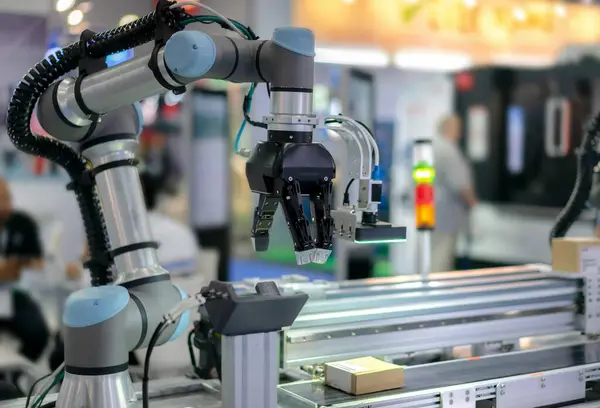
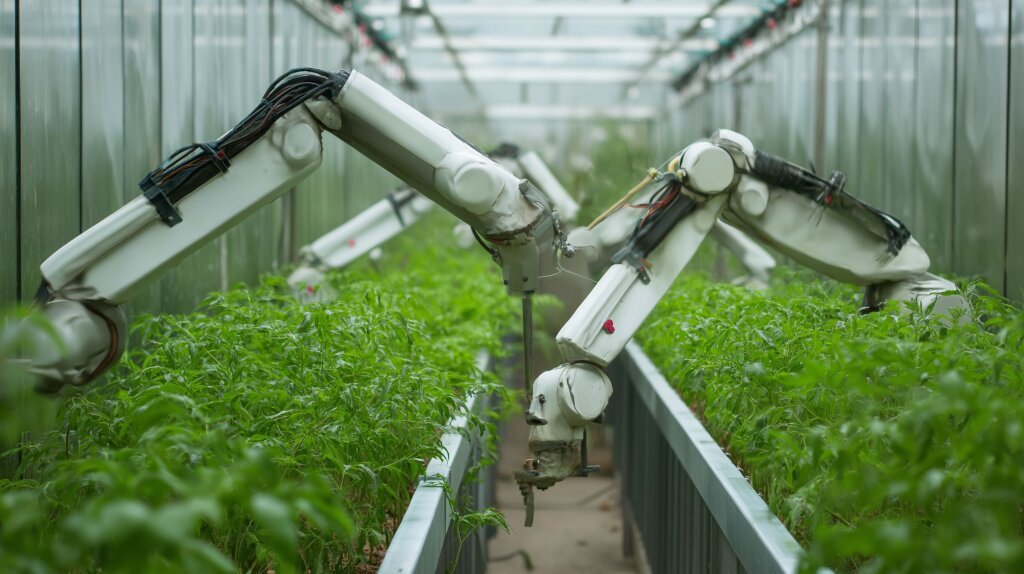
Robotics drew significant attention for their potential to replace or augment human labor in demanding farm tasks. Autonomous planters on display could place seeds at precise depths and spacing, while harvesting robots handled delicate produce without damage. Weed control robots identified and removed unwanted plants without harming crops, promising reductions in herbicide use. Such machines could act as physical executors of data-driven strategies derived from satellite and AI analysis.
Autonomous vehicles offered a glimpse into fully automated farm mobility. John Deere’s self-driving tractor was highlighted for its ability to perform complex tasks without human input. Drone swarms surveyed large tracts of farmland rapidly, and autonomous irrigation units navigated fields to deliver water precisely based on soil moisture data. Integration of these vehicles with AI platforms could enable coordinated, high-efficiency operations.
Virtual reality technologies introduced immersive tools for agricultural training, farm layout planning, and remote management. VR simulations taught equipment operation, while interactive farm planning allowed visualization of layouts before implementation. Remote VR interfaces enabled virtual field walks informed by live data feeds.
Sustainability featured prominently. Solar-powered farm equipment reduced fossil fuel dependence, advanced irrigation systems minimized water waste, and biodegradable sensors addressed electronic waste concerns. These developments align with growing demands for environmental responsibility, supported by carbon footprint tracking tools in precision agriculture platforms.
Blockchain applications targeted transparency and fairness in agricultural commerce. Systems for supply chain traceability tracked produce from farm to table, smart contracts facilitated equitable agreements, and agricultural cryptocurrencies streamlined transactions. Immutable blockchain records enhance food safety and authenticity verification.
The integration of 5G and IoT technologies promised high-speed, low-latency connectivity across farms. Smart sensors transmitted soil, crop, and weather data in real time, while connected machinery enabled remote operation and data exchange. Farm-wide networks could support continuous monitoring and rapid response to changing conditions.
Drone technology continued its ascent, with multispectral imaging drones detecting plant health and water stress, precision spraying drones reducing chemical use, and swarm coordination expanding coverage. These airborne systems complement satellite monitoring by offering higher spatial resolution and flexible deployment.
Weather prediction tools showcased hyperlocal forecasting, climate change modeling, and extreme weather alerts. Field-specific predictions could improve planting, irrigation, and harvesting decisions, bolstering resilience against environmental variability.
Holographic displays offered new modes of data interaction. Three-dimensional crop models, interactive farm maps, and educational holograms provided tactile, visual engagement with complex datasets. Such visualization could enhance understanding of spatial and temporal patterns in crop development.
Smart packaging innovations aimed to reduce food waste and improve traceability. Active packaging materials controlled moisture and gas exchange to extend shelf life, intelligent labels monitored freshness, and blockchain-integrated packaging linked physical goods to digital records.
Vertical farming technologies demonstrated AI-controlled environments, modular systems for urban deployment, and advanced hydroponic and aeroponic methods. These approaches promise high yields and resource efficiency in constrained spaces.
The global autonomous tractor market, projected to reach $11.5 billion by 2030, reflects the momentum behind these engineering advances. Adoption timelines presented at CES suggested AI-powered crop monitoring could be mainstream within 2–3 years, autonomous vehicles in 3–5 years, and robotic harvesting in 4–6 years.
The convergence of AI, robotics, autonomous mobility, blockchain, IoT, and advanced visualization at CES 2023 illustrated a future where agriculture operates as a tightly integrated, data-rich engineering system. Platforms that synthesize satellite, sensor, and machine data stand poised to orchestrate these technologies into cohesive, efficient workflows.